Do I need a water softener in Bellevue?
Almost never. Eastside tap water is already soft — about 1.4 grains per gallon — so there's essentially no hardness to remove. Softening already-soft water adds sodium and maintenance without benefit.

A water softener and a water filter solve different problems, and in Bellevue the honest answer is that most homeowners do not need a softener at all. A softener uses ion exchange to remove the calcium and magnesium that make water hard, adding sodium in the process; a filter — typically activated carbon or reverse osmosis — targets chlorine taste and odor, sediment, and contaminants instead. The reason a softener is almost always unnecessary here is that Eastside tap water is already soft: Bellevue's water runs about 1.4 grains per gallon, and the Tolt source about 1.2 grains per gallon, per City of Bellevue and Seattle Public Utilities water-quality data, both comfortably inside the USGS "soft" range. Softening water that is already soft accomplishes nothing useful and adds sodium and cost. A water softener genuinely makes sense only where the water is genuinely hard — a private well that tests hard, not the municipal SPU or Cascade supply most Eastside homes drink. What most Bellevue homeowners actually want, if anything, is a carbon filter to take the chlorine taste and smell out of otherwise good, soft water. This guide gives the hardness numbers, the softener-versus-filter distinction, when a softener actually makes sense, and the honest take on what to buy.
Last reviewed: 2026-06-04
Almost never. Eastside tap water is already soft — about 1.4 grains per gallon — so there is essentially no hardness for a softener to remove. Softening already-soft water adds sodium and cost for no benefit.
The honest answer for almost every Bellevue home is that you do not need a water softener, and the reason is simple: the water here is already soft. A water softener exists to remove the calcium and magnesium that make water hard, and Eastside tap water runs around 1.4 grains per gallon, which is well inside the range considered soft. There is essentially no hardness for a softener to take out, so installing one solves a problem the home does not have.
This runs against a common assumption, because water softeners are marketed heavily and many homeowners assume hard water is a near-universal problem. In much of the country it is — large regions have genuinely hard water where a softener earns its keep by preventing scale. But the Eastside is not one of those regions; the local municipal supply is naturally soft, so the marketing that makes sense in a hard-water city does not apply to a Bellevue home drinking SPU or Cascade water.
Softening water that is already soft is not just unnecessary, it has small downsides. A softener works by ion exchange, swapping the hardness minerals for sodium, so running soft water through one adds sodium to the water for no softening benefit, plus the purchase cost, the ongoing salt, and the maintenance of a system that is not doing anything useful. You pay to treat a problem you do not have and get slightly saltier water in return.
So the starting point for any water-quality conversation in Bellevue is to separate what the water actually needs from what gets sold. The next section gives the specific hardness numbers behind the "already soft" claim, but the headline is that a softener is the wrong product for the typical Eastside home — and recognizing that saves homeowners from buying equipment they will not benefit from. What many people actually want turns out to be something else entirely.
This happening in your home right now? A licensed plumber can talk you through the next step on the phone — 24/7, and the call is free.
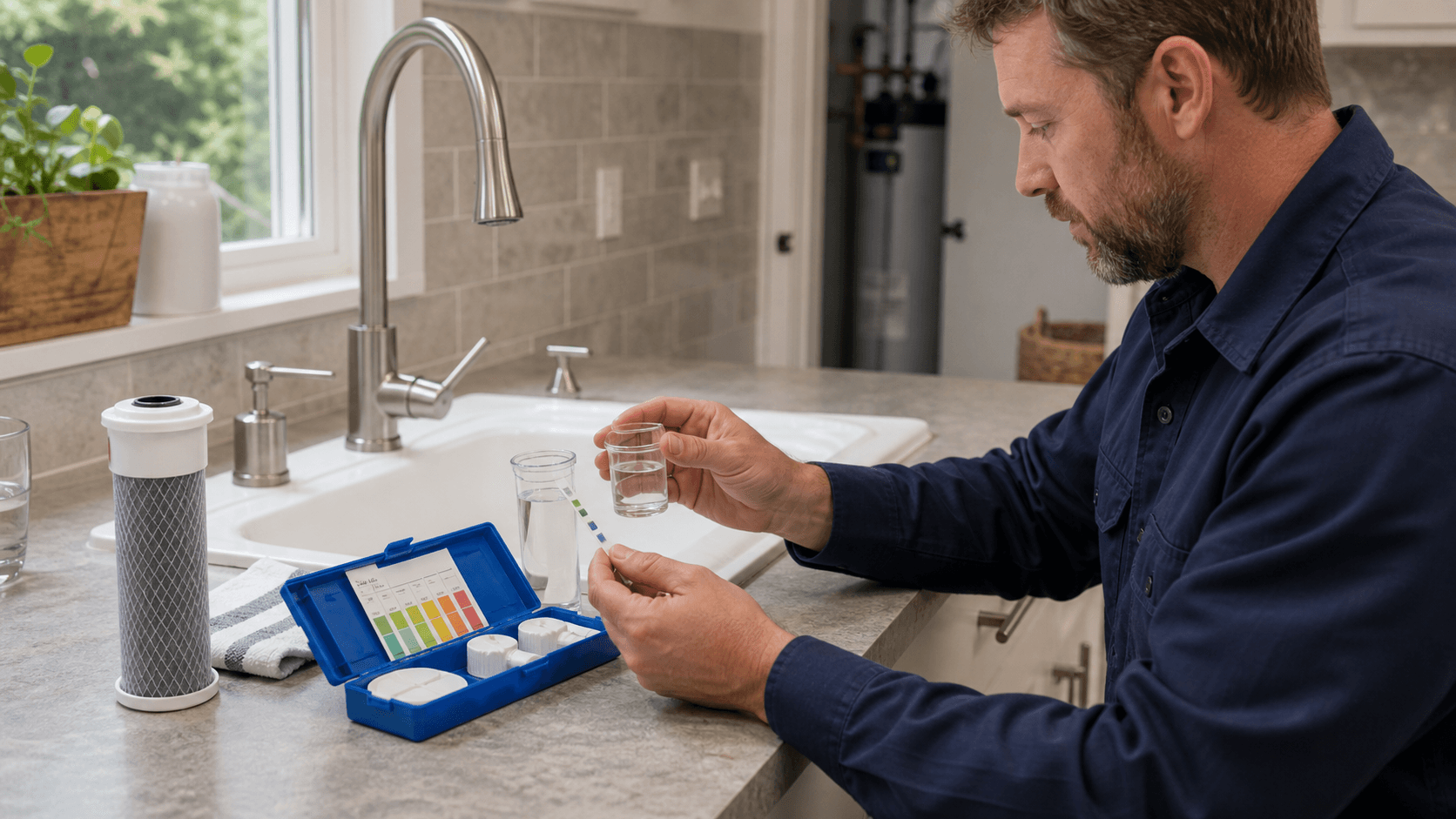
Call a plumberSoft. Bellevue's water is about 1.4 grains per gallon and the Tolt source about 1.2, per the City and Seattle Public Utilities. The USGS scale puts anything under ~3.5 grains per gallon inside "soft."
The numbers are what settle the question, and they are not close. According to City of Bellevue and Seattle Public Utilities water-quality data, Bellevue's tap water runs about 1.4 grains per gallon, and the Tolt River source — one of the two main supplies for the regional system — comes in around 1.2 grains per gallon. Those are low figures, and they reflect the fact that the region's drinking water comes largely from protected mountain watersheds that yield naturally soft water.
To put those numbers in context, the USGS water-hardness scale classifies water as soft below roughly 3.5 grains per gallon (about 60 milligrams per liter), with moderately hard, hard, and very hard ranges stacking up well above that. Bellevue's ~1.4 grains per gallon and the Tolt's ~1.2 sit comfortably inside the soft category, not near the boundary — this is water that is unambiguously soft by the standard measure, not borderline water that could go either way.
It is worth attributing these figures to the city and the utility rather than to a water-treatment vendor, because the source matters for trust. The City of Bellevue and Seattle Public Utilities publish this water-quality data as the public agencies responsible for the supply; secondary aggregators repeat it, but the primary figures come from the purveyors themselves. When a softener salesperson cites a hardness number, the number to check it against is the city's and SPU's published data.
The practical upshot of the numbers is that the "do I need a softener" question is already answered by the hardness reading: at ~1.4 grains per gallon, there is no meaningful hardness to soften. This is the foundation for everything else in this guide — because the water is genuinely soft, a softener is the wrong tool, and the real question becomes whether you want a filter for taste, which is a different product solving a different concern.
A softener uses ion exchange to remove hardness minerals (calcium and magnesium) and adds sodium. A filter — carbon or reverse osmosis — targets chlorine taste and odor, sediment, and contaminants. They solve different problems.
Softeners and filters are often lumped together as "water treatment," but they do fundamentally different jobs, and confusing them is how people end up buying the wrong one. A water softener has one purpose: to remove the calcium and magnesium that make water hard. It does this by ion exchange, passing the water over a resin that swaps those hardness minerals for sodium, so the water that comes out is soft but carries a little added sodium. A softener does nothing for taste, odor, or contaminants — it only addresses hardness.
A filter, by contrast, is about what the water tastes and smells like and what is in it, not about hardness. The most common type is an activated-carbon filter, which adsorbs the chlorine that utilities add for disinfection, removing the chlorine taste and odor that many people dislike, along with some other organic compounds. Carbon filters come as whole-house units, under-sink units, faucet attachments, and pitcher filters, all working on the same carbon-adsorption principle.
Reverse osmosis is the other major filter type, and it goes further. An RO system forces water through a semipermeable membrane that removes a very wide range of dissolved contaminants — far more than carbon alone — producing highly purified water, usually at a single drinking-water tap rather than for the whole house. RO is the choice when the goal is to reduce specific contaminants or to get the most thoroughly filtered drinking water, and it is more involved and slower than a simple carbon filter.
The key point is that these target different things: a softener removes hardness, a carbon filter removes chlorine taste and odor, and reverse osmosis removes a broad set of contaminants. In a place with hard water, you might want both a softener and a filter; in Bellevue, where the water is already soft, the softener half of that pairing has nothing to do, and the relevant question is only whether you want a filter for taste or purity. They are not interchangeable, and "I want better water" usually means a filter here, not a softener.
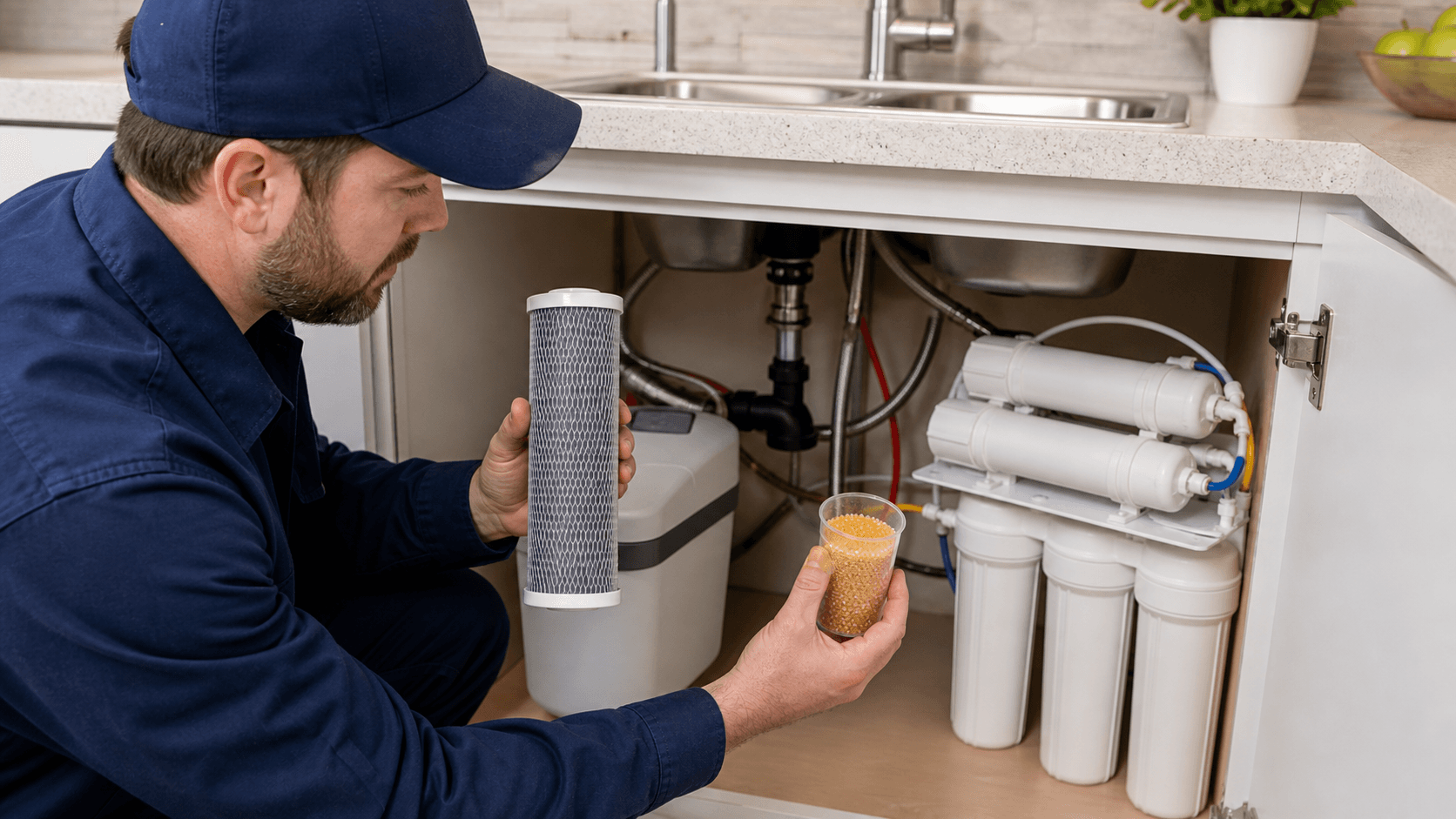
When the water is genuinely hard — typically a private well that tests hard — not the soft municipal SPU or Cascade supply most Eastside homes drink. The deciding factor is a hardness test.
A water softener is the right product in exactly one situation: when the water is genuinely hard. There are homes and regions where hardness is real and a softener earns its place by preventing scale buildup in pipes, water heaters, and fixtures and improving how soap and detergent perform. The technology is not useless — it is just matched to hard water, and the question is always whether a given home's water is actually hard enough to need it.
On the Eastside, the homes where that can be true are generally those on a private well rather than the municipal supply. Most Bellevue and Eastside homes drink soft municipal water from Seattle Public Utilities or the Cascade Water Alliance, which as the hardness numbers show is well inside the soft range. A private well, though, draws from groundwater whose hardness depends entirely on the local geology, and some wells do test genuinely hard — that is the case where a softener can make sense.
The deciding factor is a hardness test of the actual water, not a general assumption or a sales pitch. A well owner who tests their water and finds it genuinely hard has a real reason to consider a softener; a homeowner on the municipal supply almost certainly does not, because that water has already been measured as soft. The single most useful step before buying any softener is to know your water's actual hardness, which for municipal customers is published and for well owners means testing.
This is also the line that separates an honest recommendation from an upsell. A softener proposed for a home on soft municipal SPU or Cascade water is solving a problem that the published hardness data says does not exist; a softener for a private well that has tested hard is addressing a measured condition. The product is fine — it is the match between the product and the water that matters, and on the Eastside that match is rare outside of genuinely hard well water.
A carbon filter for chlorine taste and odor. The water is already soft and safe, so the common real complaint is the taste or smell of chlorine — which an activated-carbon filter removes, not a softener.
When an Eastside homeowner says they want to do something about their water, the actual complaint, more often than not, is taste or smell — and specifically chlorine. The municipal water is soft and safe to drink, so it is not hardness or contamination driving the interest; it is that disinfected tap water carries a chlorine taste and odor that some people find unpleasant. That is a real and legitimate preference, and it points squarely at a carbon filter, not a softener.
An activated-carbon filter is the right and inexpensive answer to the chlorine complaint. Carbon adsorbs chlorine, removing the taste and smell and leaving the water tasting cleaner, and it comes in forms to match any level of commitment — a pitcher or faucet filter for a renter or a single tap, an under-sink unit for the kitchen, or a whole-house filter if you want every tap treated. For most people bothered by chlorine taste, a modest carbon filter solves the entire complaint.
For those who want to go further than taste, reverse osmosis at the kitchen tap is the step up, producing highly purified drinking water by removing a broad range of dissolved substances. RO is more than most Eastside homes need given that the water is already soft and safe, but it is the option for someone who wants the most thoroughly filtered drinking water or is targeting specific contaminants. The broader picture of what is in the local supply and how it is treated is covered in our guides on the Eastside water source and treatment and Eastside water hardness.
The pattern, then, is that the equipment Eastside homeowners actually benefit from is a filter for taste, not a softener for hardness. Matching the product to the real complaint — chlorine taste, addressed by carbon; broader purity, addressed by RO; hardness, which the water does not have — is how a homeowner spends money on water treatment that does something. The softener that gets pitched so often is the one piece that the soft local water makes pointless.
When the water is already soft — which on the municipal Eastside supply it almost always is. We would rather tell a homeowner their ~1.4-grain water needs no softener than sell equipment that does nothing.
The honest position on water softeners in Bellevue is that we routinely tell homeowners not to buy one, because the water does not need it. When the municipal supply runs about 1.4 grains per gallon and the Tolt source about 1.2, there is no hardness problem to solve, and recommending a softener anyway would mean selling a piece of equipment that adds sodium and cost while accomplishing nothing. The right advice in that situation is to keep the money in your pocket.
This matters because water treatment is an industry with a strong incentive to sell, and softeners are a flagship product. A homeowner who calls about "water quality" can easily be steered toward an expensive softener regardless of whether their water is hard, because the pitch is generic and the customer usually does not know their hardness number. Knowing that Eastside municipal water is soft — and being willing to say so — is what protects a homeowner from buying the wrong thing.
Where we do see a genuine need, it is specific and testable: a private well that has actually tested hard, where a softener addresses a measured condition rather than a marketed fear. And where the real complaint is chlorine taste, the honest recommendation is a carbon filter, which costs a fraction of a softener and actually solves the problem the homeowner has. Matching the recommendation to the water, and to the actual complaint, is the whole of an honest water-quality conversation.
If you are weighing water treatment for a Bellevue home and want a straight answer about whether you need anything at all, that is a conversation worth having before you buy. We would rather tell you your ~1.4-grain water needs no softener, and maybe a simple carbon filter if chlorine taste bothers you, than sell you equipment that sits in the garage doing nothing useful. To talk it through honestly, get in touch — the goal is the right answer for your water, not the biggest sale.
Bellevue water is soft (about 1.4 grains per gallon), so you almost never need a softener; a softener removes hardness while a filter removes chlorine taste; a softener only makes sense for genuinely hard well water.
Bellevue water is soft, not hard — about 1.4 grains per gallon, with the Tolt source around 1.2, per City of Bellevue and Seattle Public Utilities data, both well inside the USGS soft range. That is why you almost never need a water softener here: there is essentially no hardness for one to remove, so softening already-soft water just adds sodium and cost for no benefit. A softener is the wrong product for the typical Eastside home on municipal water.
A softener and a filter solve different problems. A softener uses ion exchange to remove calcium and magnesium (hardness) and adds a little sodium; a filter — usually activated carbon or reverse osmosis — targets chlorine taste and odor, sediment, and contaminants instead. So if your complaint is taste or smell, you want a filter, not a softener; if you genuinely had hard water, you might want a softener, but on the soft Eastside supply that is rarely the case.
Why does the water smell like chlorine if it is soft? Because softness and chlorine are unrelated — the water is naturally low in hardness minerals but is disinfected with chlorine like most municipal supplies, and that chlorine is what you taste and smell. A softener does nothing about it; an activated-carbon filter removes it. A water softener makes sense only when the water is genuinely hard, which on the Eastside generally means a private well that has tested hard, not the SPU or Cascade municipal supply.
Is reverse osmosis worth it? Only if you want the most thoroughly filtered drinking water or are targeting specific contaminants — for most Eastside homes, the water is already soft and safe, so a simple carbon filter for chlorine taste is all that is needed, and RO is more than necessary. And no, soft water does not need a softener; that is the whole point. For a straight, no-upsell answer about your own water, get in touch, and see our guides on the Eastside water source and Eastside water hardness.
Every fact in this guide cites a verifiable public source. If you find a number we got wrong, email dispatch@bellevueplumberpro.com.
Need help with this in your home? See our Water main repair in Bellevue page for pricing, our diagnostic process, and how same-day service works across the Eastside.
Related services: Leak Detection and Pipe Repair.
Almost never. Eastside tap water is already soft — about 1.4 grains per gallon — so there's essentially no hardness to remove. Softening already-soft water adds sodium and maintenance without benefit.
A softener uses ion exchange to remove hardness minerals (calcium and magnesium) and adds sodium. A filter — carbon or reverse osmosis — targets chlorine taste and odor, sediment, and specific contaminants instead.