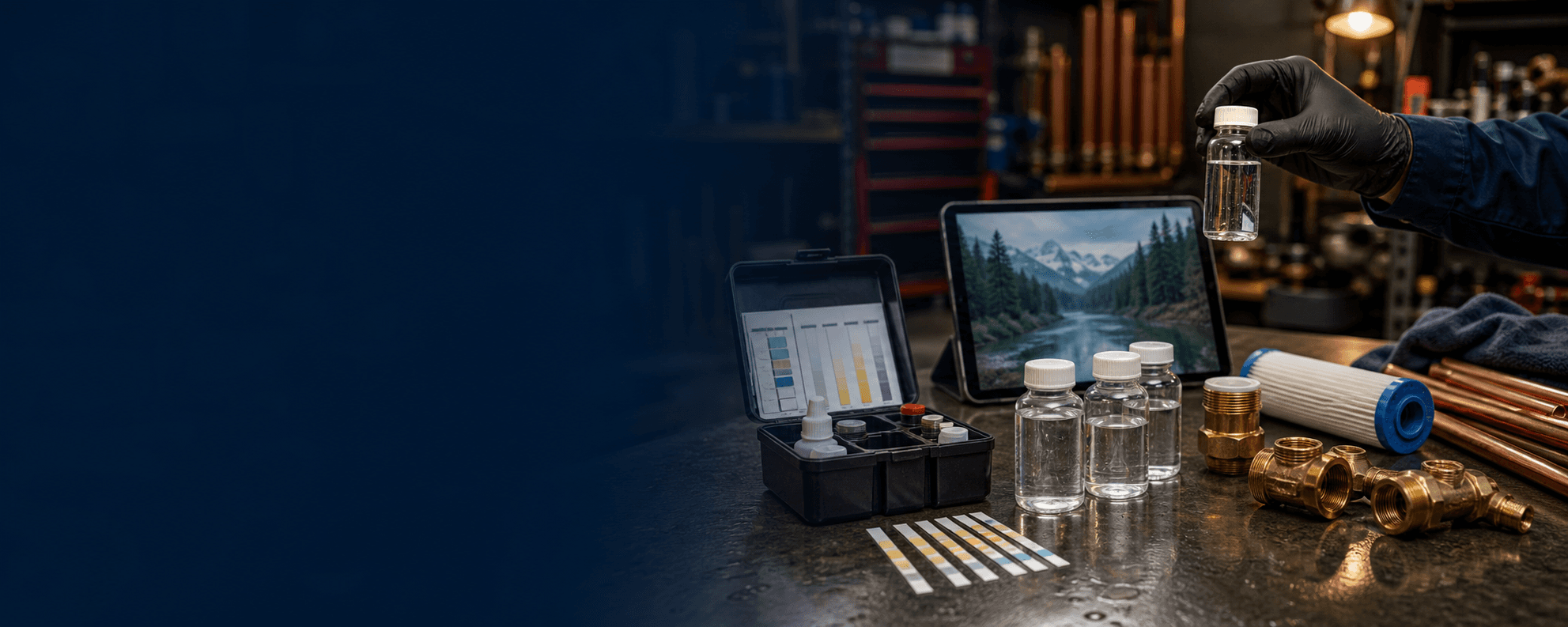
Bellevue water quality — source, hardness, and plumbing effects
Bellevue's drinking water comes from two protected Cascade watersheds (Cedar River and South Fork Tolt) through Cascade Water Alliance and into City of Bellevue Utilities' 600 miles of pressurized watermain. The source matters because soft, slightly acidic mountain water has specific long-term effects on copper, galvanized, and brass plumbing — and because well-water properties in rural Sammamish and Issaquah operate on different chemistry entirely. This section explains what's in your water, what it does to your pipes, and when a softener or filter is worth the money.
Water quality
Water softener cost in Bellevue: equipment, installation, and whether you even need one
What a water softener costs installed in Bellevue — equipment plus the plumbing loop — the salt-free conditioner alternative, and an honest answer to whether Eastside water is hard enough to need one.
Read →Well water vs city water in the Bellevue area: cost, treatment, and what to test
The practical differences between well water and city water for Eastside homes — who treats it, what it costs, what to test for, and which plumbing issues come with each.
Read →Hard water in Bellevue and the Eastside: hardness, effects, softener payoff
Bellevue municipal water is genuinely soft at 1.50 grains per gallon. Most Eastside softener marketing exaggerates the problem. Here's what the actual numbers say, where well-water areas differ, and when softener spending makes economic sense.
Read →Where Bellevue's water comes from: source, treatment, and what it means for your plumbing
Bellevue's water originates in two protected Cascade watersheds — the Cedar River and the South Fork Tolt River — and reaches your faucet through one of the cleanest large-scale water systems in North America. Here's the journey, the treatment process, and what the source means for your pipes.
Read →Water softener vs filter in Bellevue: why you almost never need a softener here
Eastside tap water is already soft — about 1.4 grains per gallon — so a water softener is almost never necessary in Bellevue. What most homeowners actually want is a carbon filter for chlorine taste. Here is the honest difference.
Read →Other guide sections
Pipes & freezing
7 guides
Browse →Sewer lines
5 guides
Browse →Water heaters
14 guides
Browse →Cost and pricing
6 guides
Browse →Code and permits
4 guides
Browse →Plumbing emergencies
5 guides
Browse →Seasonal plumbing
4 guides
Browse →Drains and clogs
10 guides
Browse →Garbage disposals
4 guides
Browse →Toilets
7 guides
Browse →Water pressure
5 guides
Browse →Fixtures and faucets
5 guides
Browse →Sump pumps
6 guides
Browse →Gas lines & safety
5 guides
Browse →