Water pressure in Bellevue and Eastside homes
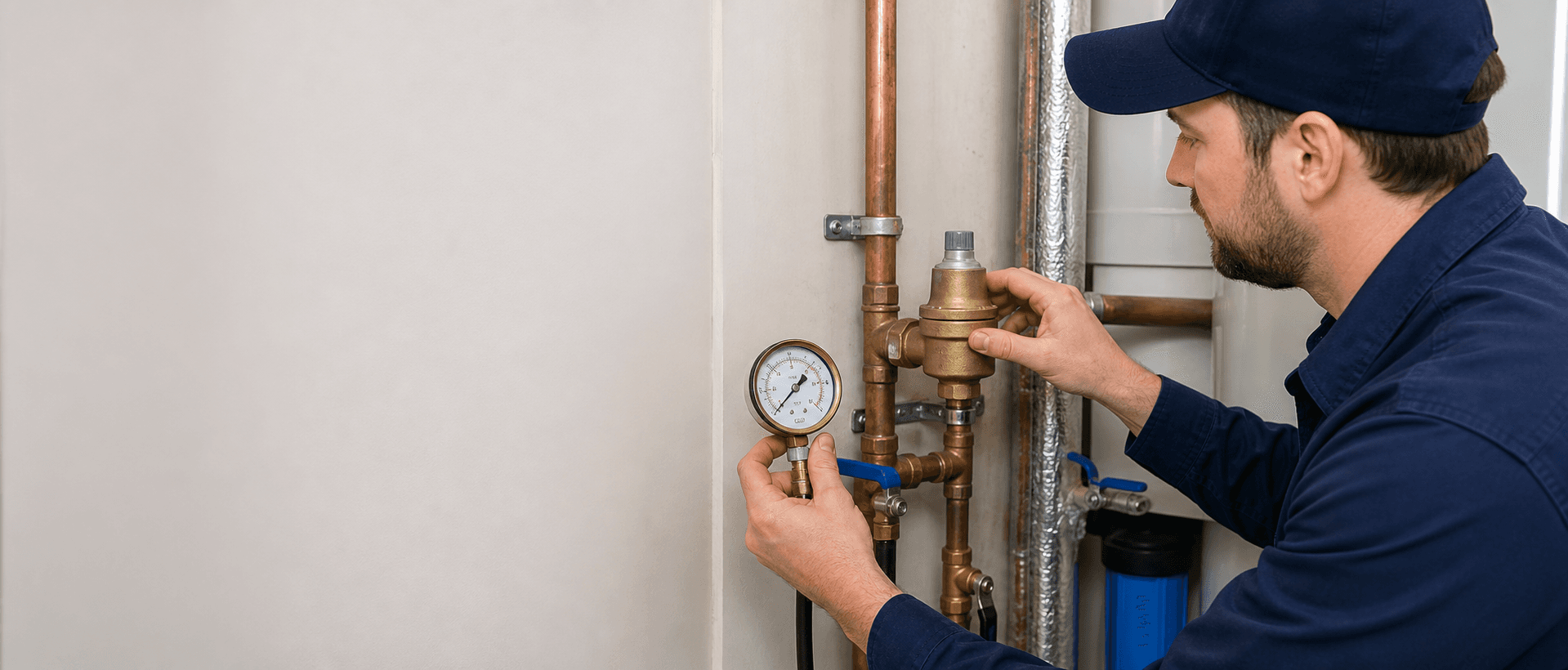
Water pressure problems in a Bellevue home split into two opposite cases: too little and too much. Low pressure at one fixture is usually a clogged aerator or cartridge; low pressure across the whole house points at the pressure-reducing valve (PRV), a partly closed main, or failing galvanized supply lines. High pressure — common where the city main runs strong — quietly stresses every fixture, valve, and the water heater until something bursts, which is exactly what the PRV exists to prevent. This section covers how to test your pressure, what the PRV does and where it fails, and how to trace low flow to its real source.
Water pressure
Water hammer: why pipes bang and how to stop the noise
That bang when a faucet, washer, or dishwasher shuts off is water hammer — a pressure shockwave. Why it happens, the arrestor-and-pressure fixes that stop it, and why ignoring it slowly stresses your joints.
Read →Water pressure regulator (PRV): what it does, code, settings, and cost in Bellevue
A PRV is a spring-loaded brass valve at the water main that drops high street pressure down to about 50 psi. Code requires one above 80 psi, and a failed PRV is behind most whole-house pressure complaints.
Read →Low water pressure in the whole house: causes, testing, and fixes in Bellevue
Whole-house low pressure usually traces to a failed PRV, a partly closed main valve, corroded galvanized pipe, or low municipal supply. A $10 gauge on a hose bib finds the cause faster than guessing.
Read →No water pressure in the shower: clogged head, restrictor, or cartridge
Low pressure at only the shower is a local part, not the house — usually a limescale-clogged showerhead or a worn pressure-balancing cartridge. Soaking the head in vinegar fixes most cases.
Read →Water pressure too high in your Bellevue home: signs, damage, and the fix
Water pressure above 80 psi is quietly damaging your fixtures, supply lines, water heater, and appliances. Most Bellevue homes need a pressure-reducing valve (PRV) set to 60–70 psi. Here is how to know if your pressure is too high and what the fix costs.
Read →Other guide sections
Pipes & freezing
7 guides
Browse →Sewer lines
5 guides
Browse →Water heaters
14 guides
Browse →Water quality
5 guides
Browse →Cost and pricing
6 guides
Browse →Code and permits
4 guides
Browse →Plumbing emergencies
5 guides
Browse →Seasonal plumbing
4 guides
Browse →Drains and clogs
10 guides
Browse →Garbage disposals
4 guides
Browse →Toilets
7 guides
Browse →Fixtures and faucets
5 guides
Browse →Sump pumps
6 guides
Browse →Gas lines & safety
5 guides
Browse →