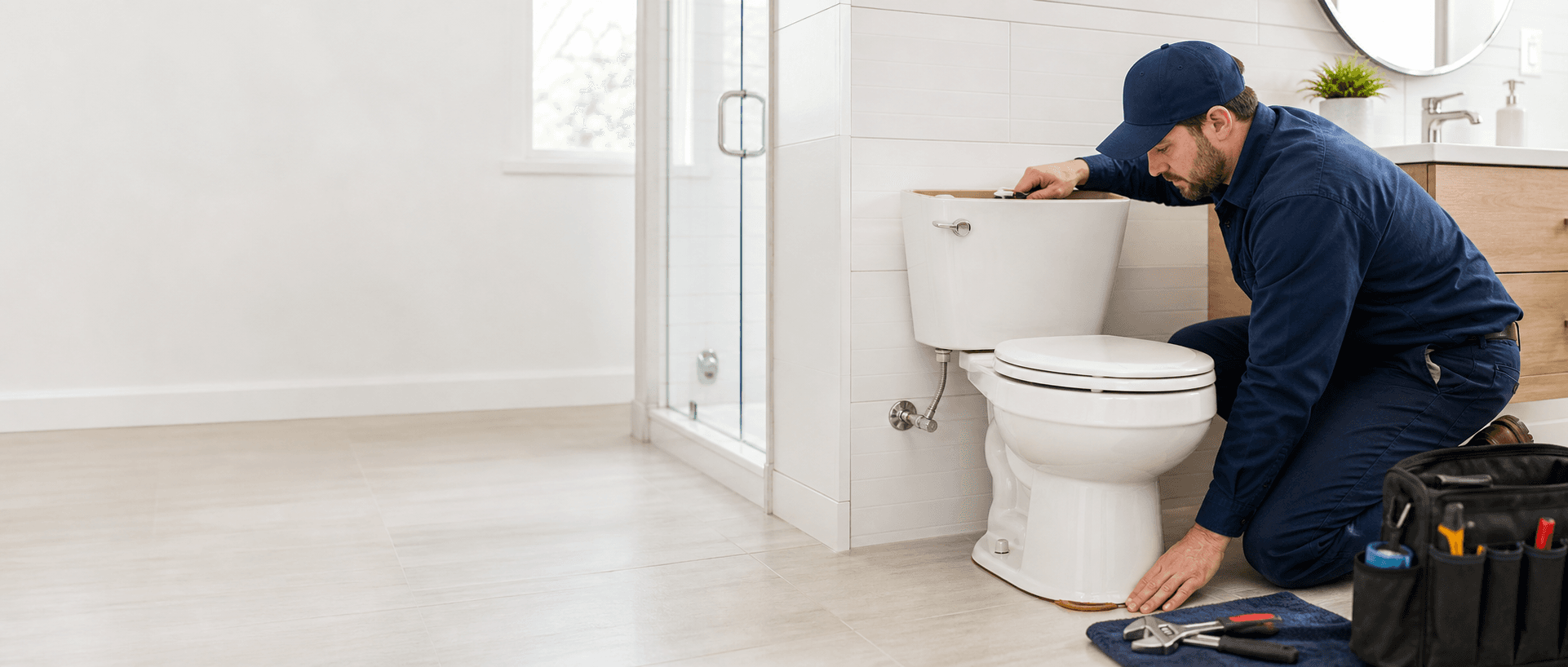
Toilets in Bellevue homes — leaks, running, and weak flushes
A toilet has three failure points homeowners actually meet: the flush (weak, incomplete, or doubling), the fill (a tank that never stops running and quietly wastes thousands of gallons a month), and the seal (water pooling at the base from a failed wax ring or a cracked bowl). Each has a distinct cause and a distinct fix, and most are a $10-$30 part rather than a service call. This section covers the diagnosis for each — running, weak flush, gurgling, base leak — and the one symptom, a gurgle that tracks with other drains, that means the problem is in the sewer line, not the toilet.
Toilets
Toilet leaking at the base: the five causes and how to find which one
Water at the base of a toilet is usually a failed wax ring, but it can be condensation, loose closet bolts, a cracked flange, or a tank-to-bowl leak. When the water appears tells you which.
Read →Toilet keeps running: the flapper, float, and fill valve fix
A toilet that keeps running — the phantom flush that refills by itself, or the constant hiss — is almost always a worn flapper, a misadjusted float, or a failing fill valve. A dye test names the culprit in ten minutes, and most fixes are under $25 in parts.
Read →Toilet bubbling or gurgling: what it means and when it is the sewer line
A gurgling toilet is air forced back through the trap by a blockage. If it bubbles when the washer or shower drains, the blockage is in the main line — and in Bellevue that often means tree roots.
Read →Weak toilet flush: why it happens and how to fix the pressure
A weak flush usually means a low tank level, a partial clog, clogged rim jets, or a flapper closing too early. Check the water level first — it is free — before cleaning jets or replacing parts.
Read →Toilet fill valve replacement: how to do it and set the water level
A fill valve refills the tank after each flush and shuts off when full. They last about 5 to 7 years; when one fails, replacing it is a sub-$25 part and a 30-minute job once the water is off.
Read →How to unclog a toilet — with a plunger, without one, and when to stop and call a plumber
The flange-plunger technique that clears most toilet clogs in under a minute, the no-plunger methods that actually work, the products that make it worse, and the three signs the problem is your drain line, not the toilet.
Read →Toilet flapper replacement: how to pick the right flapper for your toilet and swap it in 10 minutes
The $8 rubber flapper is behind most running toilets — and a worn one silently wastes up to 200 gallons a day. How to confirm it with the dye test, match the right size (2-inch vs 3-inch), and replace it without tools.
Read →Other guide sections
Pipes & freezing
7 guides
Browse →Sewer lines
5 guides
Browse →Water heaters
14 guides
Browse →Water quality
5 guides
Browse →Cost and pricing
6 guides
Browse →Code and permits
4 guides
Browse →Plumbing emergencies
5 guides
Browse →Seasonal plumbing
4 guides
Browse →Drains and clogs
10 guides
Browse →Garbage disposals
4 guides
Browse →Water pressure
5 guides
Browse →Fixtures and faucets
5 guides
Browse →Sump pumps
6 guides
Browse →Gas lines & safety
5 guides
Browse →