Last reviewed: 2026-06-06
What causes water hammer?
Water hammer is a pressure shockwave created when fast-moving water is stopped abruptly by a quick-closing valve. The common triggers are washing-machine and dishwasher solenoid valves (which snap shut), missing or waterlogged water-hammer arrestors, water pressure that's too high, and loose pipes that amplify the knock. The sound is the shockwave reverberating through the plumbing.
When a valve closes in a fraction of a second, the column of water behind it has nowhere to go and slams to a halt. That energy becomes a pressure spike that travels back up the pipe — the bang you hear. Appliances with fast solenoid valves are the most common cause because they close far faster than a hand-turned faucet.
The table maps what you're hearing to the likely cause and the fix. Most cases are solved with arrestors and correct pressure; persistent hammering is worth fixing because the repeated shock stresses joints over time.
SymptomLikely causeFix
Bang when a faucet or valve shutsMissing or failed arrestorInstall or replace arrestors
Bang when the washer or dishwasher stopsFast solenoid valve, no cushionAdd arrestors at the appliance
Banging throughout the houseWater pressure too highCheck and adjust the PRV
Knocking only in certain runsLoose pipe strapsSecure the pipes
Water hammer is a pressure shockwave. Arrestors plus correct pressure (a working PRV) fix most cases; ignoring it stresses joints over the years.
This happening in your home right now? A licensed plumber can talk you through the next step on the phone — 24/7, and the call is free.
☎Call a plumberHow to stop water hammer
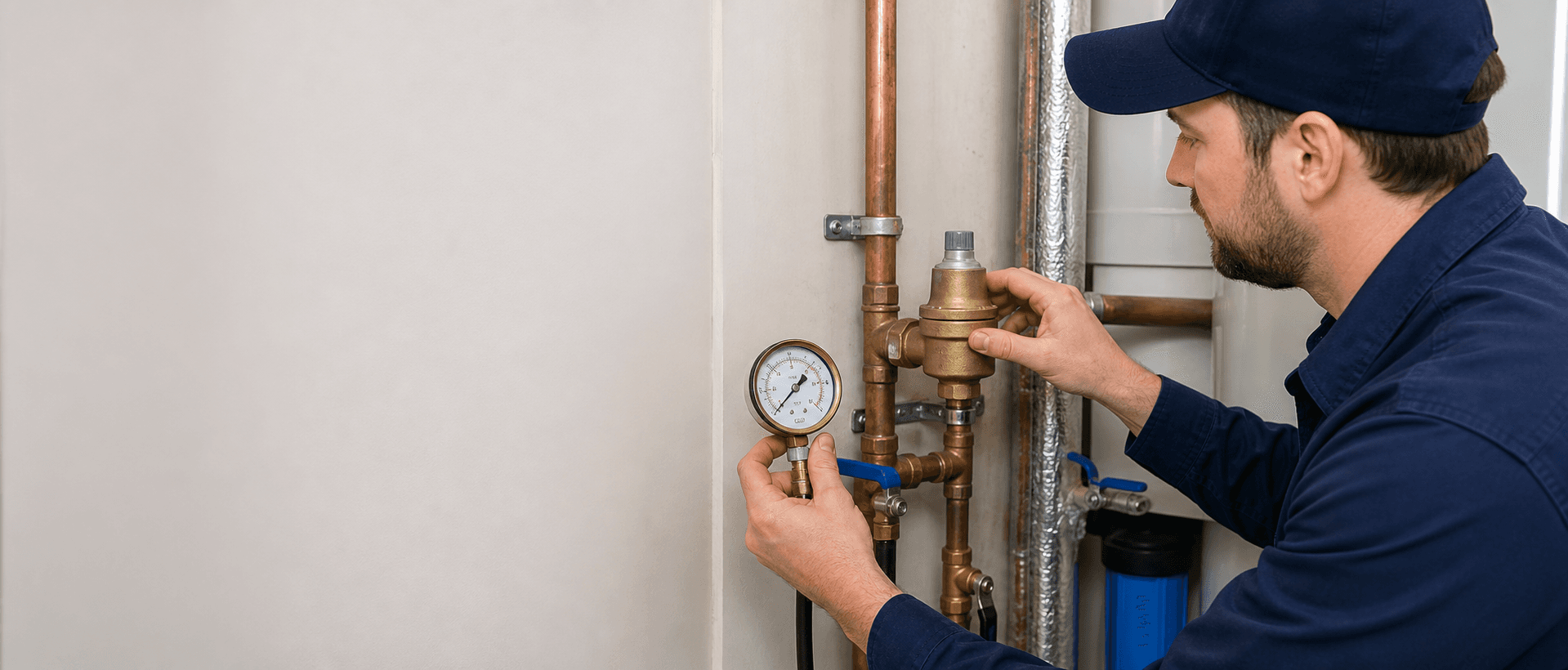
The primary fix is installing water-hammer arrestors — small air-cushioned devices that absorb the shock — at the fixtures that bang, especially the washing machine and dishwasher. If the whole house hammers, the underlying cause is often high water pressure, which a pressure-reducing valve (PRV) corrects. Securing loose pipe straps stops the rattling that amplifies the noise.
Arrestors give the stopped water somewhere to push, cushioning the spike. They thread onto the appliance supply or install in the line. Older homes sometimes had air chambers (capped vertical pipe stubs) that have since filled with water and stopped working — arrestors are the modern replacement.
If the hammering is house-wide, check the pressure: high static pressure makes every valve closure worse. See water pressure regulator (PRV): code, settings, cost for the pressure side of the problem.
Why you shouldn't ignore it
Each water-hammer event is a pressure spike well above normal operating pressure. Repeated thousands of times over years, those spikes loosen threaded joints, stress solder connections, and can eventually cause a leak — so chronic water hammer is worth fixing not just for the noise but to protect the plumbing.
The damage is cumulative, not sudden. A house that hammers for years is slowly working its fittings loose, and the failure tends to show up as a leak at a stressed joint. Fixing the hammer protects the system.
If you're also seeing pressure problems elsewhere — see low water pressure in the whole house — the PRV may be the common thread, and our Water main repair in Bellevue page covers supply-side work.
Sources
Every fact in this guide cites a verifiable public source. If you find a number we got wrong, email dispatch@bellevueplumberpro.com.
→Need help with this in your home? See our Water pressure repair in Bellevue page for pricing, our diagnostic process, and how same-day service works across the Eastside.
— Bridge to service
We dispatch for this across Lake Hills, Crossroads, and Eastgate — see your neighborhood page for local response times and recent jobs.
Related services: Leak Detection and Pipe Repair.
Related guides