Why is my faucet handle loose?
Usually a backed-out set screw — sometimes a loose handle-retaining nut or a worn stem or cartridge. The set screw is the cause in most cases.
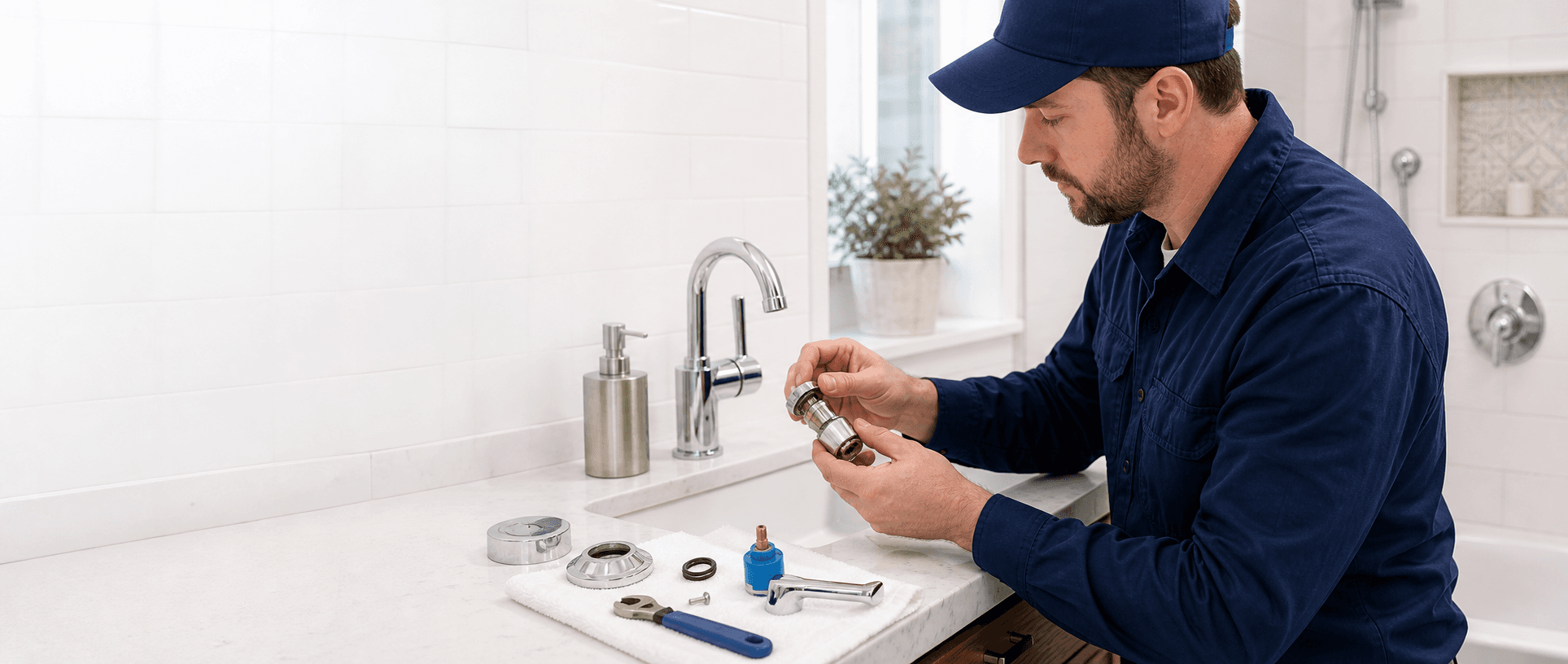
A loose or wobbly faucet handle is a mechanical looseness, not a water leak, and it is usually fixed by tightening the set screw that holds the handle onto the stem. Most faucet handles are held by a small set screw hidden under a decorative cap or on the back of the handle; turning it clockwise with a hex wrench or screwdriver snugs the handle back against the stem. When the handle has no visible set screw, it is either held by a hidden screw under a pop-off cap, threads directly onto the stem, or is retained by a loose cartridge clip. If tightening does not hold, the stem or cartridge is worn and needs replacing — a handle that wobbles after every tightening points to internal wear rather than a loose screw.
Last reviewed: 2026-08-18
A loose faucet handle is caused by a backed-out set screw, a loose handle-retaining nut, or a worn stem or cartridge — the screw is the cause in most cases.
A faucet handle goes loose for one of three reasons, and the set screw is the first to check. The handle is not glued to the stem — it is held by a small set screw (usually a hex or flathead screw) that presses against the stem, and that screw backs out over months of daily use until the handle wobbles. Tightening it is the fix in the majority of cases, which is why the set screw is always the first thing to inspect.
The second cause is a loose handle-retaining nut. Beneath the handle, a small nut or cap threads onto the stem to hold the handle assembly down, and when it loosens the handle lifts and rocks even if the set screw is snug. This nut sits under the handle and is reached after the handle is pulled off, so it is the second stop when tightening the set screw does not end the wobble.
The third cause is internal wear in the stem or cartridge. The stem is the part the handle turns, and a worn stem or a worn cartridge seal lets the handle rock on its axis no matter how tight the screw and nut are. A handle that is re-tightened and wobbles again within days is usually pointing at a worn stem or cartridge, not a screw that keeps coming loose.
The fix is progressive: tighten the set screw, then the retaining nut, and only then consider replacing the stem or cartridge. Each step is cheap and takes minutes, and stopping at the set screw solves most cases, which keeps a wobbling handle from becoming a bigger repair than it is.
This happening in your home right now? A licensed plumber can talk you through the next step on the phone — 24/7, and the call is free.
Call a plumberFind the set screw — usually under a small cap on top or on the back of the handle — and turn it clockwise with a hex wrench or screwdriver until the handle seats firmly.
The set screw is the small screw that locks the handle onto the stem, and it is hidden in one of two places: under a decorative cap on the very top of the handle, or on the back of the handle facing the wall. Pry the cap off with a fingernail or a small flat screwdriver to expose the screw, or feel along the back of the handle for the recessed hole. The screw is small — usually a 2.5 mm or 3/32-inch hex, or a small flathead — so a matching tool matters.
Turn the set screw clockwise to tighten it. A quarter- to half-turn is usually enough to reseat the handle against the stem, and the handle should stop wobbling immediately. Keep the tool seated in the screw to avoid stripping the small socket, and stop when the handle is snug rather than forcing it — over-tightening can strip the threads in a plastic handle or crack a porcelain one.
If the handle is still loose after tightening, the screw is either not engaging the stem or the handle-retaining nut beneath is the real problem. Pull the handle off after loosening the set screw and check the nut that threads onto the stem; tightening that nut removes the lift that lets the handle rock. Reassemble by seating the handle, aligning the screw flat against the stem, and snugging the set screw.
A handle that tightens and stays fixed is done. A handle that wobbles again within days after a clean tightening is the signal to stop re-tightening and look at the stem — repeated loosening means the screw or the stem threads are worn and the part, not the adjustment, is failing.
A faucet handle with no visible set screw is held by a hidden screw under a pop-off cap, threads directly onto the stem, or is retained by a cartridge clip — each tightens differently.
When there is no set screw in sight, the handle is held one of three ways, and the first is a hidden screw under a cap. Many single-handle faucets hide the screw under a small cap or plug on top of the lever — often marked with the hot/cold indicator — that pops off to reveal a screw, so a handle with no visible screw usually has a cap waiting to be pried loose. Remove the cap and the screw is underneath.
The second way is a handle that threads directly onto the stem. Some faucets use no screw at all — the handle itself screws onto a threaded stem, so the fix is to turn the handle clockwise by hand until it seats, then give it a firm final twist. These are less common on modern fixtures but still appear on older and budget faucets, and a handle that keeps unscrewing is a sign the stem threads are worn.
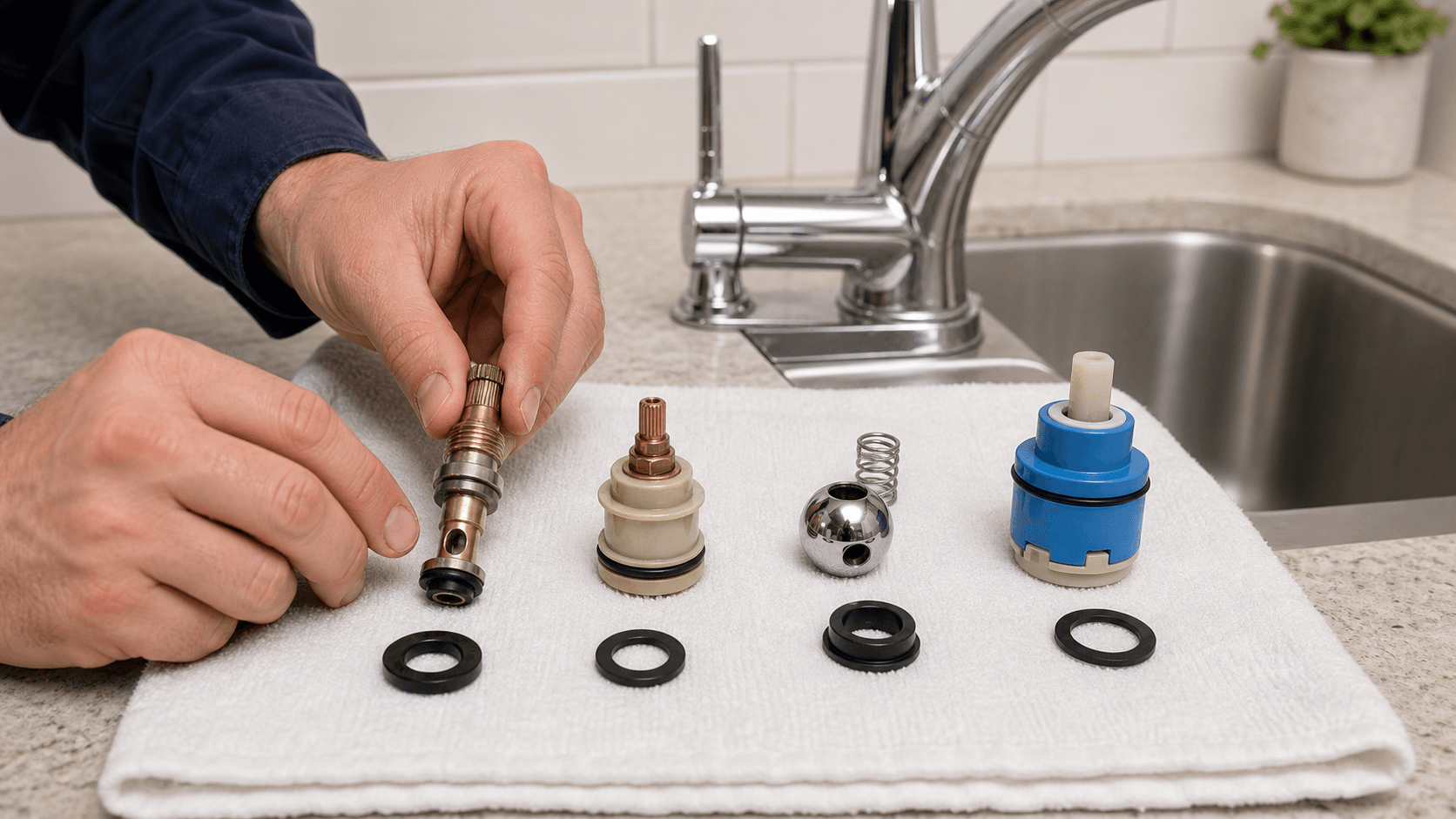
The third way is a cartridge clip. On cartridge faucets, a small U-shaped metal clip holds the cartridge — and therefore the handle — in place, and when that clip is loose or missing the handle rocks even though there is no screw to tighten. Pull the handle, check the clip, and reseat or replace it if it is bent, which locks the handle assembly back down.
The no-set-screw fix is therefore a search before it is a repair: check for a hidden cap, try turning the handle by hand, and inspect the cartridge clip. Most no-set-screw wobbles resolve with one of these, and only a handle that stays loose through all three points to a worn stem or cartridge that should be replaced rather than tightened.
A kitchen faucet handle loosens for the same reasons as a bathroom one — a backed-out set screw or worn stem — but kitchen handles are used far more often, so they wear out faster.
The kitchen faucet is the most-used fixture in the house, and that use is exactly why its handle loosens sooner than a bathroom handle. The set screw that holds the handle to the stem is subject to every turn of the tap — dozens of times a day — and the constant motion works the screw loose faster than on a fixture used a few times daily. The same repeated turning also wears the stem and cartridge seals sooner.
The fix is identical to a bathroom faucet, with one kitchen-specific note: pull-down and pull-out spray faucets put extra load on the handle because the spray head and hose run through it. A loose handle on a kitchen faucet with an integrated spray is more often the set screw backed out under the spray's weight and movement, but it can also be a worn handle body where the spray hose rides, in which case the handle itself, not just the screw, is the worn part.
Tightening the set screw is the first move, but on a kitchen faucet it is worth checking whether the looseness is the handle or the whole spout. A handle that wobbles independently is the set screw; a spout that also wiggles at its base is a separate base O-ring or mounting problem. Distinguishing the two keeps a simple set-screw fix from being misread as a bigger faucet issue.
The practical difference for a kitchen faucet is cadence: tighten it, and if the wobble returns inside a few weeks, the screw or stem is worn past re-tightening. At that point a new handle or cartridge is the durable fix, and a well-used kitchen faucet often reaches that point sooner than a bathroom fixture simply because it works harder.

Replace the handle when the set screw threads are stripped, the handle body is cracked, or the stem is worn — a handle that keeps loosening after every tightening is worn out.
Tightening solves most loose handles, but three conditions end the tightening cycle. The first is a stripped set screw or its threaded hole — once the small threads in a plastic handle are stripped, no amount of turning will hold the screw, and the handle must be replaced. Over-tightening is the usual cause, which is why the screw is snugged rather than forced.
The second is a cracked handle body. A porcelain, plastic, or metal handle that has a hairline crack from years of use will not seat firmly no matter how the screw is tightened, because the cracked body flexes around the stem. A crack at the base of the handle is a clear signal to replace it, and it is a cheap part — a replacement handle runs about $10 to $40 depending on brand.
The third is a worn stem or cartridge. When the handle is tight on its screw but still rocks, the wear is inside — the stem is sloppy in its seat or the cartridge is worn — and the fix is a new stem or cartridge rather than a tighter screw. A cartridge runs roughly $15 to $60, and on a modern faucet replacing it restores the firm feel and often fixes a developing drip at the same time.
The judgment is about where the looseness lives. A handle that tightens and stays is a set-screw job; a handle that keeps coming loose, is cracked, or rocks on a tight screw is a replacement — handle, stem, or cartridge. When the fixture is old and the part is uncertain, booking faucet and fixture repair in Bellevue gets the right part fitted the first time.
Tighten the set screw first, check for a hidden cap if there is no screw, and replace the stem or cartridge if the handle still wobbles — parts are $10 to $60.
The first step for any loose faucet handle is the set screw. It lives under a decorative cap on top of the handle or on the back facing the wall, and a clockwise quarter-turn with a hex wrench or small screwdriver usually fixes the wobble. If there is no visible screw, pry off the cap, try turning the handle by hand, or check the cartridge clip — one of those three holds every no-set-screw handle.
A handle that wobbles after tightening points to a worn stem or cartridge rather than a loose screw. Tighten first, and if the wobble returns within days, stop re-tightening and replace the worn part — a cartridge is $15 to $60 and a replacement handle $10 to $40, so the repair stays inexpensive either way. Re-tightening a stripped or worn part repeatedly only damages it further.
Kitchen faucet handles loosen faster than bathroom ones because they are turned far more often each day, and pull-down spray faucets add load through the handle. The fix is the same set-screw first approach, but on a kitchen faucet also check whether the whole spout wobbles, because a moving spout is a separate base-seal or mounting issue rather than a handle problem.
None of these fixes require shutting off the water, because a loose handle is a mechanical adjustment above the valve, not a plumbing repair. Shutoff is only needed if you proceed to replace the stem or cartridge, and at that point the job is better handled as faucet and fixture repair in Bellevue where the part is matched and fitted under warranty.
For a layered answer: how do you fix a loose faucet handle with no set screw on a single-handle kitchen faucet in an older Bellevue home? Pop the cap off the top of the lever to reveal the hidden screw, or turn the handle clockwise if it threads onto the stem; if it still rocks, the cartridge is worn and a $15–$60 replacement restores the firm feel.
A loose handle is usually a free set-screw fix; the cost climbs only when the handle or cartridge is worn.
Every fact in this guide cites a verifiable public source. If you find a number we got wrong, email dispatch@bellevueplumberpro.com.
Need help with this in your home? See our Faucet and fixture repair in Bellevue page for pricing, our diagnostic process, and how same-day service works across the Eastside.
Usually a backed-out set screw — sometimes a loose handle-retaining nut or a worn stem or cartridge. The set screw is the cause in most cases.
Find the screw — usually under a small cap on top of or on the back of the handle — and turn it clockwise with a hex wrench or screwdriver until the handle seats firmly.
It's held by a hidden screw under a pop-off cap, threads directly onto the stem, or is retained by a cartridge clip — each type tightens differently, so identify which before forcing anything.
When the set screw threads are stripped, the handle body is cracked, or the stem is worn — a handle that keeps loosening after every tightening is worn out, not just loose.