Home/Learn/Gas lines & safety/Adding a gas line for an appliance in Bellevue: permits, sizing, and why it is a pro job
Gas
Adding a gas line for an appliance in Bellevue: permits, sizing, and why it is a pro job
Adding or extending a gas line for an appliance — a range, a dryer, a gas water heater, an outdoor grill, a fireplace — is licensed, permitted, inspected work, and it is never a do-it-yourself project. In Bellevue, gas piping requires a permit and a registered contractor under the city's permitting code. The pipe itself has to be sized from the total connected BTU load of the appliances it serves and the length of the run, using the fuel-gas code's sizing tables (the International Fuel Gas Code and NFPA 54); you do not pick a pipe size by guessing. Most appliances need a sediment trap, also called a drip leg, installed downstream of the appliance shutoff per IFGC §408.4 to catch debris and moisture before it reaches the appliance valve — with specific exemptions for appliances such as ranges, clothes dryers, and outdoor grills. Before the gas is ever turned on, the new piping has to pass a pressure test to prove it holds, and the work has to be inspected. This guide explains the permit, the sizing logic, the sediment trap, the pressure test, connecting common appliances, and why every step belongs to a licensed professional.
No. Adding or extending a gas line is permitted, licensed, and inspected work, not a do-it-yourself project — the consequences of an error are an explosion, fire, or slow leak, so a licensed professional does it.
Installing or extending a gas line is not a homeowner project, and the reason is the same one that governs every gas situation: the cost of a mistake is catastrophic. A joint that is not gas-tight, a line sized too small for its load, a missing sediment trap, or piping put into service without a pressure test can produce a leak that fills a space to its explosive range, and natural gas ignites readily. This is why gas piping is treated everywhere as permitted, licensed, and inspected work rather than something to take on with a wrench and a tutorial.
The work involves judgments and procedures that are not obvious from the outside. The pipe has to be sized correctly to the appliance load and run length, the right materials and fittings used and assembled gas-tight, required components like sediment traps and shutoffs installed where code calls for them, and the finished system pressure-tested to prove it holds before any gas flows. Each of those steps is a place where a small error becomes a dangerous one, and none of them is something to improvise.
The licensing and permit requirements exist precisely to keep this work in qualified hands and under an independent check. A licensed contractor who does gas work knows the sizing tables, the code requirements, and the testing procedure, and the permit triggers an inspection that verifies the installation before it is energized. That combination — a qualified installer plus an independent inspection — is the system that prevents the leaks that gas-safety guidance is otherwise about responding to.
So the honest answer to whether you can install your own gas line is no, and not because of red tape but because of physics. Adding a line for a new range, moving a dryer, or running gas to a water heater or grill is all licensed, permitted work, and the right move is to have a licensed professional do it correctly and get it inspected. The rest of this guide explains what that correct installation involves so you know what you are paying for and why each step matters.
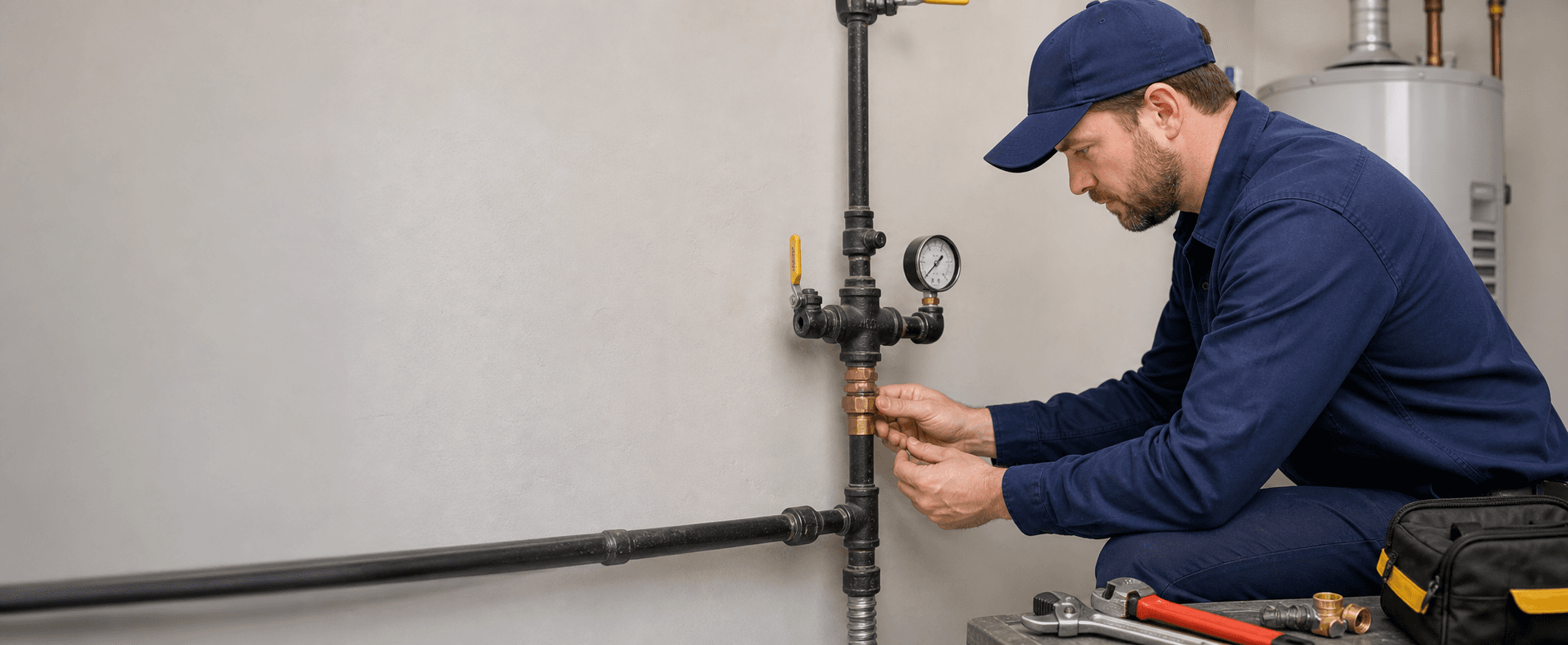
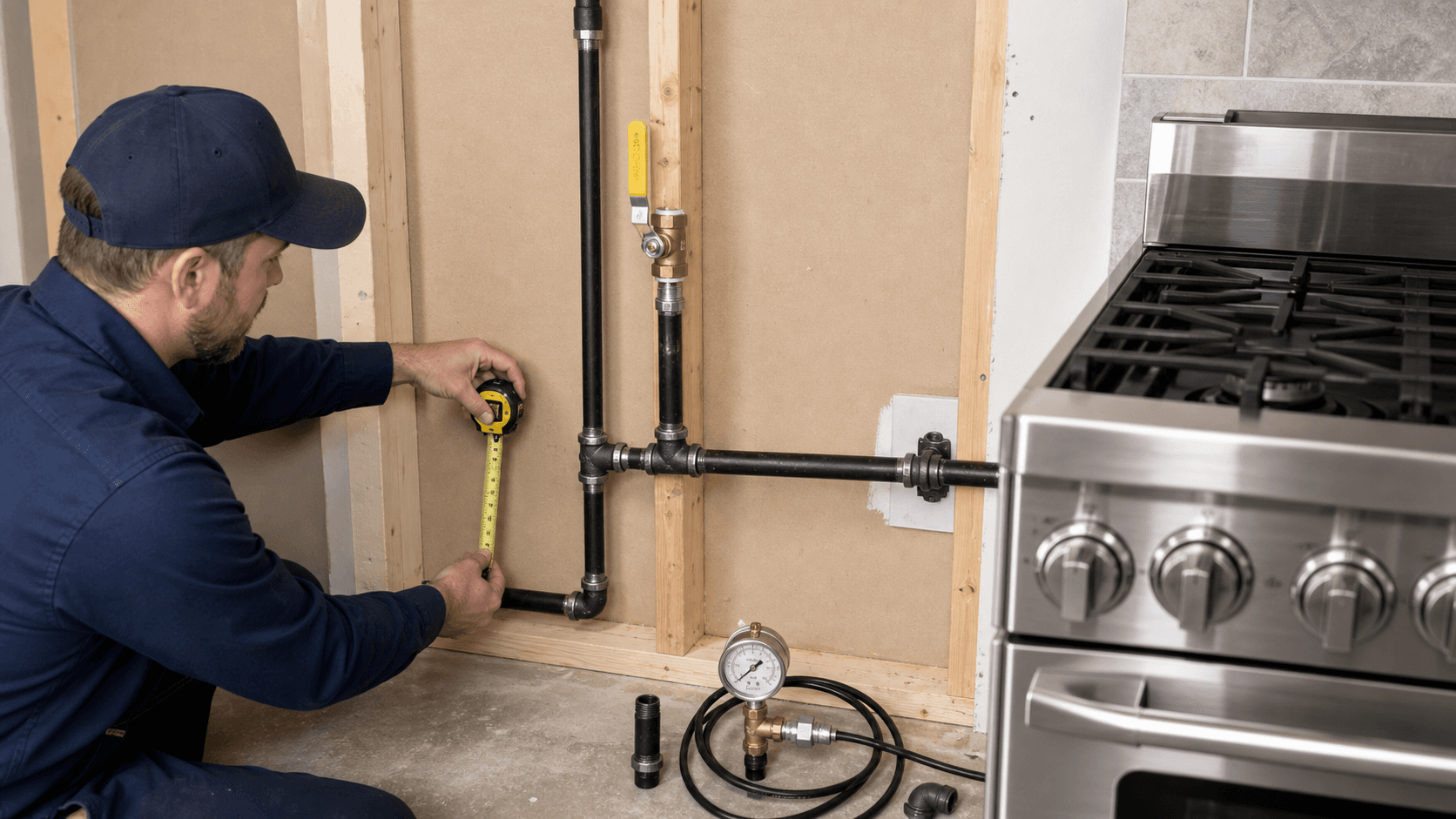
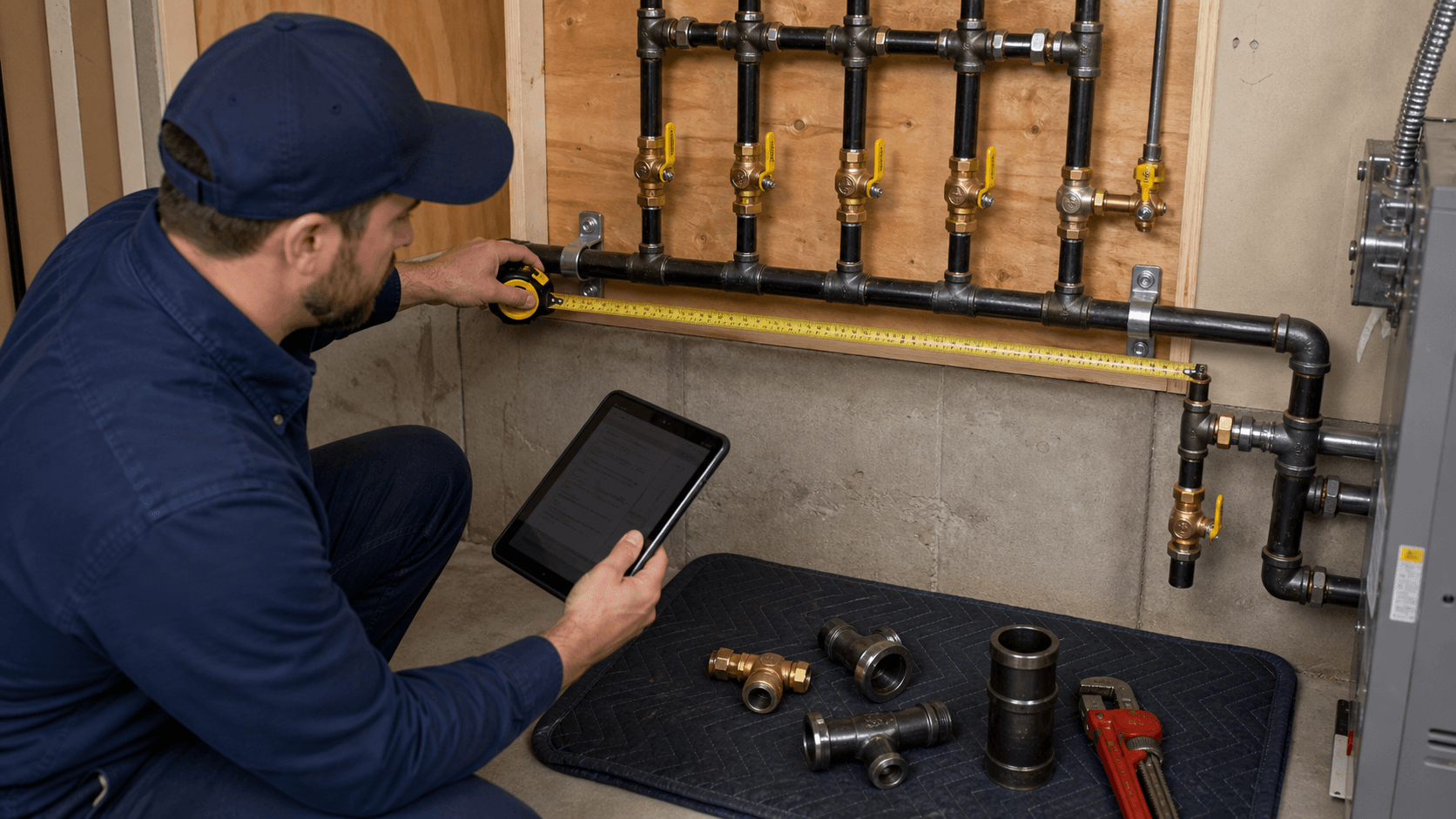
Gas appliance lines are sized, permitted, pressure-tested, and inspected work.
This happening in your home right now? A licensed plumber can talk you through the next step on the phone — 24/7, and the call is free.
Yes. Gas piping in Bellevue requires a permit and a registered contractor under the city's permitting code (BCC 23.05.090). The permit triggers the inspection that confirms the work is safe before the gas is turned on.
Adding a gas line in Bellevue is permitted work, and that is not a formality you can skip. The city's permitting code (BCC 23.05.090) requires a permit for gas piping work, and the work has to be done by an appropriately licensed and registered contractor. The permit is what brings the city's inspection into the process, and the inspection is the independent confirmation that the new piping was sized, assembled, and tested correctly before it is put into service.
The permit requirement is tied to the hazard, not to the size of the job. Running a new branch to a single appliance is still gas piping, and it still has to be done to code and inspected, because a small line installed wrong is no less dangerous than a large one. A contractor who proposes to add a gas line without pulling a permit is cutting exactly the corner the permit exists to prevent, and unpermitted gas work is both unsafe and a liability that surfaces at resale or with insurers.
What the permit and inspection protect is the homeowner. The inspection verifies that the line is correctly sized for its load, that the joints and materials are right, that required components like sediment traps and shutoffs are present, and that the system has passed a pressure test — the things a homeowner has no way to confirm on their own. Permitted, inspected gas work is documented work that holds up and, more importantly, is work that has been checked by someone other than the person who installed it.
Because permit specifics and fees are set by the city and can change, the practical step is to have the licensed contractor handle the permit as part of the job and to confirm current requirements with the City of Bellevue rather than relying on a fixed figure. A legitimate gas-line installation includes the permit, the registered contractor, and the inspection as a matter of course. The appliance-connection side of that work — water heaters and gas appliances — is handled as water heater and gas appliance service in Bellevue.
How is gas pipe sized?
From the total connected BTU load it serves and the run length, read against the fuel-gas code sizing tables (IFGC / NFPA 54). You do not guess a pipe size — it is calculated.
Gas pipe is not sized by eye or by matching whatever is already there; it is calculated, and the calculation has two main inputs. The first is the total connected load, measured in BTU per hour, of all the appliances the pipe will serve — a range, a dryer, a water heater, and a furnace each have a rated input, and a line has to carry the sum of what is downstream of it. The second is the length of the run, including the fittings, because gas loses pressure as it travels and a longer run needs a larger pipe to deliver the same flow.
Those two inputs are read against the sizing tables in the fuel-gas code — the International Fuel Gas Code and NFPA 54, the National Fuel Gas Code. The tables cross-reference the load (in BTU/hr or cubic feet per hour) against the developed length of the run and the pipe material to give the required pipe diameter that will deliver adequate gas at the right pressure to every appliance. The size is whatever the table specifies for that load over that length; it is a lookup, not a judgment call, which is one reason the work belongs to someone who knows the tables.
Getting the size right matters in both directions. A pipe sized too small starves the appliances, so a range will not reach temperature, a water heater struggles, or a furnace short-cycles — and adding an appliance to an already-marginal line can push the whole system below what it can deliver. Oversizing wastes money but is not dangerous in the same way; undersizing causes the performance and, in some configurations, safety problems that the code sizing is designed to prevent.
This is why adding an appliance is not just a matter of tapping into the nearest gas line. The new total load over the run length has to be checked against the tables to confirm the existing pipe can carry it, and the line may need to be upsized to handle the added appliance. That calculation — total connected BTU load, run length, the IFGC/NFPA 54 tables — is part of what a licensed professional does on a gas-line job, and it is why the sizing cannot be left to guesswork.
Gas pipe size comes from BTU load and run length, not guesswork.
What is a sediment trap (drip leg), and is it required?
A short capped pipe stub below the line at the appliance that catches debris and moisture before the appliance valve. Required by IFGC §408.4, with exemptions for ranges, dryers, and outdoor grills.
A sediment trap, also called a drip leg, is a simple but important fitting on a gas appliance connection. It is a short length of pipe that drops down below the line just before the appliance, capped at the bottom, positioned so that any solid debris, scale, or moisture carried in the gas falls into and stays in the trap rather than continuing on into the appliance's control valve. It is a small piece of protection for the appliance's gas valve, which can be fouled or damaged by debris that the trap is there to catch.
The sediment trap is required by code — specifically IFGC §408.4 — and the requirement is part of why appliance connections are not just a matter of running pipe to the appliance and screwing on a connector. The code calls for the trap to be installed downstream of the appliance shutoff valve, so the order on the connection is the line, then the shutoff, then the sediment trap, then the appliance. Installing it in the wrong place or omitting it is a code violation that an inspection will catch.
The requirement is not universal, though, and the exemptions are specific. Under IFGC §408.4, certain appliances are exempted from the sediment-trap requirement — these include ranges, clothes dryers, and outdoor grills, among others, where the code recognizes the trap is not needed. So whether a given connection needs a drip leg depends on the appliance: a water heater or furnace connection generally needs one, while a range, dryer, or outdoor grill connection may be exempt.
Knowing which appliances need a trap and where exactly it goes is part of doing an appliance connection to code, and getting it wrong is one of the common reasons a gas inspection fails. A licensed professional installs the sediment trap where the code requires it, in the correct position downstream of the shutoff, and omits it where the appliance is exempt — which is one more piece of why the connection is licensed, inspected work rather than a do-it-yourself hookup.
Why a pressure test is required before the gas is turned on
New gas piping must be pressure-tested and proven to hold before any gas flows, so a leak is caught with test air rather than live gas. The test confirms the line is gas-tight.
Before any new gas piping is put into service, it has to be pressure-tested — pressurized and observed to confirm it holds without losing pressure, which proves the system is gas-tight. The logic is straightforward and important: you find a leak in the piping while it is filled with harmless test pressure, not after it is filled with live, flammable gas. A line that holds the test pressure is sealed everywhere; a line that loses pressure has a leak that has to be found and fixed before the test is repeated.
The pressure test is a defined procedure, and the specific test pressure and how long the line must hold it are set by the applicable code and the inspector for the job rather than being a single universal number. What is consistent is the principle: the new piping is isolated, brought up to a test pressure, and watched to confirm it does not drop over the required period. Only piping that passes that test is allowed to be connected and have gas introduced.
This step is the reason a gas installation cannot be judged by appearance. A connection can look perfectly tight and still leak, and the only way to know the system is sealed is to test it under pressure and confirm it holds — which is not something a homeowner is equipped to do correctly or to have independently verified. The pressure test, performed by the installer and confirmed at inspection, is the proof that the line is safe to energize.
The pressure test is also the natural endpoint of the whole licensed-and-inspected process: the line is sized to its load, assembled with the right components, traps and shutoffs installed where code requires, and then tested and inspected before gas flows. Skipping or faking the test removes the one check that catches the leak before it becomes dangerous, which is exactly why it is part of permitted work and why a licensed professional does it. Appliance connection and the work that follows the test are handled as water heater and gas appliance service in Bellevue.
Connecting a gas water heater, range, or dryer
Each needs a shutoff, a connector, and a sediment trap where required, and the line must carry the added load. A water heater generally needs a drip leg; a range or dryer may be exempt.
Connecting a specific appliance brings the general rules together into one job, and the appliance type shapes the details. Every connection needs an appliance shutoff valve so the appliance can be isolated, an approved connector to the appliance, and — depending on the appliance — a sediment trap downstream of the shutoff. The line feeding the connection also has to be able to carry that appliance's BTU load on top of whatever else it serves, which is the sizing check applied to the actual addition.
A gas water heater is a common connection and one that generally needs a sediment trap, because it is not among the appliances exempted by IFGC §408.4. The water heater's input load is added to the line it draws from, the connection gets its shutoff and drip leg, and the work is part of a water-heater installation rather than a separate gas job — which is one reason water-heater and gas-appliance work are handled together. The whole connection has to be sized, trapped, tested, and inspected like any gas work.
A range and a clothes dryer are both among the appliances that IFGC §408.4 exempts from the sediment-trap requirement, so their connections may not need a drip leg — but they still need the correct shutoff, an approved appliance connector rated for the appliance, and a line sized to carry their load. Adding a gas range where there was none, or converting from electric, means confirming the line can deliver the range's BTU input over the run length, which often is the part that determines whether the existing pipe is adequate.
Across all three, the pattern is the same: confirm the line can carry the added load, install the shutoff and the correct connector, add a sediment trap where the appliance requires one, pressure-test the new piping, and have it inspected. None of these is a plug-and-play swap, and the appliance-specific details — which need a trap, what connector is correct, whether the line must be upsized — are exactly what makes the connection licensed, inspected work handled as water heater and gas appliance service in Bellevue.
Why this is always a licensed-pro job
Sizing, gas-tight assembly, required components, the pressure test, and the inspection are each places where an error becomes a leak. There is no safe do-it-yourself gas installation — the whole job belongs to a licensed professional.
Every step in adding a gas line is a place where a mistake turns into a hazard, which is the through-line that makes the whole job a licensed professional's work. Size the pipe wrong and an appliance starves or a system runs unsafe; make a joint that is not gas-tight and you have a slow leak; omit a required sediment trap or shutoff and you fail code and lose a layer of protection; skip the pressure test and you energize a line whose leaks you have never checked for. None of these errors announces itself until gas is flowing.
That is why gas piping is permitted, licensed, and inspected rather than left to the homeowner, and why the requirements are not negotiable based on how small the job seems. A short branch to a single appliance still has to be sized, assembled correctly, fitted with the right components, tested, and inspected, because the danger does not scale down with the length of the pipe. The licensing puts the work in qualified hands and the permit puts an independent inspection on it, and both are essential precisely because the failure mode is an explosion or fire.
The contrast with a suspected leak is instructive. If you ever do smell gas — during or after any work, or at any other time — the homeowner action is not to investigate or fix but to evacuate and call from outside, as covered in our gas leak guide. The same principle that makes a leak a get-out-and-call situation makes the installation a licensed-pro situation: gas does not forgive the kind of trial and error that other home plumbing tolerates.
So the practical takeaway for adding a gas appliance is to treat it as the licensed, permitted, inspected job it is from the start. A licensed professional sizes the line, pulls the permit, assembles and traps the connection to code, pressure-tests the piping, and gets it inspected before the gas is turned on. That is what the price of a proper gas-line job buys, and the appliance side of it is handled as water heater and gas appliance service in Bellevue.
Common questions about adding a gas line for an appliance
Yes you need a permit; no you cannot safely DIY it; a sediment trap is required on most appliances but not ranges, dryers, or grills; pipe is sized from BTU load and length; pressure-tested first.
Yes, you need a permit to add a gas line in Bellevue — gas piping requires a permit and a registered contractor under the city's permitting code (BCC 23.05.090), and the permit triggers the inspection that confirms the work is safe before gas flows. And no, you cannot safely install a gas line yourself: it is licensed, permitted, inspected work because a sizing error, a leaky joint, a missing component, or an untested line can cause an explosion, fire, or slow leak. The whole job belongs to a licensed professional.
A sediment trap, or drip leg, is required on most appliance connections by IFGC §408.4, installed downstream of the appliance shutoff to catch debris and moisture before they reach the appliance valve. But the requirement has specific exemptions — ranges, clothes dryers, and outdoor grills are among the appliances exempt from needing one — so whether a connection needs a trap depends on the appliance. A gas water heater connection generally needs a drip leg; a gas range connection may not.
Gas pipe is sized from the total connected BTU load of the appliances it serves and the developed length of the run, read against the fuel-gas code sizing tables (the IFGC and NFPA 54). You do not guess a size or just match the existing pipe — the table gives the required diameter for that load over that length, and adding an appliance means rechecking whether the existing line can carry the new total or has to be upsized. A range connection follows the same logic: confirm the line delivers the range's BTU input over the run.
Yes, a pressure test is required before the gas is turned on: the new piping is pressurized and observed to confirm it holds, so any leak is caught with test pressure rather than live gas. The specific pressure and duration are set by the applicable code and inspector, but the principle is constant — only piping proven to hold is connected and energized. The test and the inspection together are the proof the line is gas-tight, and the appliance work is handled as water heater and gas appliance service in Bellevue.
Sources
Every fact in this guide cites a verifiable public source. If you find a number we got wrong, email dispatch@bellevueplumberpro.com.
Need help with this in your home? See our Gas line installation and repair in Bellevue page for pricing, our diagnostic process, and how same-day service works across the Eastside.
Adding a gas line for an appliance in Bellevue — questions homeowners ask
QUESTION01
Can I install a gas line myself in Bellevue?
No. Adding or extending a gas line is permitted, licensed, and inspected work — the consequences of an error are an explosion, fire, or slow leak. Bellevue requires a permit and a registered contractor (BCC 23.05.090), and the permit triggers the pressure-test inspection.
QUESTION02
How is gas pipe size determined?
Calculated, never guessed: from the total connected BTU load and the run length, read against the fuel-gas code sizing tables (IFGC / NFPA 54).