What should I do if I smell gas in my house?
Get everyone out immediately without touching any light switch, phone, or appliance. Once outside and away, call 911 or Puget Sound Energy at 1-888-225-5773. Do not go back in until cleared.
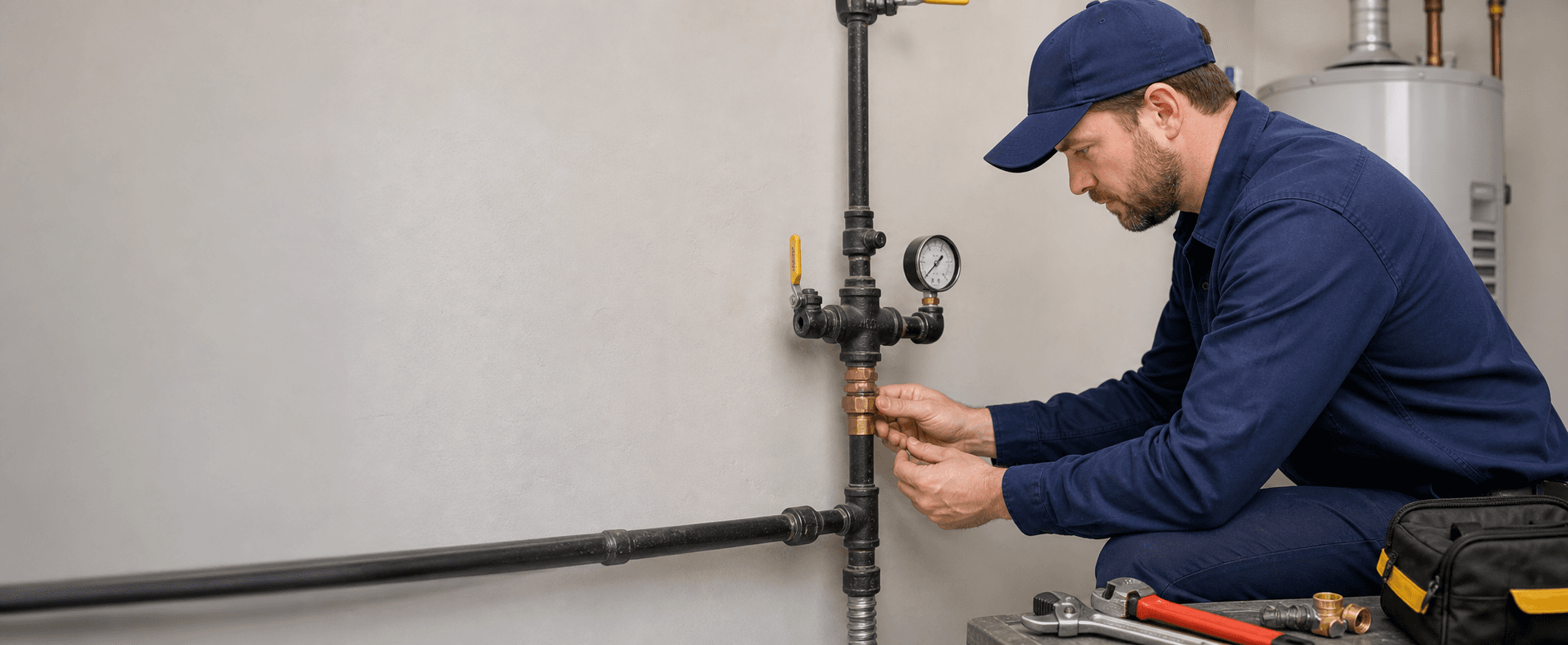
A suspected gas leak is a get-out-now situation, not a troubleshooting one. Natural gas is odorless, so utilities add mercaptan to give it a deliberate rotten-egg smell as a warning; if you smell that, or hear hissing, or see bubbles in standing water near a gas line, the only correct homeowner action is to leave. Get everyone out of the building without touching any electrical switch, phone, or anything that could spark, and once you are outside and away, call 911 or Puget Sound Energy's emergency line at 1-888-225-5773 — PSE responds around the clock at no charge. Methane, the main component of natural gas, is flammable in air between roughly 5 and 15 percent, which is why a single spark in a gas-filled space is the danger. A gas leak is a different hazard from carbon monoxide, and a carbon monoxide detector cannot sense a natural gas leak. After the utility makes the situation safe, a licensed professional repairs the line — gas work is never a do-it-yourself job. This guide covers exactly what to do, what gas smells like, the one thing never to do, the gas-versus-CO distinction, who to call in Bellevue, and why gas work is always a licensed-pro job.
Last reviewed: 2026-06-04
Get everyone out of the building immediately without touching any light switch, phone, or appliance. Once outside and away, call 911 or Puget Sound Energy at 1-888-225-5773 — free, 24/7. Do not go back in.
If you smell gas, the response is simple and absolute: leave. Get every person and pet out of the building right away, and do it without stopping to investigate, turn things off, or gather belongings. A gas leak is not a problem to diagnose from inside the house; the only safe place to be is outside and away from the building, because a gas-filled space can ignite from a single spark and the time you spend looking for the source is time you are inside a potential explosion.
On your way out, do not touch anything that could create a spark — no light switches, no thermostats, no appliances, no garage-door opener, and no phone while you are still inside. The act of flipping a switch or pressing a button can produce a tiny electrical arc, and in an atmosphere with enough gas, that arc is all it takes. Leave doors open behind you if it is easy to do so on your way out, but do not go out of your way to open windows or do anything that keeps you in the building longer.
Once you are outside and a safe distance away, make the call. Dial 911 or Puget Sound Energy's emergency line at 1-888-225-5773 from outside the building — from a neighbor's house, the street, or your cell phone once you are clear. PSE responds to gas-leak reports around the clock at no charge, and the dispatcher or 911 will tell you what to do next. The key is that the call happens from outside, after you have gotten out, never from inside the building you smell gas in.
Do not go back inside until the utility or emergency responders tell you it is safe. It is tempting to return for a pet, a phone, or to check the stove, but a gas leak can build to a dangerous concentration quickly, and re-entering is exactly the risk the evacuation was meant to remove. The professionals who respond have the instruments to measure the gas and the training to make the building safe; the homeowner's entire job is to get out, stay out, and call from outside.

This happening in your home right now? A licensed plumber can talk you through the next step on the phone — 24/7, and the call is free.
Call a plumberLike rotten eggs or sulfur — natural gas is odorless, so utilities add mercaptan as a deliberate warning smell. You may also hear hissing near a gas line or appliance, or see bubbles in standing water.
Natural gas as delivered to homes is colorless and naturally odorless, which would make a leak undetectable by smell if nothing were done about it. To solve that, gas utilities add a chemical odorant — methyl mercaptan and related compounds — that gives the gas a strong, unmistakable smell of rotten eggs or sulfur. That smell is engineered as a safety warning, so a sudden rotten-egg odor where there should not be one is the most common way people detect a leak.
The smell is the primary sign, but it is not the only one. A gas leak can also announce itself by sound: a hissing or whistling noise near a gas line, meter, or appliance connection is gas escaping under pressure through a small opening. And it can show itself visually — bubbles rising in standing water over or near a buried gas line, or a patch of dead or discolored vegetation above an underground line, can both indicate gas escaping into the ground.
Any one of these signs is enough to act on, and you should not wait for confirmation from a second one. The rotten-egg smell is the most reliable and the one most people will notice first, but hissing near an appliance or bubbles in water near a gas line are equally valid reasons to evacuate and call. The safe assumption when any of these appears is that there is a leak, and the response is the same as for the smell: get out and call from outside.
It is also worth knowing that the same odorant that makes leaks detectable can fade in some situations, and that people vary in their ability to smell it, so a faint or uncertain odor still warrants action rather than dismissal. If you think you smell gas, treat it as gas. The cost of evacuating and calling over a false alarm is a few minutes and a free utility visit; the cost of ignoring a real leak is not comparable, which is why the smell is meant to be acted on, not analyzed.
Never create a spark or flame where you smell gas — no light switches, no phone, no matches, no starting a car in an attached garage. Methane is flammable from 5 to 15 percent in air.
The single rule that underlies everything else is to create no source of ignition in a space where you smell gas. That means no flames — no matches, no lighters, no candles, no relighting a pilot — and no sparks, which is the part people forget. Ordinary electrical actions create tiny sparks: flipping a light switch, unplugging or plugging in a cord, pressing a doorbell, using a phone or landline, and turning a thermostat up or down can each produce an arc capable of igniting gas.
The reason this is so strict is the flammability range of methane, the main component of natural gas. Methane burns when it makes up between roughly 5 and 15 percent of the air, and within that range a single spark is enough to ignite the whole volume. Below 5 percent there is not enough gas to burn and above 15 percent not enough oxygen, but a leak fills a room from low concentration upward, so a leaking space will pass through that explosive range — and you cannot know by smell where in the range you are.
This is why the evacuation has to be done without touching anything electrical, and why the phone call is made from outside. A cell phone or cordless handset used inside a gas-filled room is an ignition source like any other, so the call waits until you are clear of the building. The same logic rules out starting a vehicle in an attached garage where gas may have collected: the starter and ignition are sparks, and an attached garage shares air with the house.
Equally, do not try to find or fix the leak yourself. Hunting for the source means staying inside longer and possibly operating valves or appliances, all of which is exactly what the rule forbids. There is no homeowner action on a suspected gas leak other than to evacuate and call from outside; everything else — locating the leak, measuring the gas, shutting it down, and repairing it — is the job of the utility and a licensed professional, with the instruments and training the situation requires.
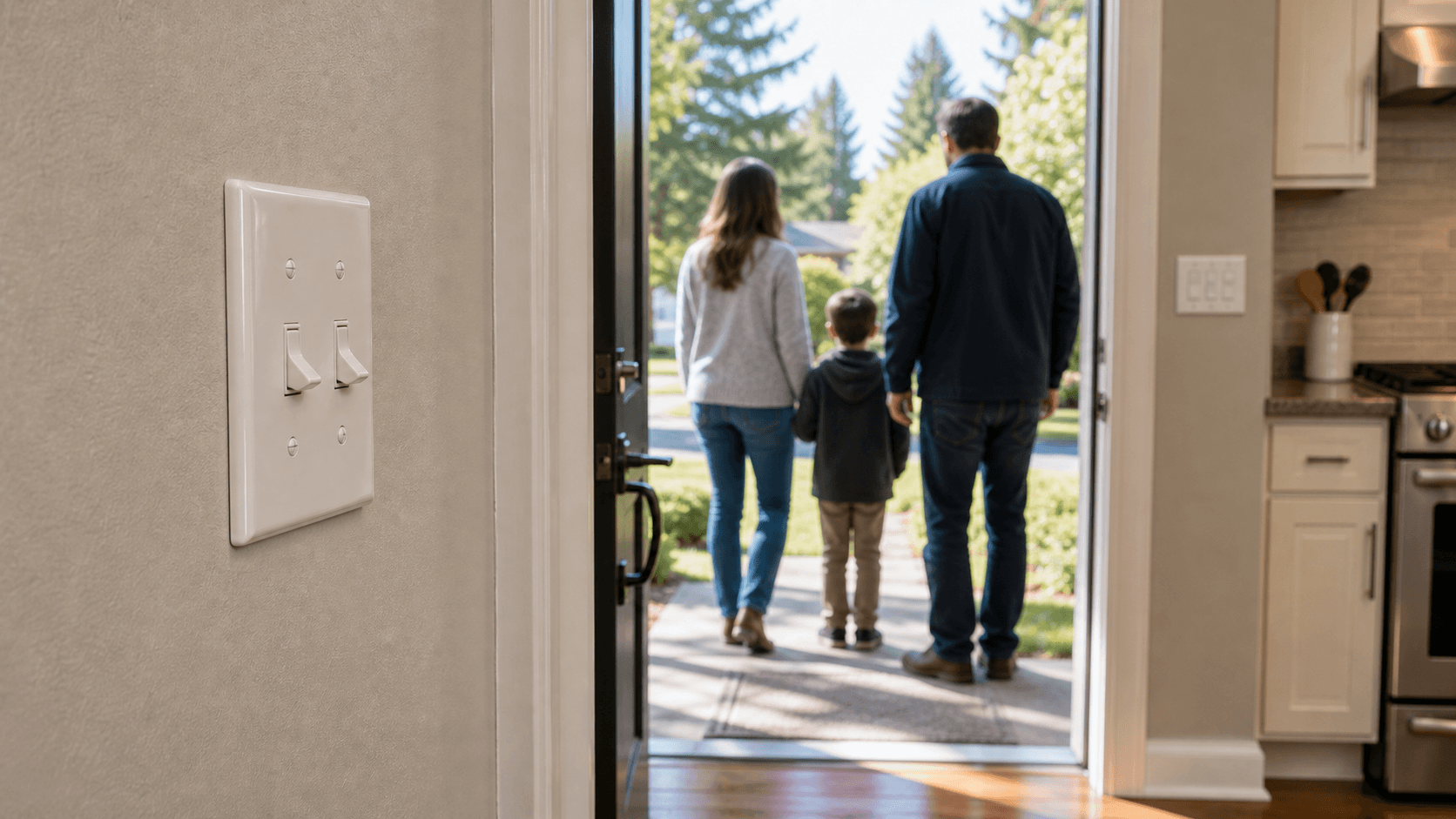
A gas leak is unburned natural gas (explosion risk); carbon monoxide is a combustion byproduct (poisoning risk). A CO detector cannot sense a gas leak, and CO symptoms ease when you go outside.
A natural gas leak and carbon monoxide are two different hazards that people often confuse, and the distinction matters for how you detect and respond to each. A gas leak is unburned natural gas escaping into the air — its dangers are explosion, because methane is flammable, and asphyxiation if it displaces enough oxygen in a confined space. Carbon monoxide, by contrast, is a product of incomplete combustion: it is produced when a fuel burns without enough oxygen, as in a malfunctioning furnace, water heater, or vehicle engine, and its danger is poisoning.
Their detectability is the most important practical difference. Natural gas is given its rotten-egg odorant so you can smell a leak, while carbon monoxide is completely colorless and odorless and cannot be smelled at all, which is why CO detectors exist. Critically, the two devices are not interchangeable: a carbon monoxide detector senses CO and cannot detect a natural gas leak, so a home with a CO alarm is not protected against a gas leak, and a gas smell will not set off a CO detector.
Carbon monoxide poisoning has its own signature that helps distinguish it. CO binds to the blood and starves the body of oxygen, producing headache, dizziness, nausea, confusion, and fatigue — symptoms that often improve when the affected person goes outside into fresh air and return when they go back in. That pattern of feeling ill indoors and better outdoors, especially affecting several people or pets in a household at once, is a hallmark of CO exposure rather than a gas leak.
Both hazards call for getting out and calling for help, but knowing which is which guides what you watch for. A rotten-egg smell or hissing points at a gas leak; an unexplained headache-and-nausea pattern that eases outdoors, with no smell, points at carbon monoxide. Working CO detectors are an important protection that a gas smell will not trigger, and a home using natural gas should have them — phrased generally, CO alarms are widely required and recommended, and a licensed professional can advise on proper placement.
Call 911 or Puget Sound Energy's emergency line at 1-888-225-5773 from outside — PSE dispatches to gas leaks free and around the clock. After the utility makes it safe, a licensed plumber repairs the line.
In Bellevue, the number to call for a suspected gas leak is Puget Sound Energy's emergency line, 1-888-225-5773, or 911 — and you call from outside, after you have gotten out. PSE is the natural-gas utility for the area, and it dispatches to reported gas leaks around the clock at no charge to the customer. There is no reason to hesitate over cost or hour: the response is free and available any time, and that is by design, because the utility would far rather respond to a false alarm than have someone delay over a real leak.
What PSE does on arrival is make the immediate situation safe. The responding technician has instruments to measure gas concentrations, can locate the source, and can shut off the gas at the meter or isolate the leak so the building is no longer at risk. The utility's role is the emergency response — finding and stopping the active hazard — not performing the permanent repair of your gas piping, which is a separate step that comes after the area is safe.
Once the utility has secured the situation, repairing the gas line or appliance connection is the job of a licensed professional. Gas piping work is permitted, licensed, and inspected, so the actual fix — replacing a failed connection, repairing or rerouting a line, correcting a faulty appliance hookup — is done by a qualified, licensed contractor and then inspected, never by the homeowner. The utility makes it safe; the licensed pro makes it right.
Because a gas leak is an after-hours-or-anytime event, the repair side fits the emergency model: you get out, the utility responds, and then licensed repair work is arranged, sometimes urgently. For the repair and any related plumbing or appliance work once the gas is safe, that is handled as 24/7 emergency plumbing in Bellevue. The order never changes, though — evacuate first, call PSE or 911 from outside, and only then deal with the repair.
Gas piping is permitted, licensed, and inspected work for a reason: an error means an explosion, fire, or slow leak. There is no safe do-it-yourself gas repair — it is a licensed pro's job.
Gas work sits in a category apart from most home plumbing because the consequences of a mistake are catastrophic rather than merely inconvenient. A poorly made joint, an undersized line, a missing component, or an untested connection can produce a slow leak that fills a space to its explosive range, or a sudden failure that ignites. This is why gas piping is uniformly treated as permitted, licensed, and inspected work — the stakes do not allow for the trial-and-error that a homeowner can get away with on a sink trap.
The licensing and permitting exist to put qualified people and an independent check on every gas job. A licensed professional knows how to size piping to the load, make and test gas-tight connections, install required safety components, and verify the system holds pressure before it is put into service, and the inspection confirms that work meets code before gas flows through it. None of that is optional or skippable, because each step is what prevents the leak that the rest of this guide is about responding to.
There is, accordingly, no safe do-it-yourself gas repair, and that includes the things that feel small — swapping an appliance connector, adding a line for a grill or a range, or chasing a faint smell. The risk is not proportional to how minor the task seems; a hand-tightened fitting or an untested line is dangerous regardless of how simple the job looked. The only homeowner action around gas remains the same one from the start of this guide: if you suspect a leak, evacuate and call from outside.
After a leak is made safe by the utility, the permanent repair is therefore a licensed professional's work from diagnosis through testing, and so is any new gas-line or appliance installation — which is covered in our gas appliance line install guide. The division of labor is consistent across every gas situation: the homeowner evacuates and reports, the utility responds and secures, and a licensed pro diagnoses, repairs, tests, and gets the work inspected.
Gas smells like rotten eggs; call 911 or PSE at 1-888-225-5773 from outside; do not flip switches or use your phone inside; methane is explosive from 5 to 15 percent.
Natural gas smells like rotten eggs or sulfur, because the gas itself is odorless and the utility adds mercaptan as a deliberate warning. Besides the smell, a leak can show as a hissing or whistling sound near a line or appliance, bubbles in standing water near a buried line, or dead vegetation over an underground line. Any one of these is reason enough to act — and the action is always the same: get everyone out and call from outside, treating a suspected leak as a real one.
Who you call is 911 or Puget Sound Energy's emergency line, 1-888-225-5773, and you make the call from outside the building after everyone is out. PSE responds to gas leaks free and around the clock, locates and stops the active hazard, and can shut off the gas. The utility makes the situation safe; a licensed professional repairs the line afterward, because gas piping repair is permitted, licensed, inspected work and never a do-it-yourself job.
No, do not open windows, hunt for the leak, or shut the gas off at the meter yourself on the way out — and absolutely do not use your phone, flip a light switch, or touch any appliance inside, because each can create a spark. Methane is flammable in air between roughly 5 and 15 percent, so a leaking space passes through an explosive range where a single arc can ignite it. The reason the phone call waits until you are outside is that a phone used inside is itself an ignition source.
A gas leak and carbon monoxide are different hazards, and a CO detector cannot catch a gas leak. A gas leak is unburned natural gas with explosion and asphyxiation risk and a rotten-egg smell; carbon monoxide is an odorless combustion byproduct that poisons, with headache-and-nausea symptoms that ease when you go outside. Both call for evacuating and calling for help, but they are detected differently, and a home on natural gas should have working CO alarms in addition to taking any gas smell seriously. Repair work once the gas is safe is handled as 24/7 emergency plumbing in Bellevue.
Every fact in this guide cites a verifiable public source. If you find a number we got wrong, email dispatch@bellevueplumberpro.com.
Need help with this in your home? See our 24/7 emergency plumbing in Bellevue page for pricing, our diagnostic process, and how same-day service works across the Eastside.
Related services: Gas Line Installation and Repair.
Get everyone out immediately without touching any light switch, phone, or appliance. Once outside and away, call 911 or Puget Sound Energy at 1-888-225-5773. Do not go back in until cleared.
Rotten eggs or sulfur — natural gas is odorless, so utilities add mercaptan as a deliberate warning. You may also hear hissing near a line or appliance, or see dead vegetation over a buried line.