When should a gas line be inspected?
Before buying a home with gas appliances, after adding any new gas appliance, after a significant earthquake, when you smell gas intermittently with no clear source, and when appliances show flame problems.
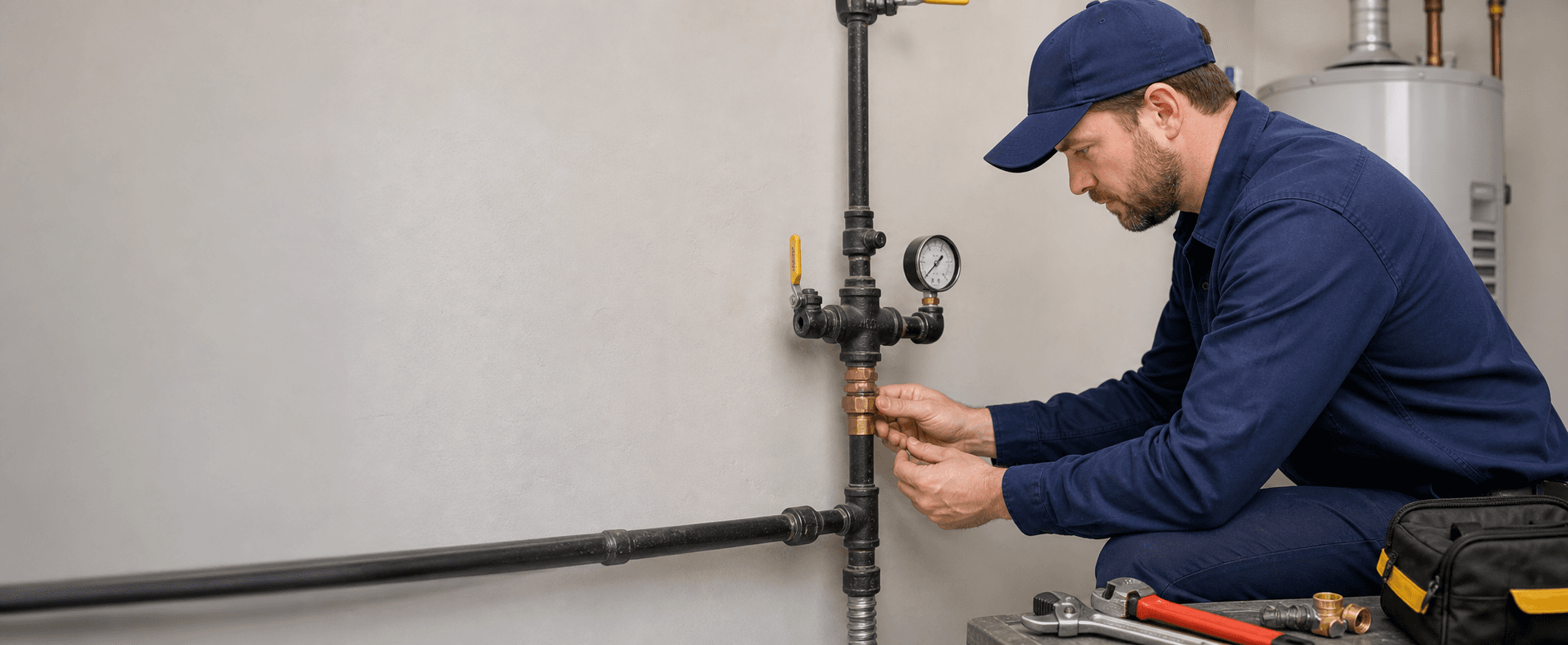
A gas line inspection is a pressure test and visual examination of the gas piping inside and around a home — the distribution lines, appliance connections, shutoff valves, sediment traps, and CSST bonding where applicable. It is required by the City of Bellevue before any new gas work is approved, and it is strongly recommended before buying a home with gas appliances, after any seismic event, and when a home's gas piping is aging black iron that has never been tested. This guide explains what an inspection covers, when to get one, and what a failed inspection means.
Last reviewed: 2026-06-14
Before buying a home with gas appliances, after adding any new gas appliance, after a significant earthquake, when you smell gas intermittently without a clear source, or when the gas piping is black iron more than 30 years old.
Home purchase is the most important trigger. A standard home inspection includes a visual check of gas appliances but typically does not include a pressure test of the gas piping itself. A licensed plumber performing a dedicated gas line inspection pressure-tests the distribution system — if it holds pressure, the system is leak-free; if it drops, there is a leak somewhere that has to be found and repaired before anyone moves in.
Seismic events shake pipe connections and can damage or loosen fittings, particularly on older threaded black iron piping with many connections. Washington State sits on an active subduction zone; even moderate earthquakes in the Puget Sound region warrant a post-event inspection if you have gas appliances.
Intermittent gas smell — something that smells like rotten eggs occasionally but never triggers a clear emergency — is a classic sign of a small leak at a fitting rather than a major rupture. This warrants an inspection and pressure test, not repeated calls to PSE. Small leaks at fittings are common on aging black iron piping where the threaded joints have been through decades of thermal cycling.
This happening in your home right now? A licensed plumber can talk you through the next step on the phone — 24/7, and the call is free.
Call a plumberA pressure test of the distribution system, visual inspection of all accessible piping and fittings, check of appliance shutoff valves and sediment traps, and CSST bonding verification where corrugated stainless steel tubing is present.
The pressure test is the core of the inspection. The plumber caps off the appliance connections, pressurizes the gas distribution lines with air or nitrogen to a standard test pressure, and holds for a set period. A drop in pressure indicates a leak. The test pinpoints the general location; the plumber then uses a combustible gas detector (a 'sniffer') to find the exact fitting or section.
Visual inspection covers the type of pipe material (black iron, copper, CSST), the condition of fittings and joints, the presence of sediment traps (drip legs) where required by code, and the condition of appliance shutoff valves. Valves that are corroded, stuck, or missing are flagged for replacement.
CSST bonding verification: corrugated stainless steel tubing (the flexible yellow-jacketed pipe common in post-2000 homes) requires arc-fault bonding per Washington State code. A bonding wire connects the CSST system to the electrical grounding system, protecting against lightning-induced puncture. Many older CSST installations predate the bonding requirement — an inspection confirms whether bonding is present and code-compliant.
$185–$350 for a standard residential inspection and pressure test. Add $95–$195 for CSST bonding verification and documentation if not included.
2026 Bellevue pricing. Permit required for any repair or new connection found during inspection.
If the pressure test fails, the plumber locates the leak with a combustible gas detector and provides a repair quote. The gas stays off until the repair is made and the system re-passes a pressure test.
A failed pressure test does not mean the system is immediately dangerous — a small leak at a fitting is different from a ruptured line. But the gas service stays off until the leak is repaired and the system passes a re-test. Puget Sound Energy (PSE) will not re-light appliance pilots on a system with a known failed pressure test.
Common findings: corroded fittings on aging black iron piping, missing sediment traps on appliances that require them (gas furnaces, water heaters), CSST without arc-fault bonding, and shutoff valves that no longer close fully. All of these are repairable; the cost depends on the extent.
Every fact in this guide cites a verifiable public source. If you find a number we got wrong, email dispatch@bellevueplumberpro.com.
Need help with this in your home? See our Gas line installation and repair in Bellevue page for pricing, our diagnostic process, and how same-day service works across the Eastside.
We dispatch for this across Downtown Bellevue, Crossroads, Somerset, Newport Hills, and Factoria — see your neighborhood page for local response times and recent jobs.
Before buying a home with gas appliances, after adding any new gas appliance, after a significant earthquake, when you smell gas intermittently with no clear source, and when appliances show flame problems.
$185–$350 for a standard residential inspection and pressure test; add $95–$195 for CSST bonding verification and documentation if it's not included.