Home/Learn/Pipes & freezing/Frozen and burst pipes in the Pacific Northwest: causes, prevention, and emergency steps
Pipes
Frozen and burst pipes in the Pacific Northwest: causes, prevention, and emergency steps
Bellevue gets fewer than three hard freezes a decade, and that scarcity is the trap. Homes here are built for rain, not cold. When a sub-25°F arctic outflow does arrive — as it did in January 2024 — Seattle Fire alone responded to 120+ burst-pipe calls in a single weekend, schools closed across the Eastside because of frozen sprinkler systems, and at least five people died from hypothermia regionally. The average homeowner insurance claim for water damage from frozen pipes exceeds $12,500. This guide explains the temperature thresholds at which pipes actually freeze, the five places in a Bellevue home most likely to fail, the 30-minute prevention checklist before a cold snap, what to do during the freeze, and how to recover safely if a pipe has already burst.
Why Pacific Northwest homes freeze faster than they should
Pacific Northwest homes are built for rain and mild winters, not arctic outflows. Many Bellevue homes have water supply lines running through unconditioned crawlspaces, against poorly-insulated exterior walls, or in attic spaces — all locations that drop below freezing fast once outside air hits the mid-20s.
The PNW averages mild winter temperatures because the marine layer off the Pacific moderates extremes. Bellevue's average January low is about 35°F. Local building codes and conventional construction practice reflect that average — exterior wall insulation rated for moderate climates, often-unconditioned crawlspaces, minimal foundation insulation, and uninsulated supply lines through wall cavities. That works fine 95% of winters.
The other 5% of winters bring arctic outflow events, where cold dense air from inland Canada pushes through the Cascade gaps and reaches the Puget Sound lowlands. During those events, daytime highs can stay in the teens and overnight lows can drop to single digits. PNW homes have no thermal mass or insulation reserve to handle that. The arctic air finds the weak spots — and finds them within hours, not days.
Three building patterns make this worse: vinyl siding (common in 1980s/1990s Sammamish, Issaquah, and Bothell construction) provides almost no thermal break to wall-cavity pipes. North-facing exterior walls without direct sun exposure stay cold longer once chilled. And uninsulated crawlspaces with exposed pipe runs — standard in 1960s/70s Bellevue ranchers — let pipe temperatures track outside air temperature within a few hours. Homes with original galvanized supply lines in 1960s Bellevue homes are particularly vulnerable in cold snaps because tuberculation has already narrowed pipe diameter — a partial ice plug fully blocks flow much faster.
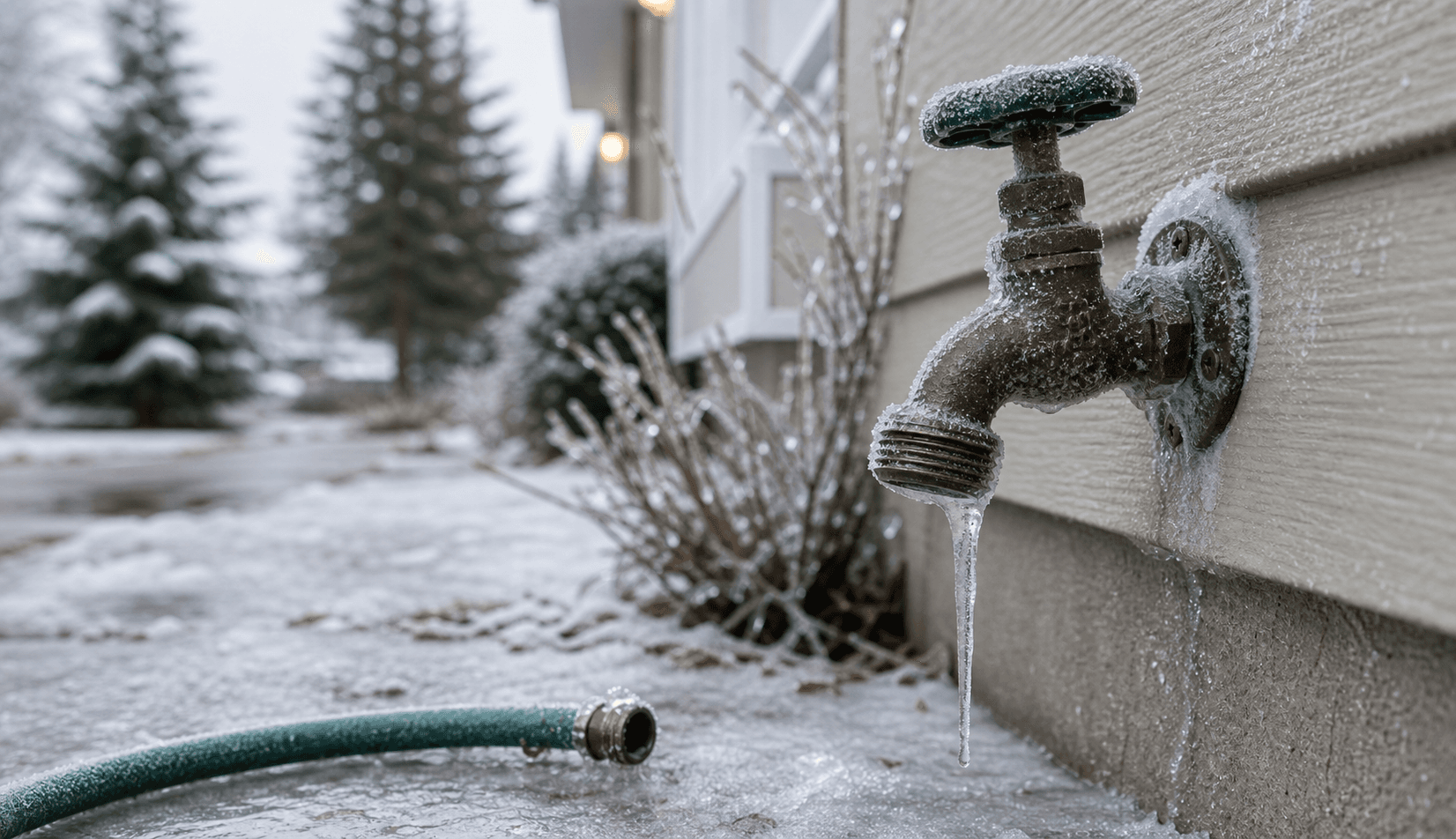
Exterior hose bibs and feeder lines are the first freeze-risk points during Eastside cold snaps.
This happening in your home right now? A licensed plumber can talk you through the next step on the phone — 24/7, and the call is free.
What actually happened during the January 2024 Seattle cold snap
Between January 11 and mid-January 2024, Western Washington saw temperatures drop well below freezing for several days running. The Seattle Fire Department alone responded to over 120 burst-pipe calls in a single weekend, multiple Lake Washington School District elementary schools closed because frozen fire-sprinkler systems burst, and at least five people died from hypothermia regionally.
The January 2024 cold snap is the most recent and most-documented PNW arctic event. Coverage from The Seattle Times, KOMO News, FOX 13 Seattle, and the Office of the Mayor of Seattle provides verifiable detail.
Seattle Fire Chief Harold Scoggins reported the department responded to hundreds of incidents over the weekend of January 13-14, 2024 — 120+ classified as burst-pipe calls. Many were commercial sprinkler-system failures rather than residential domestic-water lines, but the residential burst-pipe call volume across King County plumbers was sufficient to push response times from typical 38-minute averages to 4-to-8-hour waits at the peak of the event.
Lake Washington School District canceled classes at Wilder Elementary and Dickinson Elementary/Explorer Community School because the buildings' fire-sprinkler systems froze, burst, and flooded classrooms. The Seattle Times documented 100+ 'no water' reports made to Seattle Public Utilities during the same window.
The human cost was higher. At least five people died from hypothermia in Seattle during the January 11 to mid-January window — most outdoors, but the death toll underscores how unprepared regional infrastructure and population are for sustained sub-freezing temperatures.
The next event of similar severity will happen, eventually. The mid-2010s, the 2016-2017 winter, and January 2024 each produced one. The frequency may be every 3 to 5 years on average. The arrival is predictable from National Weather Service forecasts 3 to 5 days out — which is enough warning to prepare every Bellevue home if homeowners act on it.
At what temperature do pipes actually freeze?
Pipes start to freeze when sustained outside temperatures drop below 20°F for around 6 hours — faster for exposed, uninsulated lines, slower for insulated lines or pipes inside heated wall cavities. The threshold most plumbers watch is the overnight low forecast staying below 25°F for two consecutive nights.
The physics: water freezes at 32°F at standard pressure, but a pipe full of water doesn't freeze the instant outside air hits 32°F. Heat in the water plus heat in the surrounding materials (drywall, framing, soil for buried lines) buffers the temperature drop. The pipe wall and the water inside both need to cool to 32°F before ice forms.
Plumbing-industry data points consistently around 20°F as the practical threshold. Below 20°F sustained, insulated pipes start freezing in approximately 6 hours. Between 20 and 32°F, insulated pipes typically take 12 or more hours to freeze. Uninsulated pipes in exposed locations — outdoor hose bibs, crawlspace runs, attic-routed supply lines — freeze noticeably faster, often within 3 to 4 hours below 20°F.
The 'three-day rule' most plumbers use: if the National Weather Service forecast shows three consecutive nights of overnight lows below 20°F, take prevention actions before the second night. Two nights at sub-20°F with sub-30°F daytime highs is the documented condition under which most Bellevue burst-pipe damage occurs.
Important: ice expansion is what bursts pipes, not freezing itself. Water expands roughly 9% when it freezes. In a closed pipe segment, ice expansion creates pressure between the ice plug and a downstream closed valve or fixture. That trapped-water pressure — not the ice itself — eventually exceeds the pipe's burst strength. This is why opening faucets to a slow drip during a cold snap matters: even a small flow relieves the pressure that does the damage.
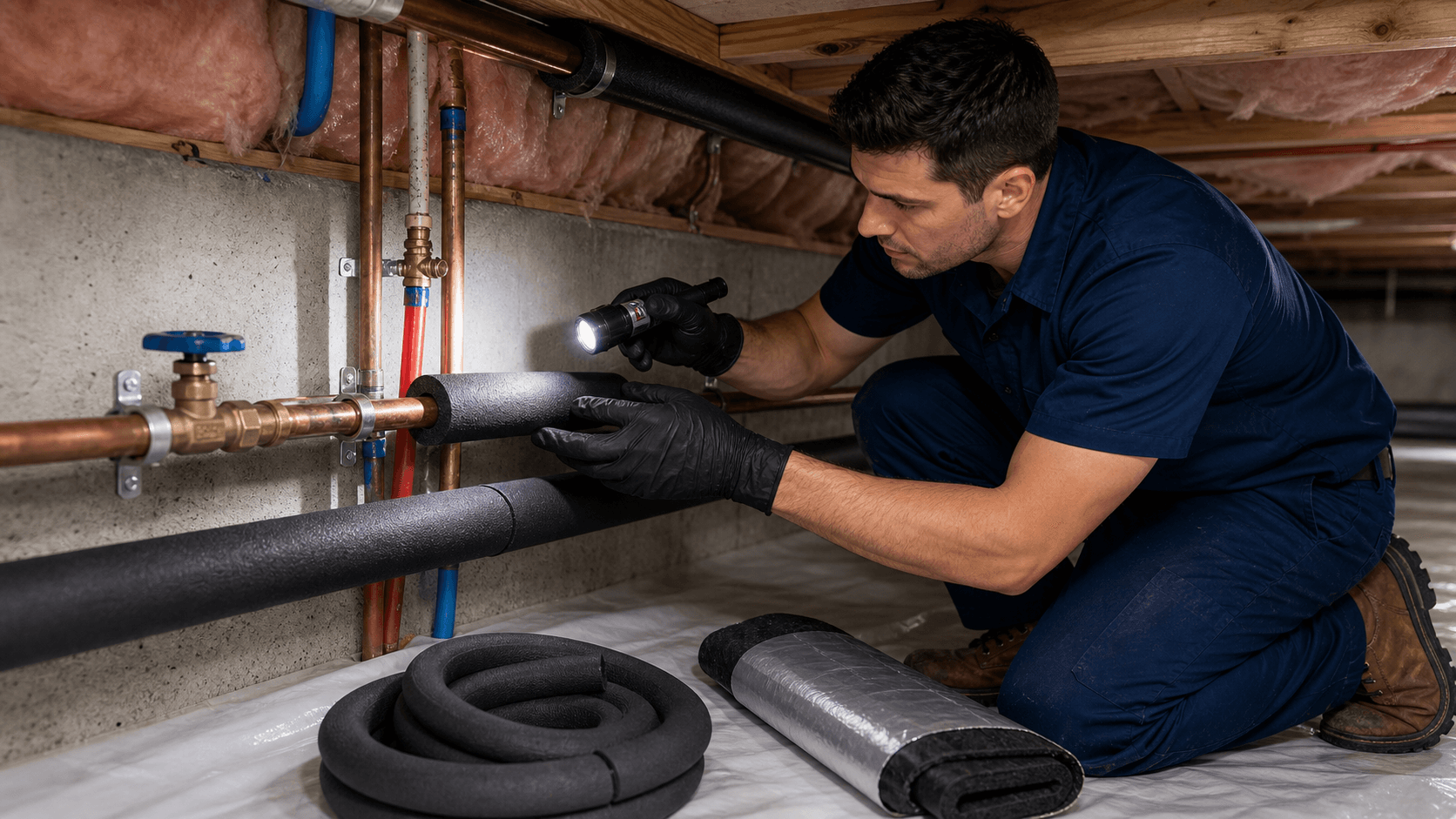
Safe thawing and pipe insulation reduce burst risk where water lines run near exterior walls.
What pipes freeze first? The five places in a Bellevue home most likely to freeze
Outdoor hose bibs without a frost-free sillcock, garage supply lines, crawlspace runs against the foundation rim, attic-routed pipes in finished homes, and supply lines in exterior walls on north-facing sides of the house.
These five locations account for the vast majority of residential burst-pipe calls in Western Washington during cold snaps. Each one fails for a different physical reason — but all five share the same vulnerability: low ambient temperature, low insulation, and no internal heat source nearby.
Outdoor hose bibs (sillcocks). Standard outdoor faucets have the shut-off valve at the wall, leaving water in the short pipe segment between the valve and the spout exposed. That segment freezes first. The number-one most common burst-pipe call across PNW plumbers in January is a hose bib that wasn't winterized — and the resulting fix often runs $385 to $640 for a single repair, well-covered in our [plumber cost and pricing in Bellevue](/learn/cost-and-pricing/plumber-rates-bellevue/) guide.
Garage supply lines. Many Bellevue homes route hot- or cold-water lines through unheated attached garages to reach the kitchen, laundry, or utility-room side of the house. Garage temperatures track outside air closely; pipes inside the garage wall cavities or above the garage ceiling freeze fast.
Crawlspace runs against the foundation rim. Older Bellevue homes (Lake Hills, Crossroads, Bridle Trails) often have main supply trunks running along the perimeter rim joist inside the crawlspace. The rim joist is the coldest part of the crawlspace because it's directly behind exterior siding with minimal insulation between.
Attic-routed pipes in finished homes. Some Bellevue homes — particularly 80s/90s construction with second-story bathrooms over garages — have supply lines run through attic spaces above the insulation layer. Attic temperatures during a cold snap can drop below outside air temperature because of radiant heat loss to night sky.
North-facing exterior wall cavities. The north side of a house gets the least direct sun and stays cold longest once a temperature gradient establishes. A bathroom plumbed against a north exterior wall is statistically more likely to freeze than the same fixture on a south wall.
The 30-minute prevention checklist before a cold snap
Disconnect and drain garden hoses, shut off and drain outdoor hose-bib supply lines if you have interior shutoff valves, insulate exposed pipes in crawlspaces and garages, open cabinet doors under kitchen and bath sinks to let warm air reach pipes, and set thermostats to at least 55°F throughout the entire house — including unused rooms.
These five actions take about 30 minutes total for a typical Bellevue home and prevent the majority of burst-pipe damage that occurs during cold snaps. The forecast window for arctic outflows is usually 3 to 5 days, which is more than enough warning to complete all five.
Disconnect every garden hose from every outdoor spigot, drain the hose, and store it inside. A connected hose holds water against the inside of the sillcock and prevents proper drainage even on frost-free models.
If you have interior shutoff valves for your outdoor hose bibs (a small valve on the indoor supply line about 12 inches inside the wall), close it, then open the outdoor spigot to drain the line.
Insulate exposed pipe runs. Foam pipe-insulation sleeves cost $1-3 per 6-foot section at any hardware store. Slip them over any pipe you can see in the crawlspace, garage, or attic — focus on the longest exposed runs first.
Open cabinet doors under kitchen and bathroom sinks at night. Lets indoor warm air reach the supply lines inside the cabinet wall cavity. Trivial action, surprisingly effective.
Set thermostat to at least 55°F throughout the entire house — including bedrooms you don't use, basements, and any zones you might normally let drop to 50°F at night. The energy cost of one cold snap of higher thermostat setting is a fraction of a single burst-pipe claim deductible.
Optional but recommended: open a single faucet at the fixture farthest from the water meter and let it drip at pencil-thin flow throughout the cold snap. The continuous water movement prevents pressure buildup behind any ice plug that forms. The water cost is about $0.50 per night.
What to do during a cold snap that's already underway
Keep the thermostat at 55°F or higher, leave cabinet doors open, leave faucets dripping at the most exposed fixtures, monitor for unusually weak flow at any fixture (an early sign of a freezing line), and know exactly where your main water shutoff valve is located before you need it.
Once a cold snap is actually happening, prevention shifts from preparation to monitoring. The two signals that matter: any fixture flowing noticeably weaker than yesterday, and any visible frost or condensation on accessible pipe sections (in crawlspace, garage, or under sinks).
Weak flow at a single fixture during a cold snap usually means a partial ice plug is forming somewhere upstream. The pipe is freezing but hasn't fully frozen or burst yet. Two actions: open the fixture wider to let any remaining flow through (relieves pressure), and gently warm the most likely freeze location with a hair dryer or space heater (never an open flame, never a torch — both cause house fires every year during cold snaps).
Find your main water shutoff valve and confirm it actually turns now, while you have time. Most are located inside the house where the supply line enters — typically in a garage, basement, crawlspace, or utility closet. Some are at the meter at the curb (requires a meter key, which most homeowners don't have). If your interior shutoff hasn't been turned in years, the valve stem may be seized — a $150 service call now beats trying to shut off water at 2am during an emergency.
If you smell or see signs of an active burst pipe — water sound inside a wall, wet spot on a ceiling, sudden flow loss everywhere — go directly to the main shutoff and close it. The water damage progresses by the minute. A 30-second delay closing the main can mean a $500 versus $5,000 repair. Once the water is off, call our 24-hour and 24/7 emergency plumber in Bellevue, WA line — burst pipe response is the highest-priority call type and we dispatch the nearest available tech.
What to do after a freeze (and before you find a burst)
Inspect every accessible pipe section as the house warms up, run a faucet at each fixture and listen for unusual sounds, walk the basement and crawlspace looking for water, and don't assume you're safe just because nothing has obviously burst — slow leaks from cracked but not yet failed pipes show up over days.
The most damaging freeze events aren't the ones that burst a pipe immediately. They're the ones that crack a pipe slightly, then thaw without anyone noticing, then slowly drip into wall cavities for weeks until the drywall finally fails and the homeowner discovers the damage.
Inspection sequence as temperatures return above freezing: walk every accessible plumbing area (under sinks, in basements, in crawlspaces, attached garages) and look for any wet spots, drips, or unusual smells. Run every fixture and listen — a cracked pipe in a wall sometimes produces a hissing or trickling sound when water flows nearby. Open every cabinet you closed during the cold snap and feel the pipe surfaces (they should feel dry, not damp).
Check water pressure at multiple fixtures. If pressure is noticeably lower at upstairs or end-of-run fixtures than before the cold snap, a partial blockage or active leak may be developing. Don't ignore subtle changes.
Pay extra attention 24 to 72 hours after the freeze ends. Cracked pipes can leak slowly for hours before producing visible signs. If you see a damp spot on a ceiling or wall that wasn't there before, that's water-damage in progress — even if it's still small.
Frost-free sillcocks — the permanent fix for outdoor hose bibs
A frost-free sillcock (also called a frost-proof hose bib) is an outdoor faucet built with a long valve body that extends through the exterior wall, placing the actual shut-off valve inside the heated portion of the house. The exterior spout drains automatically when shut off. Once installed, you cannot freeze it from outside unless a garden hose is left connected.
Standard hose bibs have the shut-off valve at the wall, leaving 4 to 8 inches of exposed pipe between the valve and the spout. That short segment fills with water every time you use the faucet, drains incompletely, and freezes when temperatures drop. Frost-free sillcocks solve this by relocating the valve 6 to 12 inches inside the wall, into the heated interior space. Water in the outer pipe section drains backward into the heated zone as soon as you shut the faucet, so no water is left in the exposed exterior section to freeze.
The installation depth matters. Frost-free sillcocks come in lengths from 4 inches (for thin walls) to 24 inches (for thick exterior insulation or brick veneer). The valve body needs to extend far enough through the wall that the shut-off mechanism is inside the building envelope on the heated side of the insulation. A too-short sillcock places the valve inside the wall cavity rather than in heated space — and the valve itself can then freeze.
Two installation requirements that matter: the sillcock must be installed with a slight downward slope (5 to 10 degrees) toward the exterior so water drains by gravity when shut off, and no garden hose can be left connected during freezing weather. A connected hose holds water against the spout, defeats the drainage feature, and lets the sillcock freeze and crack despite being 'frost-free.'
Cost is typically the part homeowners ask about. The sillcock itself is $20 to $60 retail. Plumber installation runs about $250 to $400 for a single sillcock replacement on an accessible wall, depending on whether the existing supply line connection needs modification. Replacing all four hose bibs on a typical Bellevue home runs $800 to $1,500 — less than half of a typical single freeze-related insurance deductible.
Heat tape and pipe insulation — when to use each, and how they work together
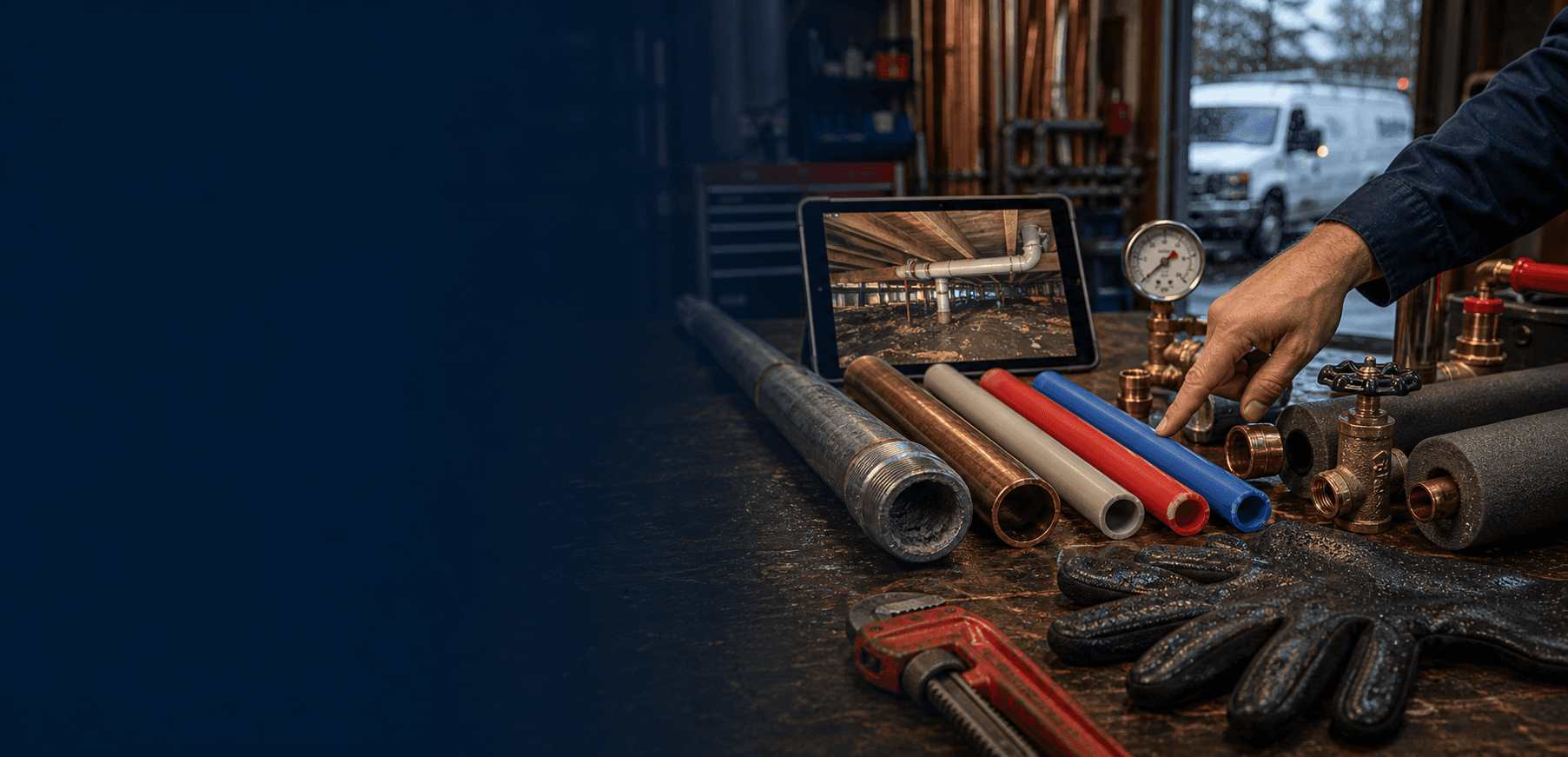
Pipe insulation alone keeps a pipe a few degrees warmer than the surrounding air — sufficient for moderate cold but insufficient for sustained sub-20°F. Heat tape (also called heat cable) adds electric heat to the pipe and is rated to prevent freezing down to -20°F or colder. They work best together: heat tape against the pipe, then insulation over the heat tape.
Pipe insulation: foam sleeves or rubber wrap that reduces the rate of heat loss from a pipe to surrounding air. Industry data shows insulated pipes run 3 to 4°F warmer than the same uninsulated pipes in similar conditions. For most PNW cold events (low-20s overnight, brief), insulation alone is enough. For arctic outflow events (sustained sub-20°F), insulation buys time but isn't a complete solution.
Heat tape: an electrical cable wrapped around or run along a pipe, with built-in thermostat that activates heating when ambient temperature drops near freezing. Modern self-regulating heat tape automatically adjusts heat output to the temperature — more heat when colder, less when warmer, off when above freezing. Plug-and-play models exist for residential use; they require a GFCI outlet for safety.
Installation matters. Heat tape should not be lapped over itself unless the manufacturer specifically permits (overlapping concentrates heat and can melt the cable jacket). Insulation goes OVER the heat tape, not under — but check the heat tape manufacturer's specification, because some products are rated to be installed against the pipe with insulation on top, while others require specific air gaps.
Where to use what in a Bellevue home: insulation alone is fine for pipes running through conditioned spaces (basements with HVAC, wall cavities behind interior walls). Heat tape plus insulation is the right choice for pipes in unconditioned crawlspaces, attached-garage runs, attic-routed lines, or any exterior-wall plumbing that's been observed to freeze in past cold snaps. The combined cost of heat tape and pipe insulation for the typical at-risk run (10 to 20 feet) is $50 to $150 in materials plus a few hours of installation time.
What burst-pipe damage actually costs
The U.S. average homeowner insurance claim for water damage including freezing is approximately $12,500 to $15,400. A single burst pipe repair alone runs $200 to $3,000 in plumbing work; the full damage including drywall, flooring, framing, and contents typically pushes total claim costs well above $5,000, and severe cases (overnight flooding, multiple rooms) can exceed $50,000.
Industry data from the National Association of Insurance Commissioners and major carriers consistently reports water damage (including freezing) as the third-most-common homeowner insurance claim category, accounting for approximately 24% of all homeowner claims in 2021. Approximately 1 in 60 insured homes files a property damage claim related to water damage or freezing in any given year. The industry processes about $13 billion in such claims annually.
Why the average claim is so much higher than the burst-pipe repair itself: water damage compounds. A pipe that bursts at 2am while a homeowner is away on vacation can release 200+ gallons per hour for 8 hours before discovery. That's 1,600 gallons in walls, floors, and ceilings. The plumbing repair itself might be $500. The drywall replacement, hardwood floor replacement, framing dry-out, mold remediation, and contents replacement can easily be 50× that.
Insurance coverage caveats matter. Standard homeowner policies typically cover sudden, accidental water damage from frozen pipes — IF the homeowner took 'reasonable precautions' to prevent the loss. A burst pipe in a vacant home with heat turned off is often denied as failure to mitigate. A burst pipe in an occupied home with thermostats at 55°F+ is almost always covered. Read your policy's freezing exclusion language before you need it.
When to call a plumber versus DIY
Call a plumber for any visible burst pipe, any sudden water flow from a ceiling or wall, suspected frozen pipes behind drywall, frost-free sillcock installation, or pre-cold-snap winterization on a home that hasn't been done before. DIY is fine for disconnecting hoses, adding pipe insulation to accessible runs, and using a hair dryer to thaw an exposed line.
The line between DIY and pro is pretty clear in freeze emergencies. Anything you can see, reach, and thaw safely with a hair dryer or low-heat space heater is DIY. Anything behind drywall, inside a wall cavity, or already leaking is plumber work.
Two specific DIY mistakes worth avoiding: never use an open-flame device (propane torch, blow torch, oil-burning heater) to thaw a frozen pipe. House fires from this exact cause kill people every cold snap. Never leave a space heater unattended in a small enclosed space (crawlspace, cabinet) — heat sources plus combustible materials plus an absent homeowner is exactly how house fires start.
If you've identified a frozen pipe but it hasn't burst, you have a window of usually a few hours to thaw it. Open the faucet downstream first to relieve pressure. Apply heat to the most accessible section. Watch closely. The moment water starts flowing again, leave the faucet open for several minutes to confirm no leaks develop downstream of the thaw.
Sources
Every fact in this guide cites a verifiable public source. If you find a number we got wrong, email dispatch@bellevueplumberpro.com.
Need help with this in your home? See our Frozen pipe repair in Bellevue page for pricing, our diagnostic process, and how same-day service works across the Eastside.
— Bridge to service
We dispatch for this across Crossroads, Bridle Trails, and Bothell — see your neighborhood page for local response times and recent jobs.
Frozen and burst pipes in the Pacific Northwest — questions homeowners ask
QUESTION01
At what temperature do pipes freeze in the Pacific Northwest?
Pipes start to freeze when sustained outside temperatures drop below 20°F for around 6 hours — faster for exposed, uninsulated lines, slower for insulated lines or pipes inside heated space. PNW homes are built for rain and mild winters, not arctic outflows, which is why cold snaps hit them hard.
QUESTION02
What should I do if a pipe bursts in winter?
Close the main water shutoff first, open the lowest faucet in the house to drain residual pressure, kill electricity to any rooms with standing water, and call a plumber. The January 2024 cold snap kept Seattle Fire busy with burst-pipe calls for days — the 60-second shutoff is what limits the damage.