Last reviewed: 2026-08-22
How much does it cost to repipe a house in Bellevue?
A whole-house PEX repipe in Bellevue typically runs $4,000 to $9,000, and a whole-house copper repipe $8,000 to $15,000-plus. A partial repipe — one run or a single wet wall — runs $1,500 to $4,000. Replacing failing galvanized or polybutylene commonly lands at $5,000 to $13,000 depending on home size, access, and drywall repair.
A house repipe is the replacement of a home's fresh-water supply lines — everything downstream of the main shutoff — as opposed to the drain/waste system, which is separate. The pipe material is the headline difference in cost, but it is rarely the biggest cost itself. Most of a repipe bill is labor: opening walls and ceilings to reach the lines, running the new pipe, and then repairing and repainting the drywall. A home where the pipes are easy to reach costs far less than the same-size home where they run through finished, hard-to-access walls.
That is why the ranges are wide. Use the table as a planning guide, then get a walk-through quote — the number depends on your home's size, layout, and how much has to be opened up.
Repipe scope / materialTypical Bellevue costMain cost driver
Partial repipe (one run or wet wall)$1,500–$4,000Access and wall opening
Whole-house PEX repipe$4,000–$9,000Home size and fixture count
Whole-house copper repipe$8,000–$15,000+Material and labor
Galvanized or polybutylene replacement$5,000–$13,000Age, access, drywall repair
Bellevue planning ranges, 2026. PEX is usually cheaper and faster than copper; the hidden cost is the drywall repair and access, not the pipe.
This happening in your home right now? A licensed plumber can talk you through the next step on the phone — 24/7, and the call is free.
☎Call a plumberPEX vs copper — cost, lifespan, and fit
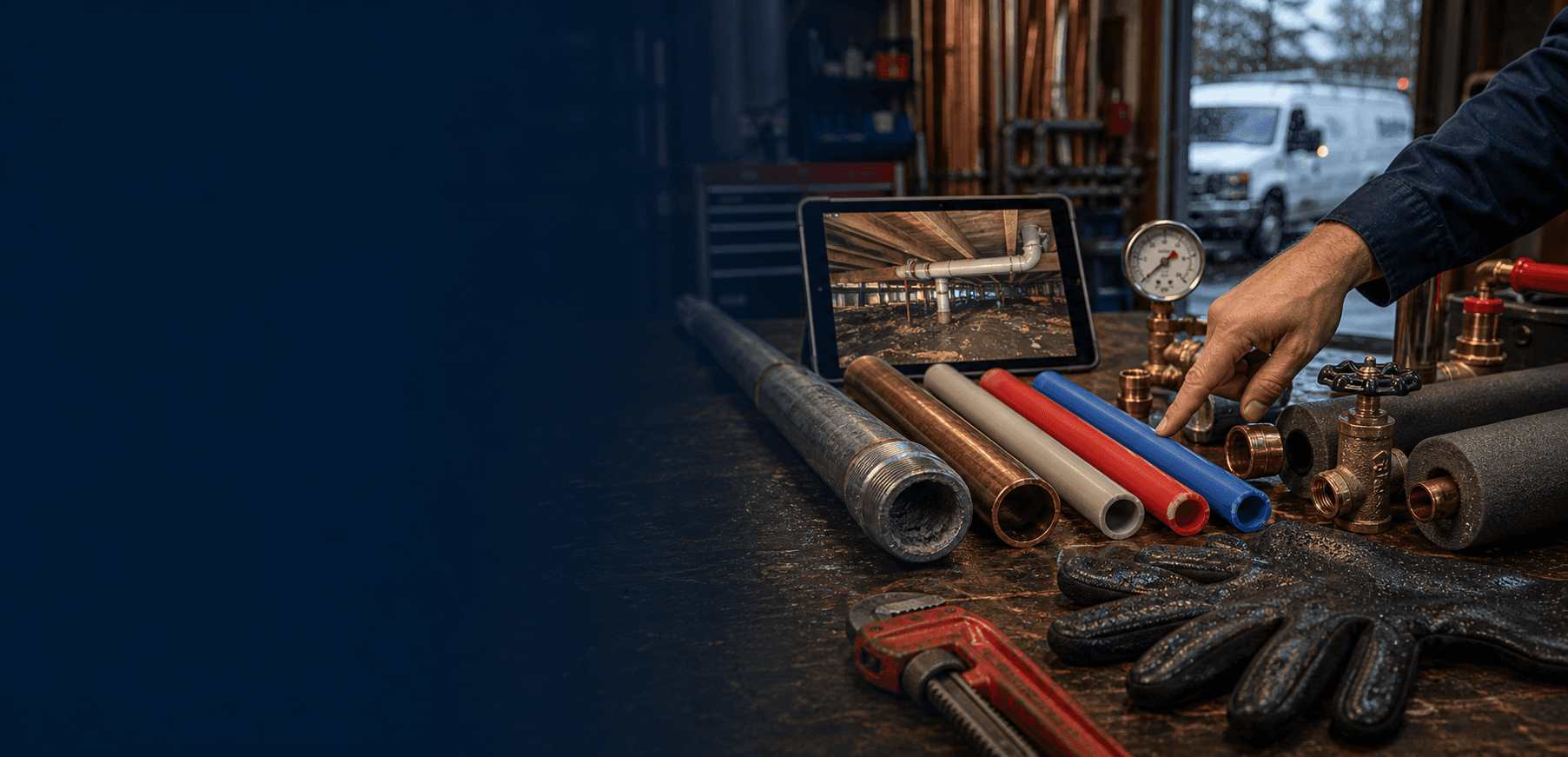
PEX is cheaper, faster to install, freeze-resistant, and flexible enough to run through walls with fewer openings — which lowers labor and drywall cost. Copper is more expensive and labor-intensive but long-proven and preferred by some for its rigidity and recyclability. For most Bellevue repipes, PEX delivers the lower total cost without sacrificing reliability.
The cost gap is mostly labor. PEX's flexibility means fewer fittings and fewer wall openings, so both the pipe bill and the drywall-repair bill come down. Copper's rigidity means more openings and more skilled labor per foot.
The full trade-off — including how each handles the Eastside's cold snaps and water chemistry — is in our PEX vs copper repipe in Bellevue homes comparison. Either material is a 50-year-plus solution when installed correctly.
The materials and methods behind the number
A PEX repipe uses PEX-A pipe (the Engel-method, ASTM F876 grade) joined with expansion fittings — an expansion tool stretches the pipe over the fitting and it contracts to seal, with no crimp rings to fail. Copper repipe uses rigid Type L or M tube joined by soldering, which is where the labor hours pile up. Layout matters too: a manifold home-run design (one line per fixture from a central manifold) costs more pipe but delivers full pressure at every fixture.
"Customers ask about the pipe; the quote is really about the walls," says the repipe lead on our dispatch line. "PEX-A pulls through openings copper can't, and every opening we don't make is drywall you don't pay to restore."
Material / methodWhat it isWhy it moves the price
PEX-A + expansion fittingsEngel-method pipe (ASTM F876), tool-expanded jointsFewer fittings, fewer wall openings — lowest labor
Copper (Type L/M), solderedRigid tube, flame-soldered jointsMore skill-hours and openings per foot
Manifold home-run layoutOne dedicated line per fixtureMore pipe, best pressure — worth it on large homes
Material and joining method, 2026. The method determines how much wall gets opened — which is the real cost driver.
Why older Eastside homes pay more
Homes still on galvanized steel (common in 1960s and earlier Bellevue construction) or polybutylene (1980s and 1990s) are the most common repipe candidates, and they often cost more because the old pipe runs through finished walls, the corrosion has spread, and more drywall has to be opened and repaired to replace it all.
Galvanized pipe corrodes from the inside, narrowing and eventually leaking — see galvanized supply lines in old Bellevue homes. Polybutylene was installed widely before it was found to fail at the fittings — see polybutylene pipe replacement. Both are reasons to repipe proactively rather than wait for the flood.
The cost premium on these homes is access, not the new pipe. Decades-old galvanized often runs in awkward places, and replacing all of it means opening more wall — which is the labor and drywall cost, not the PEX.
Partial vs whole-house — and when to repipe
A partial repipe fixes one failing run or wet wall and is right when the rest of the system is sound. A whole-house repipe is right when the pipe material itself is failing (galvanized, polybutylene) or when leaks keep appearing in different places — repeated spot repairs on failing pipe cost more over a few years than one repipe.
The signal to stop spot-repairing and repipe is leaks appearing in new places: that means the material is at end of life, not that one fitting failed. Low pressure throughout the house is another sign — covered in low water pressure in the whole house.
When you're weighing it, our Leak detection and pipe repair in Bellevue, WA page covers how we scope a repipe, and water main repair and trenchless replacement in Bellevue covers the supply line from the street.
From walk-through to repainted walls: how a repipe runs
Five steps: a walk-through quote that maps every fixture and wall opening, the City of Bellevue permit (required on repipes), the pipe replacement itself in daily sections with water restored each evening, the city inspection, and the drywall patch-and-paint close-out. Two to five days for most whole-house PEX jobs.
What the project looks like:
- Walk-through and flat-rate written quote — every fixture counted, every wall opening mapped, material chosen.
- City of Bellevue permit pulled — repipes are permitted work, included in the quote.
- Pipe replacement in sections — water is off room-by-room during the day and restored each evening.
- City inspection of the new lines before walls close.
- Drywall patch, texture, and paint on every opening — the last day of a clean repipe is a drywaller, not a plumber.
Sources
Every fact in this guide cites a verifiable public source. If you find a number we got wrong, email dispatch@bellevueplumberpro.com.
We dispatch for this across Lake Hills, Crossroads, and Eastgate — see your neighborhood page for local response times and recent jobs.
Related services: Frozen Pipe Repair.
Related guides