Home/Learn/Sump pumps/Sump pump keeps running: short-cycling, bad check valve, and high water table
Sump pumps
Sump pump keeps running: short-cycling, bad check valve, and high water table
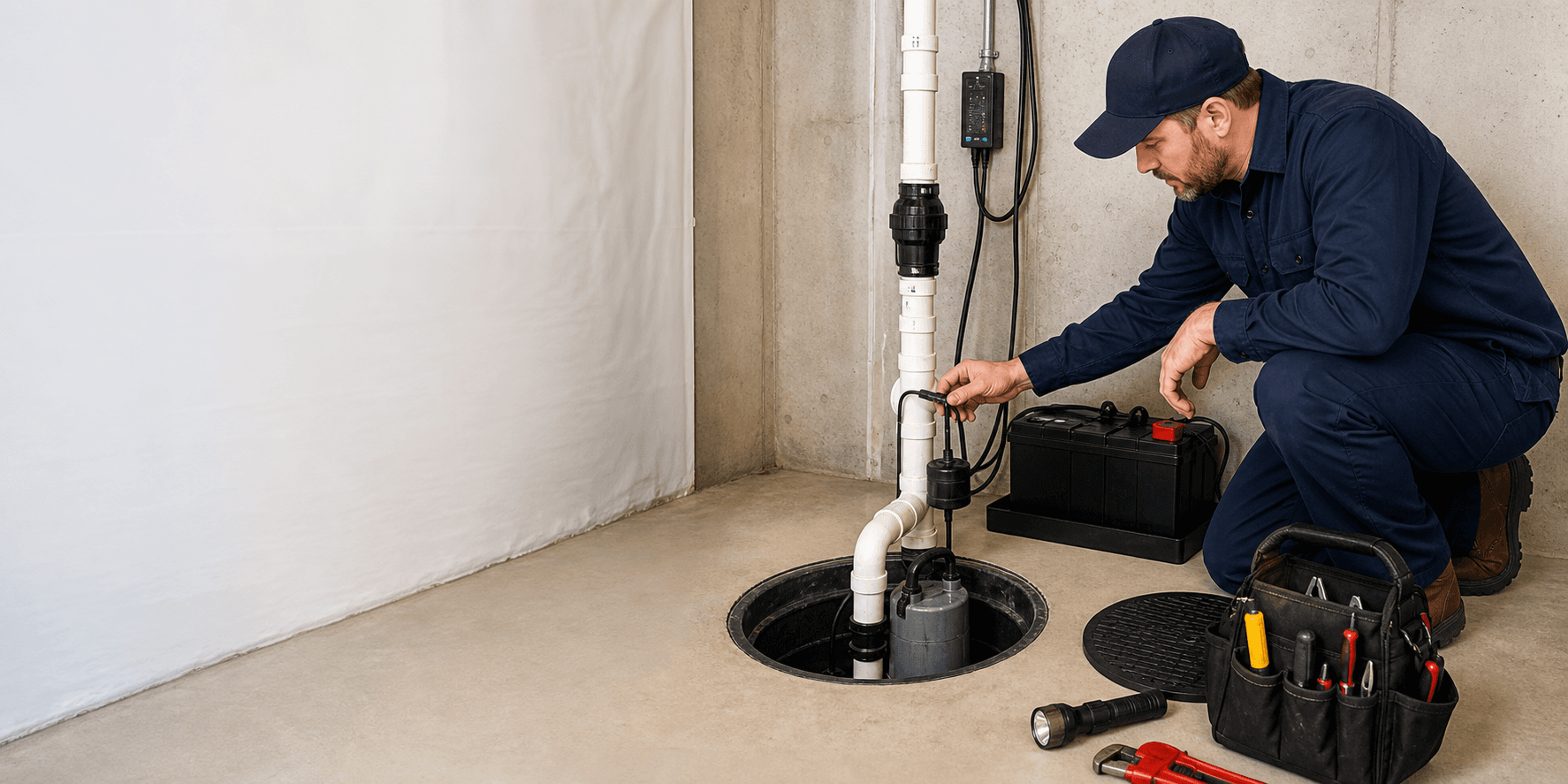
A sump pump that keeps running has a fault-side cause and a normal-side explanation, and telling them apart is the whole job. On the fault side: a stuck float that never lets the switch turn off, a failed or missing check valve that drains the discharge column back into the pit so the pump re-pumps the same water, a pit too small to hold a normal cycle's worth of water, or an undersized pump that cannot keep ahead of the inflow. A common residential pump such as the Zoeller M53 is rated to 43 GPM at zero lift but delivers only about 19 GPM — roughly 1,140 gallons per hour — against 15 feet of head, so real-world head matters. On the normal side: in a Puget Sound winter, with Bellevue getting about 42 inches of rain a year per BestPlaces climate data concentrated from November through February, a high winter water table can keep a healthy pump cycling often. This guide separates short-cycling and constant running from normal high-table operation, and covers where code allows the water to go.
Five causes: a stuck float that never shuts off, a failed or missing check valve draining water back, a pit that is too small, an undersized pump, or simply a high winter water table.
A sump pump that keeps running splits into two very different situations, and the first job is deciding which one you have. On the fault side, the pump is running because something is broken or mismatched: a stuck float that holds the switch closed, a failed check valve that drains the lifted water back into the pit, a pit too small to hold a normal cycle, or a pump too small for the inflow. On the normal side, the pump is running because the groundwater really is coming in that fast — a high winter water table in a wet Puget Sound season.
The fault causes each have a distinct signature. A stuck float never lets the pump shut off, so it runs continuously whether or not there is water to move. A failed or missing check valve lets the discharge column fall back into the pit, so the pump short-cycles — running, stopping, refilling itself, running again. A pit that is too small fills and re-triggers the pump before it has drawn the water down, and an undersized pump runs constantly because it cannot get ahead of the inflow.
The normal cause is the one homeowners most often misread as a failure. In a Puget Sound winter the ground is saturated and the water table rises, and a sump pit at the low point of a basement will fill from groundwater as fast as the pump empties it during the wettest stretches. A pump cycling frequently — even every few minutes — during a heavy rain spell can be a perfectly healthy pump doing exactly its job, not a broken one.
Because the fault and the normal explanation produce overlapping symptoms, the diagnosis is about watching how the pump runs, not just that it runs. A pump that runs continuously with no water in the pit is faulted; a pump that short-cycles the instant it stops has a check-valve problem; a pump that cycles frequently but empties the pit cleanly and stays off between rains is likely just keeping up with a high table. The sections below take each cause in turn and end with how to tell a fault from normal high-table running.
A pump that never shuts off often points to the float, check valve, pit size, or water table.
This happening in your home right now? A licensed plumber can talk you through the next step on the phone — 24/7, and the call is free.
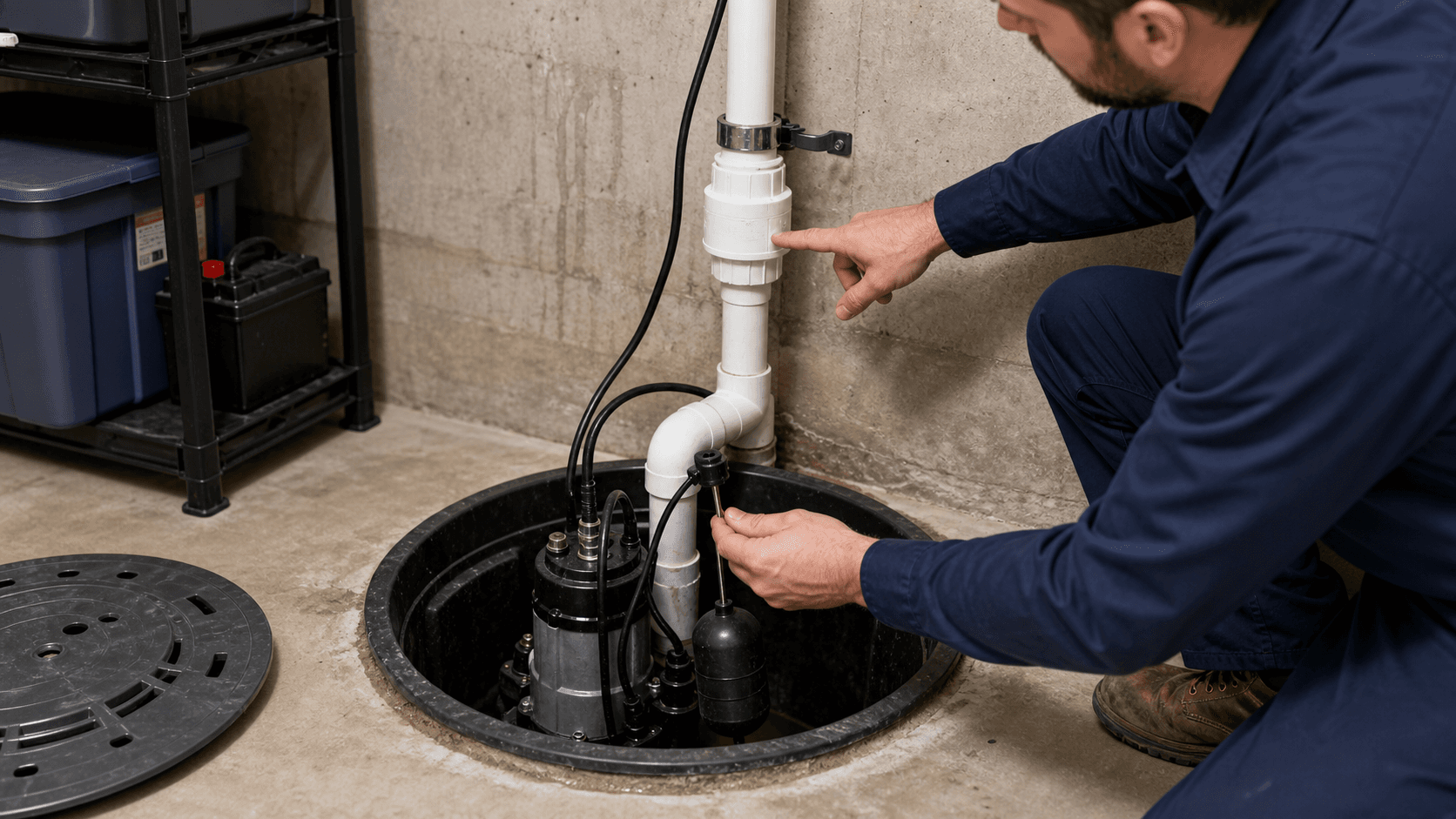
Without a working check valve, the column of water in the discharge pipe drains back into the pit each time the pump stops — so it re-pumps the same water and short-cycles to an early death.
The check valve is the one-way valve in the discharge pipe just above the pump, and it is the most common reason a pump short-cycles. When the pump shuts off, a tall column of water is standing in the discharge line above the valve; a working check valve seals and holds that column up in the pipe, but a failed or missing one lets it all drain back down into the pit. The pit refills with the pump's own backflow within seconds, the float rises again, and the pump restarts — re-pumping water it just lifted.
Short-cycling is the name for that rapid run-stop-run pattern, and the tell is timing. A pump that empties the pit, shuts off, and then immediately refills and restarts — with no rain to explain the inflow — is pumping the discharge column back into itself. The give-away that separates this from a high water table is that the refill is instant and tied to the pump stopping, not gradual and tied to groundwater seeping in. Watch one cycle: if water rushes back the moment the motor quits, the check valve is the cause.
The damage from short-cycling is what makes a bad check valve more than a nuisance. Every start is hard on a pump's motor and switch, and a pump that restarts every few seconds because it keeps swallowing its own backflow racks up an enormous number of cycles in a short time, wearing the motor and switch and running the pump to an early failure. A check valve that costs little to replace can, left failed, be what kills the pump itself.
Replacing or adding the check valve is a contained fix on the discharge pipe and restores the single clean cycle the pump should run. A discharge line with no check valve at all will always drain back and short-cycle, so adding one is the fix on a system that never had it. A pump that runs in rapid bursts with no rain is pointing squarely at the check valve, and that repair is part of the work booked as sump pump service in Bellevue.
Stuck float switch
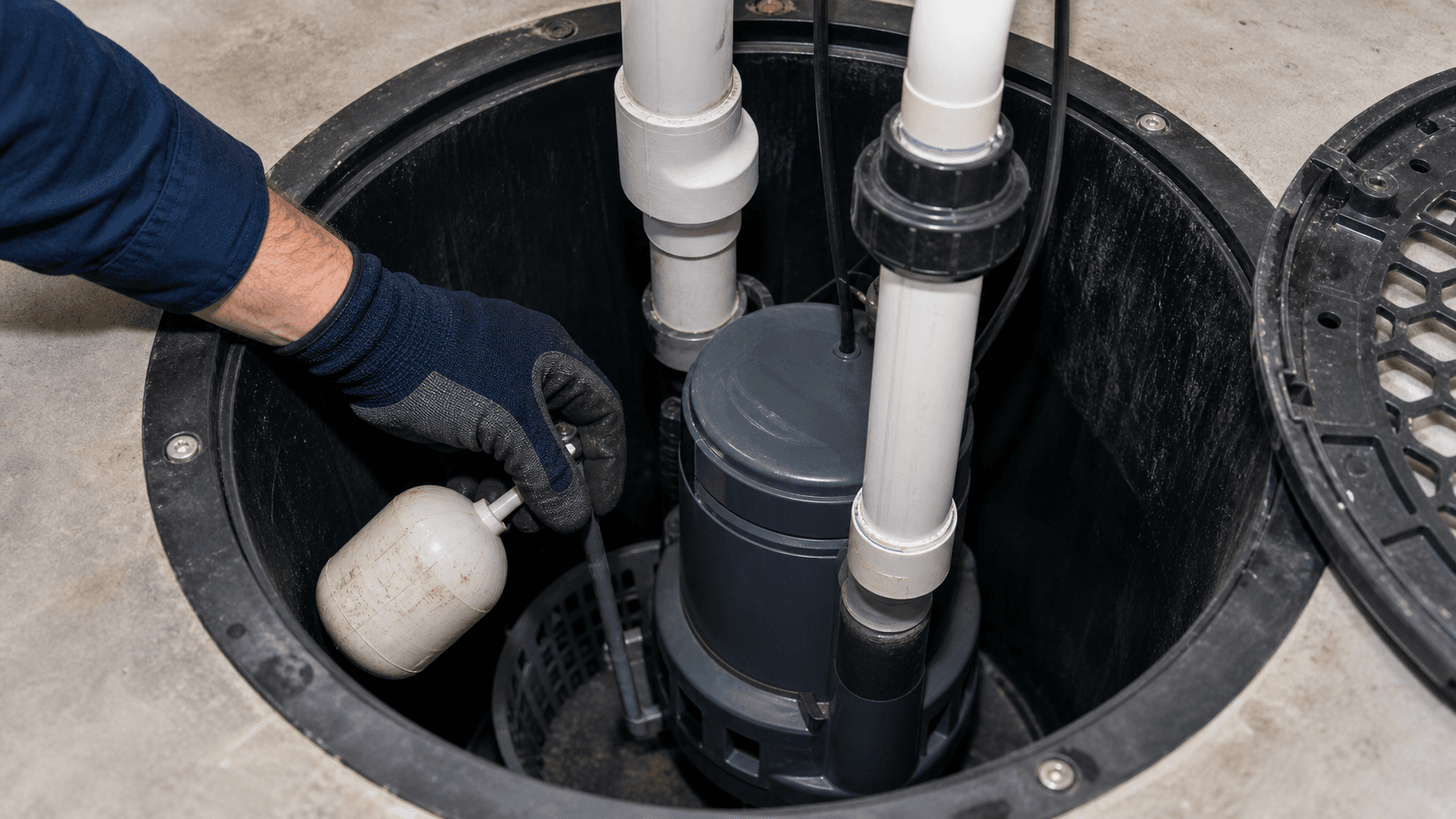
A float jammed in the up position holds the switch closed so the pump runs nonstop; a float fouled by debris or wedged against the pit wall is the simplest reason it never shuts off.
The float switch decides when a sump pump runs and when it stops, and a float stuck up is a direct cause of a pump that never turns off. The float should rise with the water to start the pump and then fall as the water drops to shut it off; if the float jams in the raised position — wedged against the pit wall, fouled by debris, or tangled on its cord — the switch stays closed and the pump keeps running even after the water is gone. The motor runs dry against an empty pit, which it is not built to do for long.
Debris and a cramped pit are the usual reasons a float hangs up. A tethered float swinging in a pit that is too narrow or cluttered can catch on the pump body or the wall and stay up; sediment settling in the pit over a season can foul the float or jam its travel. The result is the opposite of the stuck-down failure that keeps a pump from starting — here the float is stuck up, so the pump cannot stop, and it runs continuously regardless of the water level.
Running dry is the harm a stuck-up float does. A sump pump is cooled and lubricated by the water it moves, and a pump held on by a jammed float keeps running against an empty pit, overheating and wearing the motor with no water to pump. A pump that is clearly running with no water in the pit, droning on after it should have shut off, is the signature of a float stuck in the up position rather than any inflow problem.
Freeing the float is often the whole fix — clearing debris from the pit, giving a tethered float room to swing, and untangling its cord can restore normal shut-off with no parts. A float that is cracked and waterlogged so it no longer falls, or a switch that no longer opens, is worn and needs replacing. A pump running nonstop over a dry pit is a stuck float until proven otherwise, and clearing or replacing it is part of sump pump service in Bellevue.
A stuck float can hold the switch closed and run the pump nonstop.
Pit too small or pump undersized
A pit too small re-triggers the pump before it draws down; an undersized pump cannot keep ahead. A Zoeller M53 moves 43 GPM at zero lift but only ~19 GPM at 15 feet of head.
Two sizing problems make a pump run far more than it should, and they compound each other. A sump pit that is too small holds very little water, so it fills and re-triggers the float before the pump has run long enough to draw the level down — the pump ends up cycling rapidly because there is simply not enough volume in the pit to give it a full cycle. The fix is a properly sized pit that lets the pump run a real cycle and rest between them rather than snapping on and off.
An undersized pump is the other half. If the pump cannot move water faster than the groundwater flows in during a wet spell, it runs continuously and still loses ground, because its capacity is below the inflow rate. This is where the pump's real-world output matters, and the key fact is that a pump's headline rating is measured at zero lift, which no installed pump ever sees — every sump has to push water up and out, and that head cuts the delivered flow.
The Zoeller M53 makes the point with numbers. It is rated to 43 gallons per minute at zero head, an impressive figure, but against 15 feet of total head it delivers only about 19 gallons per minute — roughly 1,140 gallons per hour. That is the flow that actually matters, because a real installation lifts the water up out of the pit and out of the house, so sizing a pump to its zero-lift rating badly overstates what it will move and can leave a pump that looks adequate on paper running flat out and still behind.
Sizing therefore has to be done at the actual discharge head, not the catalog peak. A pit large enough to give a full cycle and a pump whose delivered flow at the real lift comfortably exceeds the worst-case inflow are what stop the constant running that comes from mismatch rather than malfunction. Getting the pit and pump sized to the home's real conditions is part of the work booked as sump pump service in Bellevue, and it is the fix when the float and check valve are fine but the pump still cannot rest.
When is constant running just a high water table?
In a wet Puget Sound winter a high water table can keep a healthy pump cycling often — Bellevue gets about 42 inches of rain a year per BestPlaces, concentrated November through February.
Frequent running is not automatically a fault, because in the wettest part of a Puget Sound winter the groundwater really does come in fast. Bellevue receives about 42 inches of rain a year, per BestPlaces climate data, and that rain is not spread evenly — it is concentrated in the November-through-February stretch, when the ground saturates and the water table rises. A sump pit sitting at the low point of a basement fills from that high winter table, and a pump emptying it repeatedly during a heavy rain spell is doing exactly its job.
A high water table is what raises the groundwater level around and under a foundation until it pushes into the sump pit. When the table is high through a wet winter, the pit refills steadily from groundwater, and the pump cycles often to keep the basement dry — not because anything is broken, but because the inflow is genuinely high. The same pump that runs only occasionally in a dry month can cycle every several minutes through a saturated rainy stretch and still be perfectly healthy.
This is why the season and the weather are part of the diagnosis. A pump cycling frequently in late January during a series of storms, in a region getting most of its 42 inches in those months, is behaving normally for the conditions; the same frequency in a dry August with an empty pit would be a fault. Judging a pump's run frequency without accounting for whether it is the wet season and whether it has been raining hard leads homeowners to chase a malfunction that is really just a high winter table.
The line between normal and faulted is whether the pump is moving real inflow or chasing a problem. A pump that fills from genuine groundwater during a wet stretch, empties the pit cleanly, and rests between rains is keeping up with a high table; a pump that runs with no water, short-cycles its own backflow, or never gets ahead has a fault. The next section gives the one-cycle test that separates the two, so a homeowner does not replace a sound pump that was simply keeping a wet basement dry.
How do you tell a fault from normal high-table running?
Watch one full cycle: a healthy pump empties the pit and stays off; a stuck float runs over a dry pit, a bad check valve refills instantly, and an undersized pump never gets ahead.
The cleanest test is to watch a single full cycle and see how the pump behaves at each stage. Let the pit fill, watch the pump start, watch it empty the pit, and watch what happens when it shuts off. A healthy pump keeping up with a high table will draw the water down, switch off, and stay off until groundwater refills the pit gradually — the pit empties and stays empty for a while. That clean draw-down and rest is the picture of normal operation, however often the wet season makes it repeat.
Each fault breaks that picture in a specific place. A stuck-up float shows as a pump running over a dry or empty pit, droning on after the water is gone — the draw-down happens but the shut-off does not. A failed check valve shows as the pit refilling the instant the pump stops, water rushing back from the discharge column rather than seeping in from groundwater — the shut-off happens but the pit will not stay empty. An undersized pump or too-small pit shows as a pump that runs and runs and never quite gets ahead of the inflow.
The timing and the water source are the discriminators. Backflow from a bad check valve is instant and tied to the pump stopping; groundwater from a high table is gradual and tied to the weather. A pump running with no water at all is a float problem, not an inflow problem. By watching whether the pit empties, whether it stays empty, and whether any refill is instant or gradual, a homeowner can place the behavior into normal-high-table, stuck-float, bad-check-valve, or undersized without guessing.
If the one-cycle test shows the pump emptying the pit cleanly and resting between storms, the frequent running is a high winter table and the pump is fine — the right response is a backup for the power-outage risk, not a repair. If it shows a stuck float, instant backflow, or a pump that never catches up, that is a fault to fix. Sorting which, and correcting a float, check valve, or sizing problem, is the work booked as sump pump service in Bellevue.
Where is a sump pump allowed to discharge in Bellevue?
A sump pump must discharge to an approved stormwater outfall, never to the sanitary sewer. Bellevue code (BCC 24.04.215) prohibits connecting stormwater or groundwater to the sanitary sewer system.
Where the water goes is governed by code, and the central rule in Bellevue is that a sump pump's discharge may not be connected to the sanitary sewer. Bellevue City Code 24.04.215 prohibits discharging stormwater, groundwater, and other clear-water sources into the sanitary sewer system, and a sump pump moving groundwater out of a basement is exactly such a clear-water source. The discharge must instead go to an approved stormwater outfall — daylighted to the ground surface, a storm drain, or another approved point — not tied into the sewer.
The reason the prohibition exists is that the sanitary sewer is sized and treated for wastewater, not for clear groundwater. Pumping a sump's flow into the sanitary system overloads it with water that does not need treatment, which during wet weather can contribute to sewer surcharging and backups, and it sends clean groundwater to a treatment plant for no reason. Keeping stormwater and groundwater out of the sanitary sewer is a basic separation that BCC 24.04.215 enforces, and a related provision (BCC 24.06.125) governs the stormwater side of where the water is allowed to go.
For a homeowner this means a sump discharge has to be routed to a legitimate outfall, and an existing illegal tie-in to the sewer is a code violation to correct. A discharge line that runs to a floor drain connected to the sanitary sewer, or that ties into a sewer cleanout, is exactly what the code forbids, and a pump that keeps running is also a reminder to confirm the water it is moving is going somewhere legal. Routing the discharge correctly is part of any compliant sump installation.
Because the discharge point is a code matter and not just a plumbing preference, it belongs in any conversation about a sump pump that runs hard. A pump cycling frequently through a wet winter is moving a lot of groundwater, and all of it must reach an approved stormwater outfall rather than the sanitary sewer under BCC 24.04.215. Confirming and correcting the discharge routing is part of the work booked as sump pump service in Bellevue.
Common questions about a sump pump that keeps running
A pump that won't shut off usually has a stuck float; constant running isn't always broken; a bad check valve causes short-cycling; storm-time cycling can be normal; size to the real head.
If your sump pump will not shut off, the most likely cause is a stuck float holding the switch closed — the float has jammed in the up position against the pit wall, on debris, or tangled on its cord, so the pump runs even over an empty pit. Clearing the pit, giving the float room, and untangling its cord often fixes it; a waterlogged float or a failed switch needs replacing. A pump droning on over a dry pit is a stuck float until proven otherwise.
No, constant running does not always mean the pump is broken. In a wet Puget Sound winter — Bellevue gets about 42 inches of rain a year per BestPlaces, concentrated November through February — a high water table fills the pit fast and a healthy pump can cycle often just keeping up. The test is whether it empties the pit cleanly and rests between storms; a pump moving real groundwater during heavy rain is doing its job, not failing.
Yes, a bad check valve causes short-cycling: when the valve fails, the column of water in the discharge pipe drains back into the pit the instant the pump stops, so it refills and restarts within seconds, re-pumping its own backflow and wearing itself out. And yes, running every few minutes can be perfectly normal during a heavy rain spell with a high water table — what is not normal is running with no water in the pit, or refilling instantly with no rain.
What size pump you need depends on the real discharge head, not the catalog peak. A Zoeller M53 is rated to 43 GPM at zero lift but delivers only about 19 GPM — roughly 1,140 GPH — against 15 feet of head, so sizing has to be done at the actual lift and against the worst-case inflow, with a pit large enough to give a full cycle. Getting the pit and pump sized to the home's conditions, and confirming the discharge runs to a legal stormwater outfall rather than the sanitary sewer, is handled as sump pump service in Bellevue.
Sources
Every fact in this guide cites a verifiable public source. If you find a number we got wrong, email dispatch@bellevueplumberpro.com.
Need help with this in your home? See our Sump pump service in Bellevue page for pricing, our diagnostic process, and how same-day service works across the Eastside.
Five causes: a stuck float that never shuts off, a failed or missing check valve draining water back, a pit that's too small, an undersized pump, or simply a high winter water table. The check valve is the classic hidden one — without it, the discharge column drains back and the pump short-cycles re-pumping the same water.
QUESTION02
How do I fix a sump pump that won't stop running?
Check the float first — a float jammed in the up position or fouled by debris holds the switch closed. It's the simplest reason a pump never shuts off, and clearing it is free.