Last reviewed: 2026-08-22
How much does sump pump installation cost in Bellevue?
Replacing a sump pump in an existing pit typically runs $400 to $900 in Bellevue. A new installation that requires digging a pit and running a discharge line runs $1,200 to $3,500. Adding a battery backup system runs $400 to $1,200 on top, and a high-end water-powered or dual-pump setup can push a full installation past $4,000.
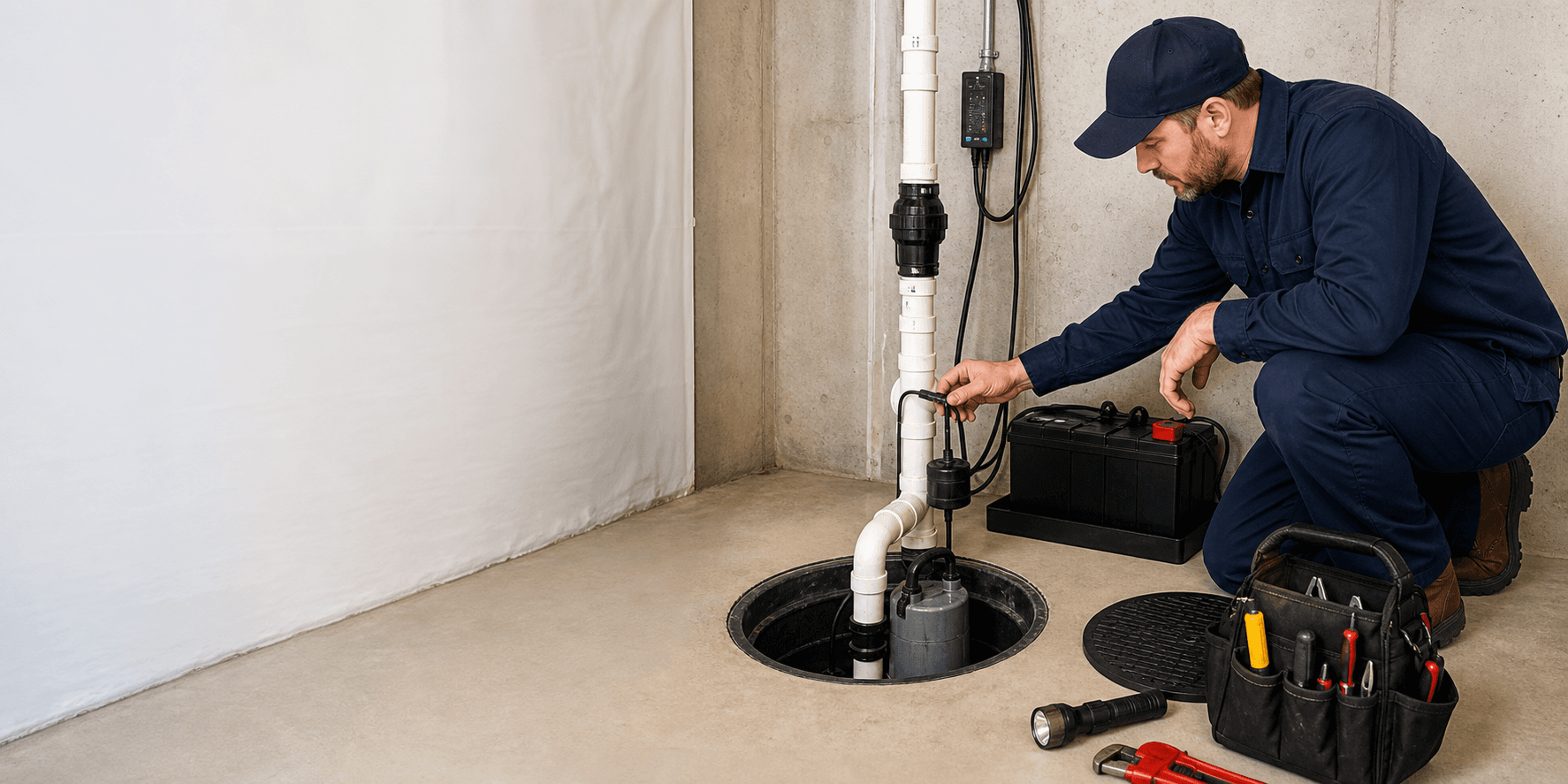
A sump pump is the pump at the bottom of a pit below a basement or crawlspace floor that collects rising groundwater and pushes it outside before it can flood the space above — the last line of defense between the water table and your finished basement. The gap between installation price numbers is almost entirely the pit and the discharge. Dropping a new pump into an existing, working pit is a quick swap. Cutting a new sump pit into a concrete floor, setting the basin, and running a new discharge line to daylight or a drain is excavation plus plumbing plus electrical — a different scale of job.
Because the variables are wide, price any specific job on a visit. The factors that decide where you land are below, but the recurring theme is the same as most plumbing: the equipment is rarely the cost — the access, the discharge run, and the backup choice are.
Sump pump jobTypical Bellevue costMain cost driver
Pump replacement in existing pit$400–$900Pump type and horsepower
New pit + discharge line installation$1,200–$3,500Excavation and discharge run
Battery backup system (added)$400–$1,200Backup capacity and battery
Dual-pump or water-powered backup setup$2,500–$4,000+Redundancy and complexity
Bellevue planning ranges, 2026. Permits and electrical (a dedicated GFCI circuit) can add to a new installation. Exact price depends on pit work and discharge routing.
This happening in your home right now? A licensed plumber can talk you through the next step on the phone — 24/7, and the call is free.
☎Call a plumberPedestal vs submersible vs battery backup
A pedestal pump (motor above the pit) is cheapest and easiest to service but louder and shorter-lived. A submersible pump (sits in the pit) costs more, runs quieter, and lasts longer — the usual choice for a finished basement. A battery backup is a second pump that runs when the power fails or the primary can't keep up, and in Puget Sound it is the most important add-on, not an optional extra.
For most Bellevue homes with a finished or semi-finished basement, a submersible primary plus a battery backup is the standard recommendation. The primary handles normal water; the backup covers the exact scenario that causes most flooded basements — a winter storm that both saturates the ground and knocks out the power at the same moment.
If your pump is failing rather than missing, the decision tree is different — see sump pump replacement cost in Bellevue and the diagnostics in sump pump not working: 5 causes and fixes.
The equipment that goes in the pit
The standard Bellevue primary is a 1/3-HP submersible — the Zoeller M53 (rated 43 GPM) or an equivalent Liberty unit. A battery backup adds roughly 7–8 hours of continuous pumping on a single charge, and a high-water alarm with phone alerts ($385) tells you the system is losing before the floor gets wet.
"Size the backup to the storm, not the sunny day," says the sump lead on our dispatch line. "Seven hours of runtime sounds like a lot until the outage runs all night and the ground is still saturated at dawn."
ComponentContractor-standard equipmentSpec that matters
Primary pumpZoeller M53 or Liberty 1/3-HP submersible43 GPM at typical head
Battery backup12V DC backup pump + deep-cycle battery7–8 hrs continuous runtime
High-water alarmFloat alarm with phone alerts$385 installed, smart-home compatible
Check valveOn the discharge lineStops back-flow re-pumping
Equipment set, 2026. The annual September inspection ($145) catches failing floats and worn impellers before storm season.
What drives the installation price
Whether the pit already exists or has to be dug, the length and routing of the discharge line, the need for a dedicated GFCI electrical circuit, the pump type and horsepower, and the backup system chosen are the factors that move a sump pump installation bill.
A new pit is the big one. Cutting concrete, setting a basin, and gravel-packing it is real excavation. Routing the discharge so it carries water far enough from the foundation — and does not freeze or dump back toward the house — is the plumbing half. Many older homes also need a dedicated, GFCI-protected circuit added for the pump.
Horsepower and pump quality matter at the margin: a higher-capacity pump for a high-water-table lot costs more but is the right call where the pit fills fast. A backup system, covered next, is the add-on most worth its cost here.
Why the Puget Sound water table makes a backup worth it
In the Puget Sound region the wettest stretches of the year and the wind-driven power outages that disable a primary pump tend to arrive together — so a battery backup is the add-on that actually prevents the flood, not a luxury. The cost of a backup ($400 to $1,200) is a fraction of a single flooded-basement insurance deductible.
A primary pump is useless during the exact event you bought it for if the storm that's flooding the ground also cut the power. That is the Puget Sound failure mode: saturating rain plus an outage. A battery backup keeps pumping through it.
A backup also covers primary-pump failure and a pit that fills faster than one pump can clear. For how backups are sized and maintained, see sump pump battery backup in Puget Sound. If a running-constantly pump is the symptom, sump pump keeps running: causes and fixes covers it.
Replacement vs new installation
If you already have a working pit, you are replacing a pump — a $400 to $900 job, and a good moment to add a battery backup while the system is open. If you have water intrusion but no pit, you are doing a new installation ($1,200 to $3,500) and the pit and discharge are most of the cost.
The cheapest time to upgrade to a backup or a higher-capacity pump is during a replacement you are already paying for — the labor to open the system is sunk. If you are weighing repair against replacement on an aging pump, the sump pump replacement cost guide lays out the break-even. When a pump fails mid-storm, our Sump pump service and battery backups in Bellevue, WA page covers same-day response.
From assessment to a tested system: how the install runs
Five steps: assess the pit, discharge routing, and electrical; flat-rate written quote covering pump, backup, and any GFCI circuit; the install (a swap is under three hours; a new pit with discharge is a day-plus); discharge run with check valve; and a bucket-test of the finished system plus the September inspection calendar.
What the visit looks like:
- Assessment — pit condition, discharge routing, electrical capacity, and water-table history of the lot.
- Flat-rate written quote on a tablet: pump, backup if chosen, discharge work, and any dedicated GFCI circuit.
- The install — a like-for-like pump swap runs under three hours; a new pit, basin, and discharge line runs a day or more.
- Discharge routed away from the foundation with a check valve set so the column doesn't drain back into the pit.
- Bucket-test of the complete system — float trip, pump run, clean discharge — and the September inspection schedule handed over.
Sources
Every fact in this guide cites a verifiable public source. If you find a number we got wrong, email dispatch@bellevueplumberpro.com.
We dispatch for this across Factoria, Crossroads, and Renton — see your neighborhood page for local response times and recent jobs.
Related services: Water Main Repair.
Related guides
- Sump pump not working: 5 causes, the bucket test, and fixes in Bellevue
- Sump pump keeps running: short-cycling, bad check valve, and high water table
- Sump pump battery backup in Puget Sound: runtime, sizing, and water-powered vs battery
- Sump pump replacement cost in Bellevue: pedestal vs submersible, HP, and lifespan
- Sump pump installation guide: basin size, pump selection, and what Bellevue installers actually do