Home/Learn/Drains and clogs/What Drano and other chemical drain cleaners actually do to Bellevue pipes
Drains
What Drano and other chemical drain cleaners actually do to Bellevue pipes
Sodium hydroxide drain cleaners (Drano Max Gel, Liquid-Plumr, and similar products) work by generating heat through an exothermic chemical reaction — temperatures peak around 200°F (93°C) as the lye reacts with water and the aluminum granules in the formula. In a freely flowing drain, the heated solution moves through the line and the damage is distributed. In a partially blocked drain — which is when homeowners reach for chemical cleaners — the heated solution pools above the clog and concentrates all the chemical and thermal damage on a small section of pipe for hours. This guide explains the specific damage mechanism for each pipe material common in Bellevue homes (cast iron, galvanized, PVC, rubber gaskets), why professional plumbers refuse to cable a line that contains chemical residue, and what actually works as a safer alternative.
Drano Max Gel and similar products contain sodium hydroxide (lye), sodium hypochlorite (bleach), a surfactant, and aluminum granules. When the product contacts water in the drain, two exothermic reactions occur simultaneously: sodium hydroxide dissolving (exothermic) and aluminum reacting with the caustic sodium hydroxide solution to produce hydrogen gas and sodium aluminate (also exothermic, vigorously so). The combined heat output raises the solution temperature to approximately 200°F (93°C). The reaction continues until either the aluminum is consumed or the solution cools below the threshold.
The mechanism is straightforward chemistry. Sodium hydroxide (NaOH) is hygroscopic — it absorbs water readily, and the absorption is exothermic. A few grams of NaOH dissolving in water can heat the surrounding solution by 30 to 50 degrees Fahrenheit alone. The aluminum granules then react with the hot caustic solution: 2 Al + 6 NaOH + 6 H2O → 2 Na3AlO3 + 3 H2 (the equation simplifies for residential drain conditions, but the principle holds).
The hydrogen gas produced by the aluminum reaction is the source of the visible foaming and bubbling that Drano Max Gel advertises as 'clog-busting action.' Mechanically, the gas helps lift the formula up into a clog rather than sitting at the bottom. Thermally, the reaction is highly exothermic and pushes the solution temperature toward 200°F.
At 200°F, the caustic solution is in the temperature range that softens PVC and ABS pipe, accelerates corrosion of iron and steel, and rapidly degrades rubber gaskets and slip-joint washers. The damage potential depends on how long the heated solution sits in contact with each material — which depends entirely on whether the drain is flowing or blocked.
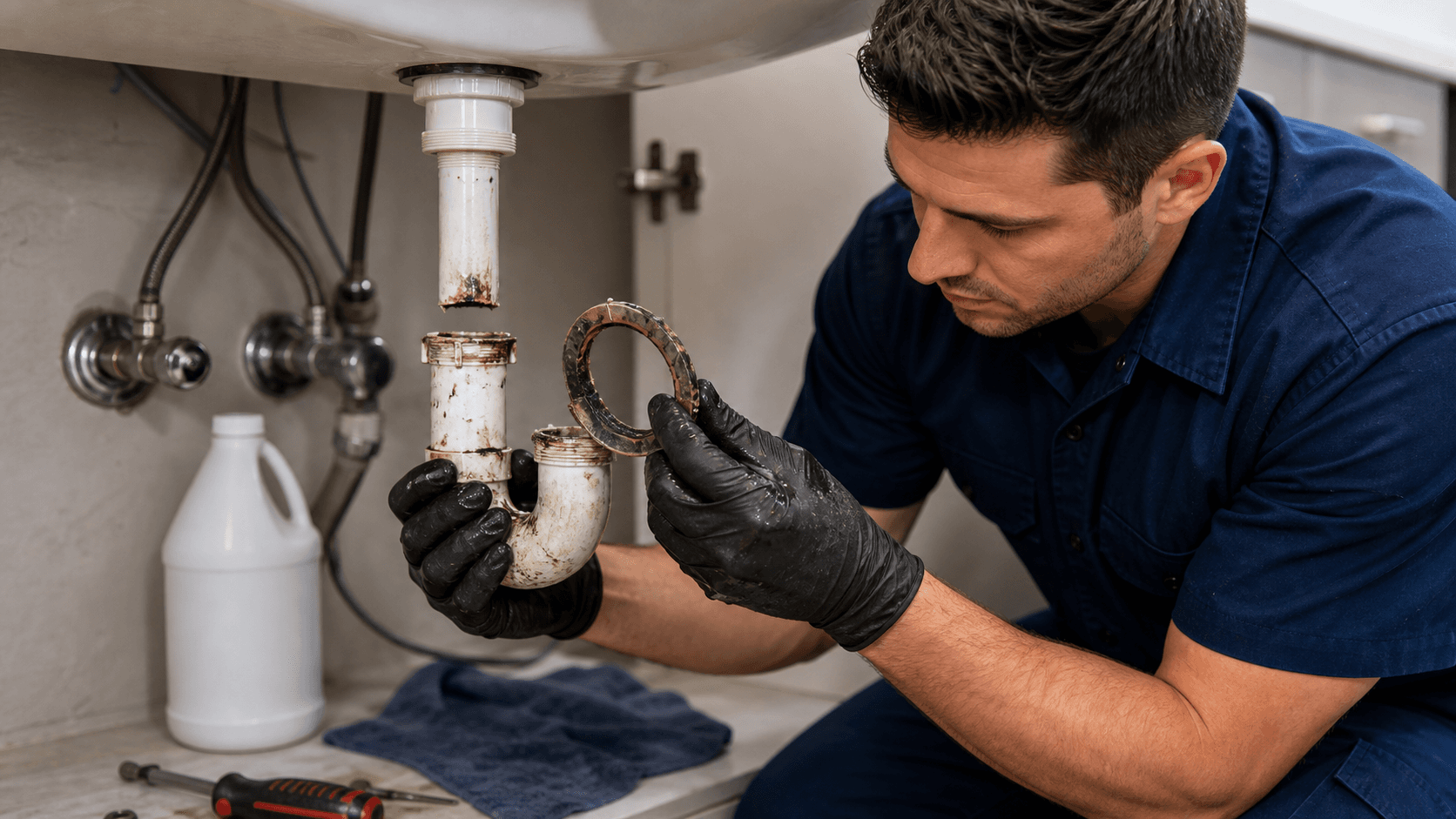
Caustic drain cleaners can damage gaskets, traps, and older pipe materials while sitting above a partial clog.
This happening in your home right now? A licensed plumber can talk you through the next step on the phone — 24/7, and the call is free.
In a freely flowing drain, the Drano solution travels through the line in a few minutes and the heat is distributed across a long run of pipe. Contact time at any single point is brief and damage is minimal. In a partially blocked drain — which is exactly the condition where homeowners reach for Drano — the solution pools above the clog and concentrates all the heat and chemical action on the small section of pipe immediately above the obstruction. The pool can sit for hours or overnight, with the reaction continuing until aluminum is exhausted, focusing 200°F caustic solution on the most fragile section of the line.
The homeowner usage pattern compounds this. Drano label instructions say to pour, wait 15 to 30 minutes, then flush with hot water. In practice, homeowners often pour it before bed, intending to flush in the morning — letting the solution sit for 8 to 12 hours. They re-dose the next day if the clog is not cleared. The cumulative exposure of the localized pipe section can run 12 to 24 hours at near-boiling caustic temperature.
The location of the pooling matters. Most kitchen and bathroom clogs occur at horizontal sections of the drain — the P-trap, the trap arm, the connection at the branch tee. These are exactly the joints with rubber gaskets, slip-joint washers, and the highest concentration of stress on the pipe wall. Pooling above a clog at the P-trap means the caustic solution sits in direct contact with the gasket material for hours.
In a 1965 Bellevue home with cast iron drain stacks and brass or steel drain fittings, the localized pooling targets the most corroded section of pipe with hot caustic. Cast iron is reasonably caustic-tolerant in passing exposure but accelerates corrosion under prolonged heated caustic contact — the localized exposure shortens the remaining service life of an already-aged pipe section.
Damage by pipe material in Bellevue homes
The damage pattern varies by material: cast iron accelerates corrosion at the contact site (worst at existing rust pits), galvanized steel loses its zinc coating and the underlying steel corrodes faster, PVC and ABS soften above 140°F and deform above 160°F, rubber gaskets degrade and crack within months of repeated exposure, brass and chrome plating on visible drain trim show oxidation and pitting. In a typical Bellevue home, multiple materials are present in a single drain run, and Drano damages all of them — just at different rates.
Cast iron — most pre-1980 Bellevue homes. The interior is already corroded by decades of wastewater exposure (the tuberculation discussed in the recurring-clogs guide). Drano contact accelerates corrosion specifically at the rust pits where the iron is already thinnest. Long-term effect: faster progression toward pinhole leaks at the contact site, typically a P-trap or branch fitting.
Galvanized steel — common in pre-1960 Bellevue homes for supply and some drain applications. The zinc galvanizing protects the underlying steel by acting as a sacrificial anode. Sodium hydroxide attacks zinc preferentially (the Pourbaix diagrams for zinc in caustic conditions show rapid dissolution above pH 12.5). After zinc is consumed, the steel is exposed and corrodes faster than it would have with the protective coating intact. The galvanized supply lines in 1960s Bellevue homes guide covers the broader galvanized failure pattern; chemical drain cleaner accelerates that timeline.
PVC and ABS — modern (post-1972) Bellevue homes. PVC softens above 140°F and deforms (creeps) above 160°F. The 200°F peak temperature of Drano reaction exceeds both thresholds. Single short exposure may produce no visible damage, but repeated exposure over months produces visible distortion at the contact site — usually a slight bulge or out-of-round shape at the P-trap that catches debris and accelerates future clogs.
Rubber gaskets and slip-joint washers — universal in residential drains regardless of pipe material. Sodium hydroxide degrades nitrile and EPDM elastomers progressively. After 3 to 5 Drano exposures, the gasket loses elasticity and develops cracks. The visible symptom is a leak under the sink within months — the homeowner blames the original installation or normal aging, but the actual cause is the chemical exposure.
Chrome and brass drain trim — visible portions of P-traps and drain assemblies. Chrome plating oxidizes and develops pitting at the contact site; brass dulls and develops patina. Cosmetic damage only, but visible.
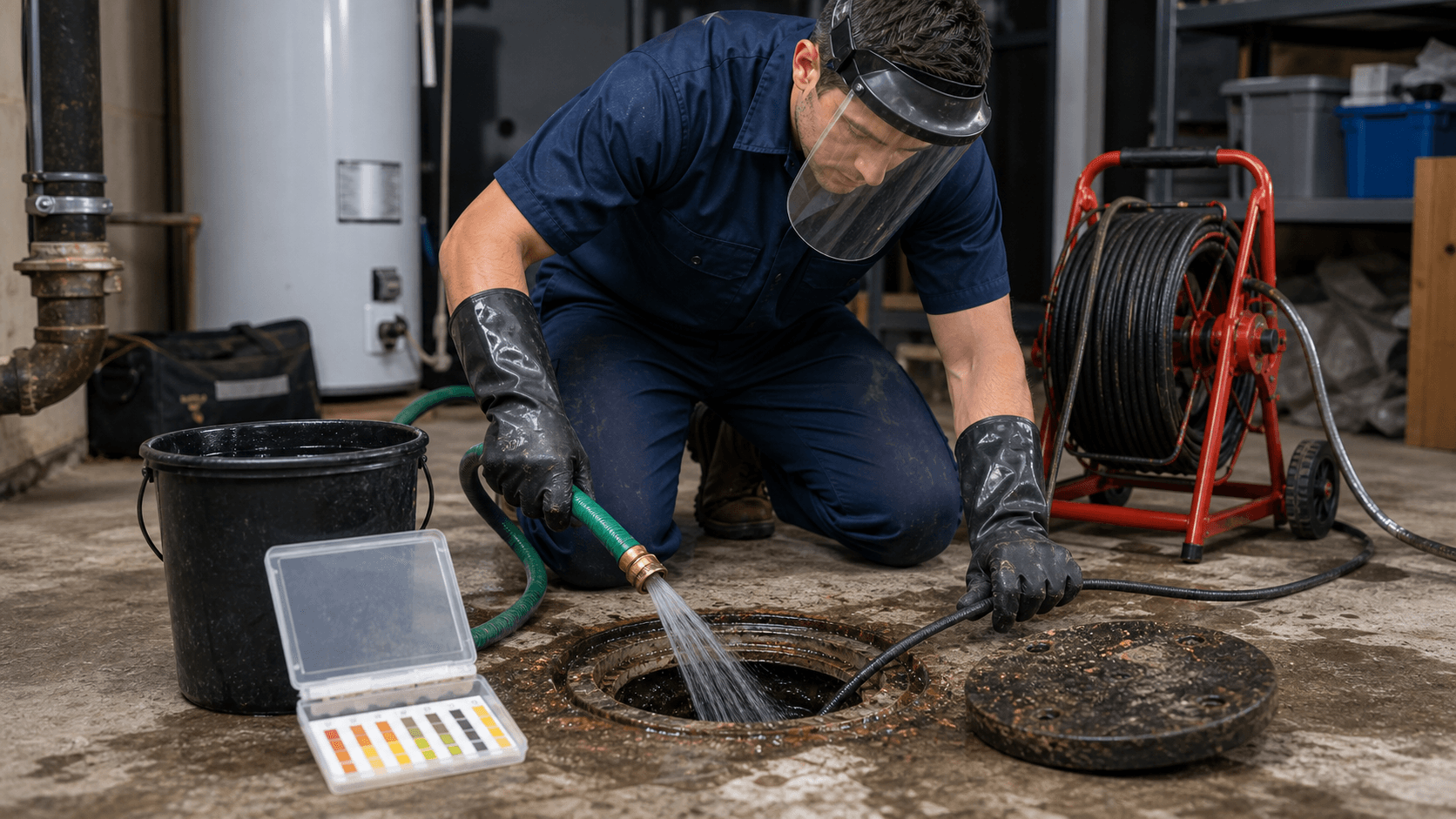
Professional cabling is slower and riskier when caustic residue is still inside the drain.
Why plumbers refuse to cable a line containing chemical residue
Drano and similar caustic drain cleaners create an OSHA-classified hazardous condition in the drain line. A mechanical cable retracting under pressure from a partially cleared clog carries the caustic solution back through the cleanout, splashing toward the plumber's face and arms. Sodium hydroxide contact with skin causes immediate chemical burns; contact with eyes causes permanent corneal damage. Most reputable plumbing companies require either a full flush of the line with neutralizing solution before cabling, or refusal of the service call until the chemical is cleared — both of which add cost and time.
The OSHA hazard classification covers any drain containing residual caustic chemical above a threshold concentration. In practice, a drain that had Drano poured into it within the past 48 hours is treated as hazardous regardless of how much water has been run through it since. The chemical adheres to pipe walls and resuspends when mechanical agitation (cabling) disturbs the line.
The standard safe-work procedure when a plumber arrives at a chemical-treated drain: pour 1 to 2 gallons of clean water down the drain to displace the highest-concentration residue, wait 30 minutes for dilution to occur, then test the displaced water with pH paper at the cleanout. If pH is above 11.5, repeat the flush. Once pH is at or below 11, cabling can proceed with extended PPE (face shield, chemical-resistant gauntlets, full-length apron). This adds 45 to 90 minutes to the service call and the equivalent labor cost.
Some companies charge a flat 'chemical cleared drain' surcharge (typically $75 to $150) for any drain reported as Drano-treated within the past 48 hours. Other companies refuse the call until the homeowner confirms the line has been fully flushed for 24 hours. Either way, the homeowner who reached for Drano to save money on a plumber visit pays more for that plumber visit than they would have for a clean cable on an untreated drain.
What to use instead — and what to do if you already used Drano
Three approaches that work without damaging pipes: enzymatic monthly maintenance (Bio-Clean, Roebic K-87) for kitchen drains, hot water plus dish soap flush for fresh grease, and mechanical cabling from the cleanout for actual clogs. If you have already used Drano and the clog is not cleared: do not add more. Wait 24 to 48 hours for the chemical to neutralize through dilution from normal water use. Open the cleanout with chemical-resistant gloves and dilute further with several gallons of clean water before calling the plumber. Tell the dispatcher exactly what chemical was used and when — this lets them bring appropriate PPE and saves time on arrival.
The full picture of what works for Bellevue kitchen drains specifically is covered in our why kitchen drains keep clogging in Bellevue homes guide. The short version: enzymatic bacterial cultures digest organic matter over days to weeks without damaging any pipe material; hot water and dish soap emulsify fresh grease without exceeding pipe temperature limits; mechanical cabling from a cleanout addresses the clog physically without introducing chemicals.
For recurring clogs — the situation where homeowners most often reach for chemical cleaners — the right answer is rarely more chemical. Recurring clogs in older Bellevue homes typically signal a structural cause (covered in the why your drains keep clogging in an older Bellevue home guide). No amount of Drano addresses tuberculation, bellies, or undersized venting.
If you've already used Drano and need a professional visit: be honest with the dispatcher. Tell them which product, how much, and how long ago. They will adjust the arrival PPE, the access procedure, and the time estimate. A homeowner who admits to using Drano gets a faster, safer service call than one who claims a clean drain and the plumber discovers the residue mid-job. The honesty also typically saves the homeowner from a surprise surcharge — most companies waive the chemical-cleared fee for transparent disclosure.
For pre-existing damage from past Drano use that the homeowner did not know about — the pinhole leaks at P-traps, the cracked gaskets, the deformed PVC — repair is straightforward and not particularly expensive: $150 to $400 typical for a P-trap replacement with new gaskets. The diagnostic value is realizing why repeated leaks have happened in the same spot, and changing the maintenance habit going forward.
Sources
Every fact in this guide cites a verifiable public source. If you find a number we got wrong, email dispatch@bellevueplumberpro.com.
Need help with this in your home? See our Drain cleaning and clog removal in Bellevue page for pricing, our diagnostic process, and how same-day service works across the Eastside.
What Drano and other chemical drain cleaners actually do to Bellevue pipes — questions homeowners ask
QUESTION01
Does Drano damage pipes?
It can. Drano Max Gel and similar products generate exothermic (heat-producing) reactions in the drain. In a freely flowing line the heat distributes and damage is minimal — but in a partial clog the hot caustic concentrates against one spot: cast iron corrodes faster at existing rust pits, galvanized loses its zinc coating, and the heat stresses PVC and rubber gaskets.
QUESTION02
Is Drano dangerous for plumbers?
Caustic drain cleaners create an OSHA-classified hazardous condition in the line. A mechanical cable retracting under pressure from a partially cleared clog can carry the caustic solution back onto whoever is working — which is why plumbers charge extra to cable a Drano-treated drain.
QUESTION03
What should I use instead of chemical drain cleaners?
Enzymatic or bacterial drain treatments digest organic buildup without heat or corrosion, and mechanical clearing (plunger, zip-it, cable) fixes the immediate clog. That's also what monthly maintenance should use.