How do I get rid of drain flies?
Remove the biofilm they breed in: pull the drain cover, scrub the upper pipe walls with a stiff drain brush, and follow with an enzyme or bacterial drain gel that digests the remaining organic layer.
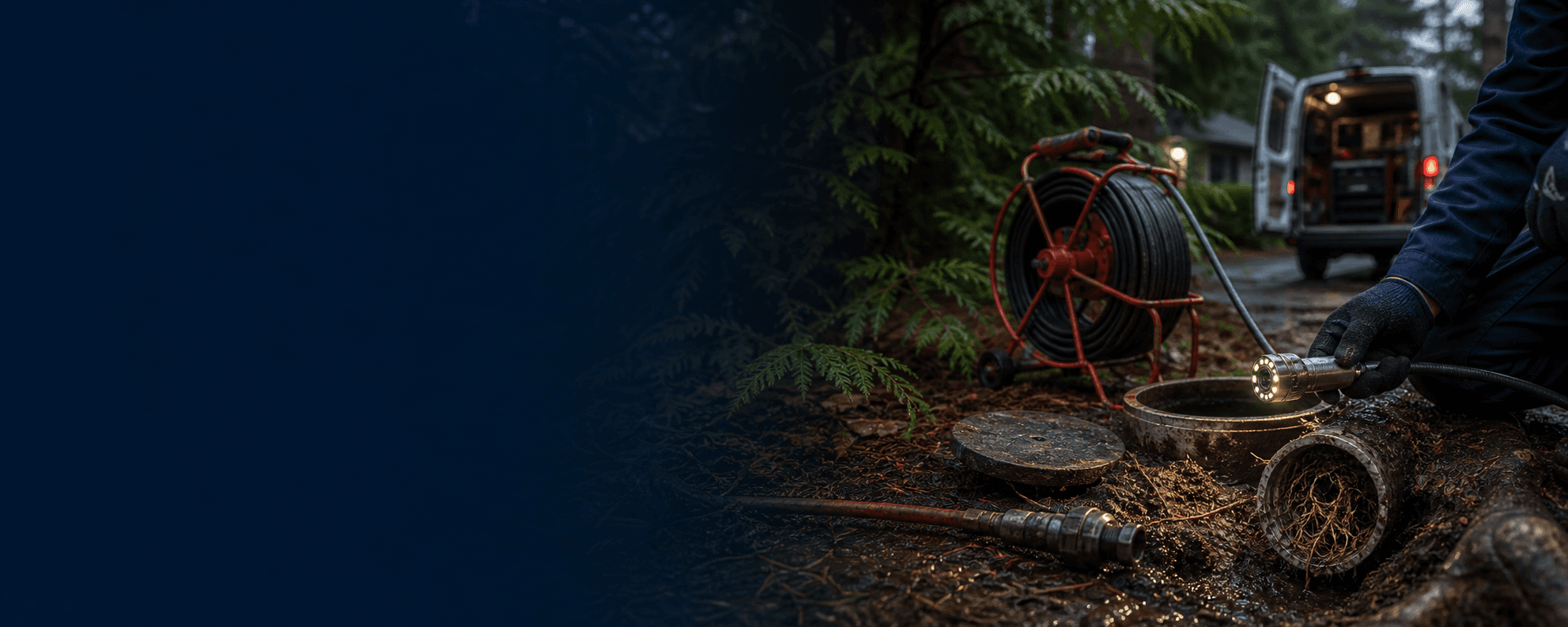
Drain flies — also called sewer gnats, sewer flies, or moth flies — are the small fuzzy-winged insects that hover around sinks, showers, and floor drains. They don't come from outside and they aren't a hygiene judgment: they breed in the gelatinous biofilm that coats the inside of every drain, and they appear wherever that layer gets thick enough to live in. Getting rid of them is a cleaning problem, not a spraying problem — kill the adults and more hatch from the pipe within days. This guide covers identification (drain fly vs. fruit fly vs. fungus gnat), the brush-and-enzyme routine that removes the breeding layer, why infestations come back, and the one scenario that matters more than the bugs: a drain fly population that persists after proper cleaning is a classic early sign of a cracked drain line or sewer breach under the home.
Last reviewed: 2026-06-12
Remove the biofilm they breed in: pull the drain cover, scrub the upper pipe walls with a stiff drain brush, and follow with an enzyme or bacterial drain gel that digests the remaining organic layer. Repeat the gel for 5 to 7 nights. Killing the adult flies with spray or traps does nothing — new adults hatch from the pipe within days until the breeding layer is gone.
The reason most drain fly battles drag on for months is that people fight the adults instead of the nursery. Adult drain flies live about two weeks and lay eggs in the slime layer — biofilm — that coats the first foot or two of pipe below the drain opening. Eggs hatch into larvae that feed on that layer, pupate, and emerge as the next wave of adults. Vinegar traps and fly spray remove the visible generation while the next three are already developing in the pipe. The only durable fix is removing the layer they live in.
The mechanical step matters most. Pull the drain cover or stopper, and run a stiff-bristled drain brush (a few dollars at any hardware store) around the upper pipe walls, the underside of the drain flange, and the stopper mechanism itself — the larvae concentrate in exactly the zones a brush reaches. What comes out is a gray-black gel; that's the breeding site. In bathroom sinks, the pop-up stopper assembly is usually the worst offender and lifts out for cleaning in most designs.
Follow the brushing with an enzyme or bacterial drain cleaner (Bio-Clean, Green Gobbler, InVade, or similar) poured at night so it sits undisturbed for hours. These products digest organic film rather than burning it, which is why they work here and caustic cleaners don't — bleach and boiling water kill the surface layer and leave the deeper film intact, and chemical drain cleaners damage pipes without solving the biology. Repeat the gel for five to seven consecutive nights to interrupt the egg-to-adult cycle completely.
Identify before you treat, because the fixes differ by insect. Drain flies are small, fuzzy, moth-like, and sit on walls near the drain; they fly in short hops rather than circles. Fruit flies are tan with red eyes and circle fruit, trash, or recycling — their fix is removing the food source. Fungus gnats are slender, dark, and come from overwatered houseplant soil. A strip of clear tape over the drain opening overnight settles the question: drain flies stick to it on their way out of the pipe.
This happening in your home right now? A licensed plumber can talk you through the next step on the phone — 24/7, and the call is free.
Call a plumberThree reasons: the biofilm was knocked down but not removed (it regrows in 2 to 4 weeks), a rarely-used drain has a dry trap that's open to the sewer, or the flies are breeding somewhere you haven't treated — a floor drain, an overflow opening, or under a slow leak. Persistent return after thorough cleaning points to a breach in the drain line itself.
Biofilm regrows — that's the most common relapse. One brushing plus one bottle of gel knocks the population down for a few weeks, the film re-establishes, and the flies return. The durable routine for a problem drain is monthly: a quick brush and a single overnight enzyme treatment. Households that run hot, greasy kitchen loads regrow film fastest, which is the same mechanism behind kitchen grease clogs — the fly problem and the future clog are the same layer at different thicknesses.
Dry traps are the second source, and the sneakiest. Every drain has a U-shaped trap holding water that seals sewer air (and sewer insects) out of the house. A guest bathroom shower, a basement floor drain, or a laundry sink that goes unused for a month evaporates its trap seal, and the drain becomes an open doorway to the sewer line — flies, gnats, and sewer smell walk right in. The fix costs nothing: pour a quart of water down every rarely-used drain monthly, with a spoonful of mineral oil on top to slow evaporation in drains used only seasonally.
Hidden breeding sites are the third. The overflow opening in a bathroom sink connects to its own small channel that grows film and breeds flies even when the main drain is clean — flush it with the enzyme gel too. Floor drains in garages, crawlspaces, and utility rooms are favorites. So is any spot with chronic dampness: under a dishwasher with a slow leak, a sweating pipe in a vanity cabinet, a washing machine pan. If the flies cluster in a room with no obvious drain, start looking for moisture rather than a drain.
When you've done all of it — brushed, treated nightly for a week, restored every trap, hit the overflows — and the flies persist or keep appearing in the same room, stop treating and start suspecting the pipe. A drain line crack under a slab, a separated joint in a crawlspace, or a root-damaged sewer lateral leaks nutrient-rich water into soil and gives drain flies an unlimited breeding ground you cannot reach with a brush. That scenario is the next section, and it's the one with real money attached.
A drain fly infestation that survives proper cleaning, appears near floor level with no drain nearby, or comes with sewer odor, gurgling, or unexplained damp spots is a recognized early indicator of a cracked drain line or sewer breach — the flies are breeding in leaked sewage in the soil or under the slab. That calls for a camera inspection, not more enzyme gel.
Pest control literature and plumbing diagnostics agree on this pattern: persistent drain fly activity with no identifiable breeding site is a moisture-intrusion indicator. The flies need wet, organic-rich material to reproduce. When the accessible film is gone and they keep coming, they've found a supply you can't see — and under a house, that supply is almost always a leaking drain or sewer line wetting the soil. Exterminators who treat the same house repeatedly for drain flies often end the cycle by referring the homeowner to a plumber.
The corroborating signs to check: a musty or sewage odor that comes and goes (sewer smell in the house has the room-by-room diagnostic), gurgling fixtures (gurgling drains covers what the sounds mean), a patch of floor or yard that stays damp, unusually lush grass over the sewer line's path, and on slab homes, warm or discolored flooring. Any two of those together with persistent flies makes the case for inspection strong.
The diagnostic is a sewer camera, and it answers the question definitively: a self-leveling camera runs the line from the cleanout and shows cracks, separations, root intrusion, and standing leaks on screen, with a locator marking the exact spot above ground. In Bellevue this runs $295 to $345 with the footage emailed to you — the full process is in our sewer camera inspection cost guide. On the Eastside, the usual culprit behind a breached lateral is root intrusion from mature cedars and firs, the pattern covered in our cedar root intrusion guide.
The cost logic favors checking early. A camera inspection is a few hundred dollars; a drain line that leaks under a slab for two years funds mold remediation, soil settlement, and a five-figure repair. Drain flies are a nuisance, but they're also free leak detection — a biological sensor that something under the house is wet that shouldn't be. If your infestation has survived a real cleaning campaign, call (425) 800-0974 and describe the pattern; a licensed plumber can usually tell you on the phone whether it sounds like biology or a breach.
Day 1: identify with the tape test and locate every breeding drain. Days 1–2: brush every affected drain and overflow, restore dry traps. Nights 1–7: enzyme gel in every treated drain. Day 14: re-check with tape. Still positive after a clean round: camera inspection.
Day one is reconnaissance. Tape-test every suspect drain overnight — kitchen, bathroom sinks, showers, tubs, floor drains, laundry. Flies stuck to the tape mark active breeding drains. Walk the house for rarely-used fixtures and pour water into every drain that hasn't run in two weeks; if a room smells like sewer before you do this and stops after, a dry trap was your whole problem and the flies should fade within the two-week lifespan of the remaining adults.
Days one and two are mechanical. Brush every positive drain: cover off, stopper out, stiff brush worked around the upper pipe, flange, and stopper assembly, then a hot-water flush. Hit bathroom sink overflows with a small bottle brush if they're accessible. This single step removes the majority of the breeding mass — the gel nights that follow are mop-up, not the main event.
Nights one through seven are biological. Enzyme or bacterial gel down each treated drain at bedtime, no water afterward until morning. Seven consecutive nights outlasts the egg-to-adult cycle (about one to three weeks depending on temperature), so larvae that survive the brushing hatch into a pipe that can no longer feed them. Expect adult sightings to drop steadily through the week and reach zero a few days after the last treatment as the final adults age out.
Day fourteen is verification. Re-tape the drains overnight. Clean tape means you're done — move to the monthly maintenance routine (quick brush, one gel night, water down the unused drains). Flies on the tape after a full, honest round means the breeding site isn't in a drain you can reach, and that's the camera-inspection conversation from the previous section. Our drain cleaning service handles both ends of it: hydro jetting strips biofilm from the full line length when the problem is stubborn but reachable, and the camera finds it when it isn't.
Every fact in this guide cites a verifiable public source. If you find a number we got wrong, email dispatch@bellevueplumberpro.com.
Need help with this in your home? See our Drain cleaning and clog removal in Bellevue page for pricing, our diagnostic process, and how same-day service works across the Eastside.
Related services: Sewer Line Repair and Replacement.
Remove the biofilm they breed in: pull the drain cover, scrub the upper pipe walls with a stiff drain brush, and follow with an enzyme or bacterial drain gel that digests the remaining organic layer.
Three reasons: the biofilm was knocked down but not removed (it regrows in 2–4 weeks), a rarely-used drain has a dry trap open to the sewer, or the flies are breeding somewhere you haven't found yet.
Sometimes. An infestation that survives proper cleaning, appears near floor level with no drain nearby, or comes with sewer odor, gurgling, or unexplained damp spots is a recognized early indicator of a cracked or leaking line under the slab.