Why does my shower drain smell like sewage?
In order of likelihood: a dry P-trap (the water seal evaporated in a rarely-used drain), biofilm in the drain producing hydrogen-sulfide odor, or a venting problem pushing sewer gas back through the trap.
A sewage smell from a shower or sink drain is one of the most common plumbing complaints, and the most common cause is also the most fixable: a dry P-trap. The P-trap is the U-shaped pipe under every drain that holds standing water as a seal against sewer gas — when it dries out (usually in a guest bath or vacation property), sewer air walks straight into the room. The second most common cause is biofilm: the organic layer inside the drain pipe that bacteria digest into hydrogen sulfide, which smells exactly like sewer gas. Neither of those is a plumbing emergency. The one scenario that is worth calling about — a persistent smell that returns after cleaning and comes from a drain that's used regularly — can indicate a cracked pipe, a failed wax ring, or a vent line problem. This guide covers every cause in order of likelihood, how to confirm which you have, and how to fix it.
Last reviewed: 2026-06-13
In order of likelihood: (1) dry P-trap — the water seal evaporated in a rarely-used drain, leaving a direct opening to the sewer line; (2) biofilm in the drain — bacteria on organic buildup produce hydrogen sulfide; (3) clogged vent pipe — sewer gas pushed backward through the trap by negative pressure; (4) cracked drain line or failed wax ring — rare but the reason a persistent smell after cleaning warrants inspection.
Every drain in a house connects to a drain-waste-vent (DWV) system that terminates in the sewer or septic. The only thing keeping sewer gas out of your living space is a column of water sitting in the P-trap — the curved pipe segment directly below the drain opening. That water evaporates when a drain sits unused for two to four weeks, and when it's gone, the trap is open. A vacation home, a guest bathroom shower that goes months between uses, a basement floor drain — these are the dry-trap candidates. The fix costs nothing: pour a quart of water down the drain.
Biofilm is the second cause and the one that produces the rotten-egg hydrogen sulfide smell most people associate with sewage. Hair, soap scum, and skin cells accumulate in the first foot of pipe and the drain body itself, and the anaerobic bacteria that live in that film release H₂S as a metabolic byproduct. The smell is worse after the shower runs (warm water volatilizes the gas) and after a hot day. A drain brush and enzyme cleaner — same routine as the drain fly elimination plan — removes it in one session.
A clogged or obstructed vent pipe creates negative pressure in the drain line when water flows through it. That pressure can pull the water out of trap seals (called siphoning), or it can push sewer gas backward through partially-emptied traps. Signs of a vent problem: gurgling sounds when drains run, multiple fixtures smelling simultaneously, or toilets that bubble when the washing machine drains. Vent obstructions are usually leaves or a bird nest at the roof penetration, cleared with a garden hose from above.
The concerning scenario — worth a plumber call — is a smell that returns within days after you've cleaned the drain and confirmed the trap is full. That pattern points to a source you can't reach with a brush: a cracked drain line leaking sewer gas through the wall or floor, a failed wax ring under a nearby toilet venting past the seal, or a disconnected vent joint in the wall. These require inspection to diagnose, and a camera is the definitive tool.
This happening in your home right now? A licensed plumber can talk you through the next step on the phone — 24/7, and the call is free.
Call a plumberPour a quart of water and a teaspoon of mineral oil down any drain that sits unused — the water restores the trap seal, the mineral oil slows evaporation. For active drains that smell, pull the drain cover, scrub the upper pipe walls and stopper with a drain brush, then run enzyme drain gel overnight for three to five nights. Most smell problems are resolved in one session.
Dry trap, active drain: if the smelly drain is used regularly (a primary shower, a kitchen sink), a dry trap is unlikely unless the house was vacant for weeks. The smell is almost certainly biofilm. Pull the drain strainer — usually a quarter-turn counterclockwise — and look at the inside of the pipe. What you'll see coating the walls is gray-black gel: that's the source. A stiff drain brush (narrow enough to enter the 1.5 or 2-inch drain pipe) worked around the upper walls and the underside of the drain flange removes the majority of it. Follow with an enzyme gel (Bio-Clean, Green Gobbler, InVade Bio Drain) poured at bedtime so it sits for hours. Repeat for three to five nights. The smell should drop significantly after the first night.
Dry trap, unused drain: pour a quart of water down the drain slowly so it fills the trap. Add a teaspoon of mineral oil or baby oil — it floats on the trap water and slows evaporation, keeping the seal effective for months instead of weeks. A spoonful every two months is a maintenance habit that eliminates guest-bathroom smell complaints entirely. For floor drains in garages or basements that only need seasonal use, a rubber floor-drain plug ($3 at any hardware store) is the alternative — pull it when the drain is needed, replace it when not.
Shower drain smell specifically: shower drains accumulate hair in the drain cover and the pivot zone of the pop-up mechanism (if it has one) faster than kitchen or bathroom sink drains do. The hair mat combines with soap scum to create an especially productive biofilm layer. A drain snake or hair-pull tool (the flexible plastic barb type) pulls the mat out; a brush finishes the walls. Many shower drain covers simply lift out; others have a center screw. Zip-It or similar barb tools are the right tool for hair — a brush alone misses the compacted mass in the center.
Bathroom sink overflow channel: every bathroom sink has an overflow hole near the top of the basin that connects to a channel behind the faucet. That channel drains into the main drain line but rarely gets water flowing through it, so it accumulates biofilm and can smell despite the main drain being clean. A small bottle brush or a pipe cleaner pushed through the overflow opening clears it. If the overflow channel is the source, the smell is worst when you lean over the sink — the channel opening is on the front underside of the basin.
Call a plumber when: the smell returns within a few days of cleaning, comes from a drain that's used daily, is accompanied by gurgling or slow drainage in other fixtures, or appears after a hard rain (ground saturation pushing sewer gas through cracks in the lateral). These patterns point beyond biofilm to a pipe, vent, or wax ring issue.
Smell that returns within days after cleaning means the gas source is not in the accessible pipe — it's entering through a breach upstream of where the brush reaches. Two common breach points in Bellevue homes: a failed wax ring under a nearby toilet, and a cracked drain line in the wall or under the slab. The wax ring is the simpler check: if the smell is worst near the toilet and appears when the toilet flushes, the ring is the likely culprit. A plumber can confirm with a smoke test — pressurizing the drain system with theatrical smoke to identify the leak point.
Gurgling plus smell is a vent problem until proven otherwise. Sewer gas should exit through the vent stack on the roof; when the vent is blocked or the stack configuration is wrong, gas finds the path of least resistance — back through trap seals into living spaces. In the Pacific Northwest, roof vent openings can collect debris from conifer trees, and the most common blockage is a compressed mass of needles. A plumber or roofer with a garden hose can usually clear it from above in 20 minutes; camera inspection is only needed if the hose doesn't solve it.
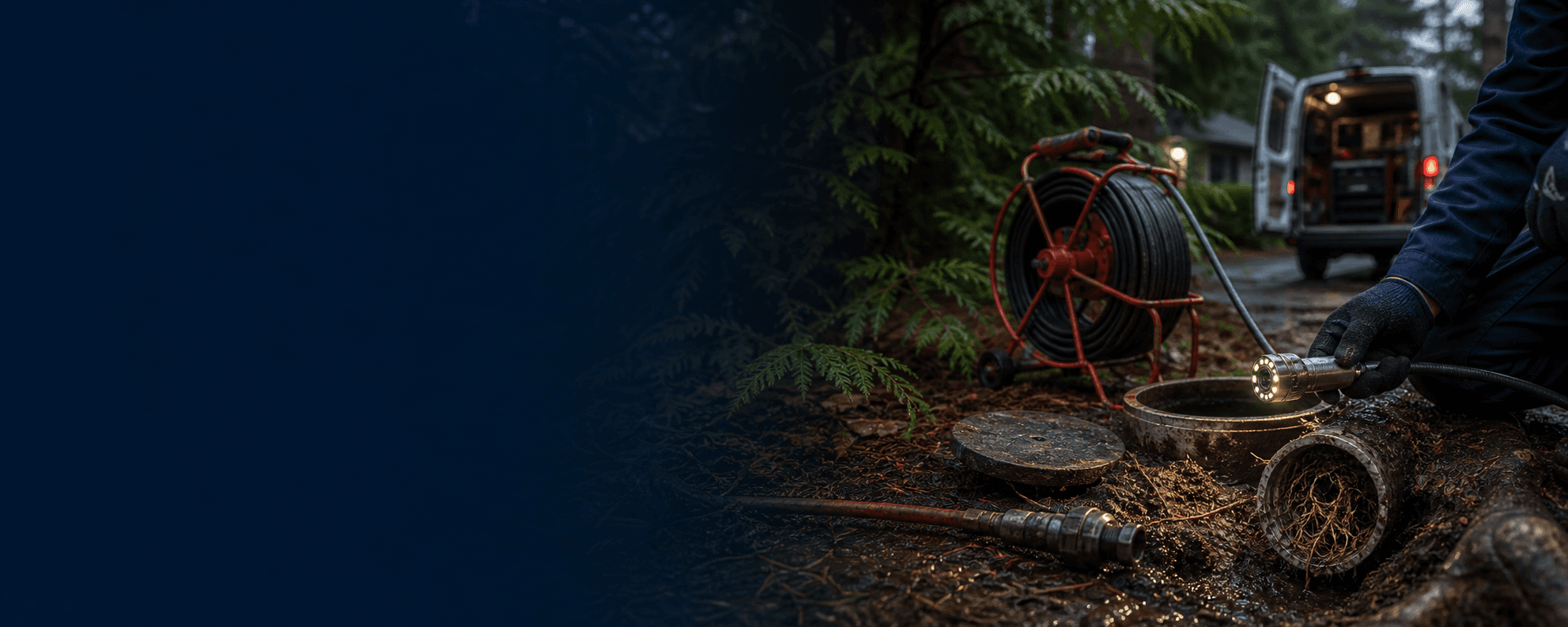
Smell after heavy rain is a specific Eastside pattern. When the soil around a sewer lateral becomes saturated, groundwater pressure can infiltrate cracked joints in older clay or cast-iron pipes, and that water carries the anaerobic smell of the sewer environment into the house when it evaporates. Homes in older Bellevue neighborhoods — Crossroads, Lake Hills, Newport Hills — with original 1960s sewer laterals are the most common candidates. This is also the pattern that eventually produces cedar root intrusion problems as roots follow moisture into the pipe joint. A camera inspection ($295 to $345) is the definitive diagnostic.
The sewer smell in the house guide covers this room-by-room in more detail. Our drain cleaning service in Bellevue handles the mechanical side — hydro jetting strips biofilm from the full run when brushing and enzyme treatment don't hold — and we carry a camera on every truck for when the diagnosis needs to go deeper.
Every fact in this guide cites a verifiable public source. If you find a number we got wrong, email dispatch@bellevueplumberpro.com.
Need help with this in your home? See our Drain cleaning and clog removal in Bellevue page for pricing, our diagnostic process, and how same-day service works across the Eastside.
Related services: Sewer Line Repair and Replacement.
In order of likelihood: a dry P-trap (the water seal evaporated in a rarely-used drain), biofilm in the drain producing hydrogen-sulfide odor, or a venting problem pushing sewer gas back through the trap.
For a dry trap, pour a quart of water plus a teaspoon of mineral oil down the drain — the water restores the seal and the oil slows evaporation. For active drains, pull the cover and scrub the biofilm from the upper pipe walls.
When the smell returns within days of cleaning, comes from a daily-use drain, is accompanied by gurgling or slow drainage in other fixtures, or appears after a hard rain — those point past the trap to the vent or sewer line.