Home/Learn/Seasonal plumbing/Eastside cold-snap playbook: real-time response when temperatures hit the teens
Seasonal
Eastside cold-snap playbook: real-time response when temperatures hit the teens
When the National Weather Service Seattle forecast calls for sustained sub-25°F temperatures across the Eastside, every Bellevue homeowner enters a 48-72 hour high-risk window. The January 2024 cold snap — when daytime highs stayed below 20°F over a weekend — produced over 150 documented water-leak responses by Seattle Fire Department, 312 water line break responses by Eastside Fire and Rescue in Issaquah alone, four school closures from burst pipes in Stanwood-Camano district, and displacement of Seattle University students from flooded dorms. The homes that came through intact weren't lucky — they followed an explicit pre-event, during-event, and post-event playbook. This guide is that playbook: the 48-hour pre-arrival checklist, the during-event thermostat and flow strategy, the power-outage contingency for the windstorm-plus-freeze scenario that took down 100,000+ PSE customers in early 2025, the first-sign-of-trouble response sequence, and the post-event walk-through that catches the slow leaks before they become claim events.
A cold snap in PNW context is any sustained period of four or more days with overnight lows below 25°F. Real damage clusters when daytime highs also stay below freezing — the four-day stretch that defined the January 2024 event saw daytime highs at or below 20°F. Below those thresholds, exposed and inadequately-insulated plumbing fails at scale.
Bellevue's normal winter. Per NOAA's 1991-2020 climate normals, Bellevue's December average low is 37°F. Even January, the coldest month, sees overnight lows averaging in the mid-30s. Most winters bring 5-10 nights below 25°F but rarely sustained multi-day events. The infrastructure is designed for that mild profile — homes are insulated to PNW standards, irrigation systems are seasonal, plumbing routes through unheated spaces are accepted practice.
The cold-snap signal. When the forecast calls for 4+ consecutive days below 25°F, particularly with daytime highs also below freezing, normal infrastructure is operating outside its design envelope. Exposed garage hose bibs that survive 28°F overnight events fail at 18°F sustained. Crawlspace supply lines that survive a single freeze night fail after 72 hours of sub-20°F ambient. Heat pump water heaters in unconditioned spaces lose efficiency and may switch to electric resistance backup, drawing 4500 watts at the same time PSE is asking customers to reduce load.
Historical reference points. The January 2024 cold snap is the most-recent severe event in regional memory — the Seattle area didn't warm much above 20°F over the affected weekend. Earlier comparable events include the December 2021 cold snap, the January 2017 freeze, and the historic December 1996 ice storm. Each produced widespread burst-pipe damage in homes that hadn't done the prep work. The pattern is consistent: prep matters more than weather, every time.
What the forecast tells you. The National Weather Service Seattle office issues Freeze Warnings, Hard Freeze Warnings, and Wind Chill Advisories ahead of cold events. A Hard Freeze Warning (sustained sub-28°F overnight) is the threshold for activating this playbook. The forecast horizon is typically 3-5 days, which gives the homeowner enough time for the pre-event window. The October prep checklist in our Bellevue winterization guide is the foundation; this playbook is the layer on top for active events.
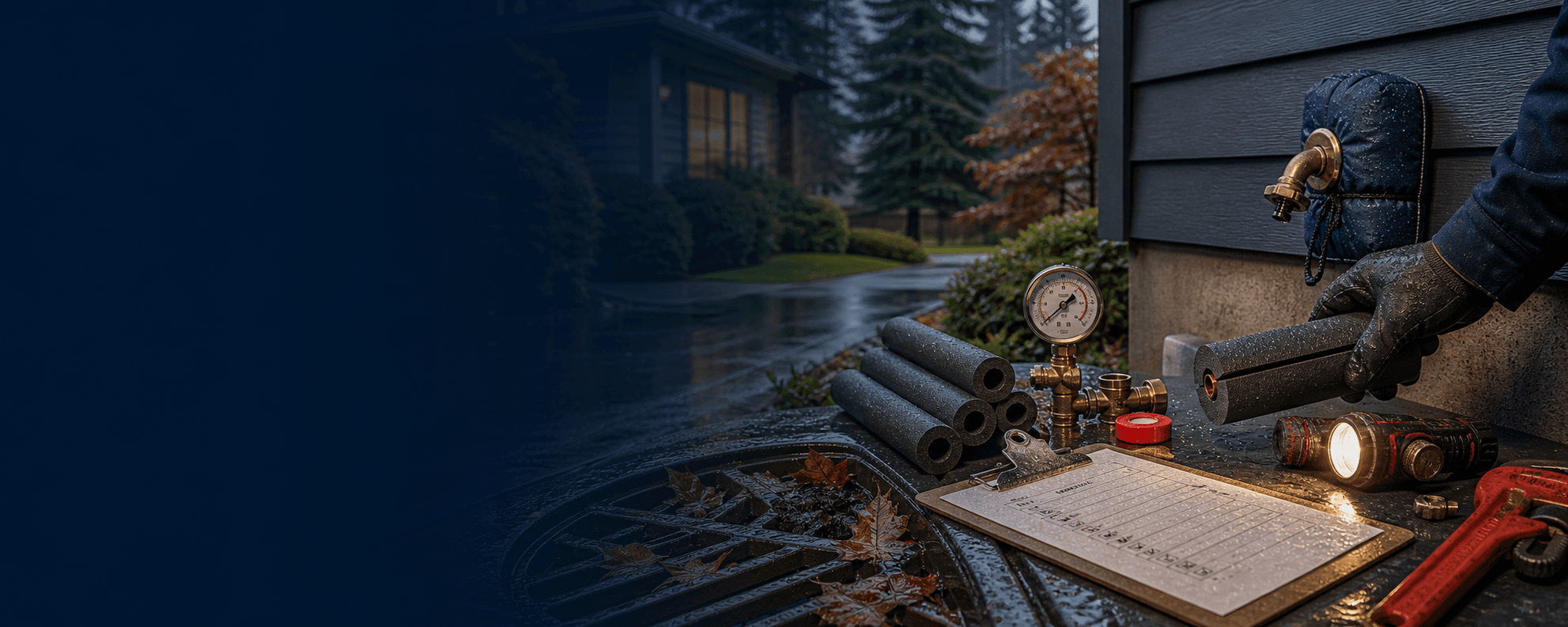
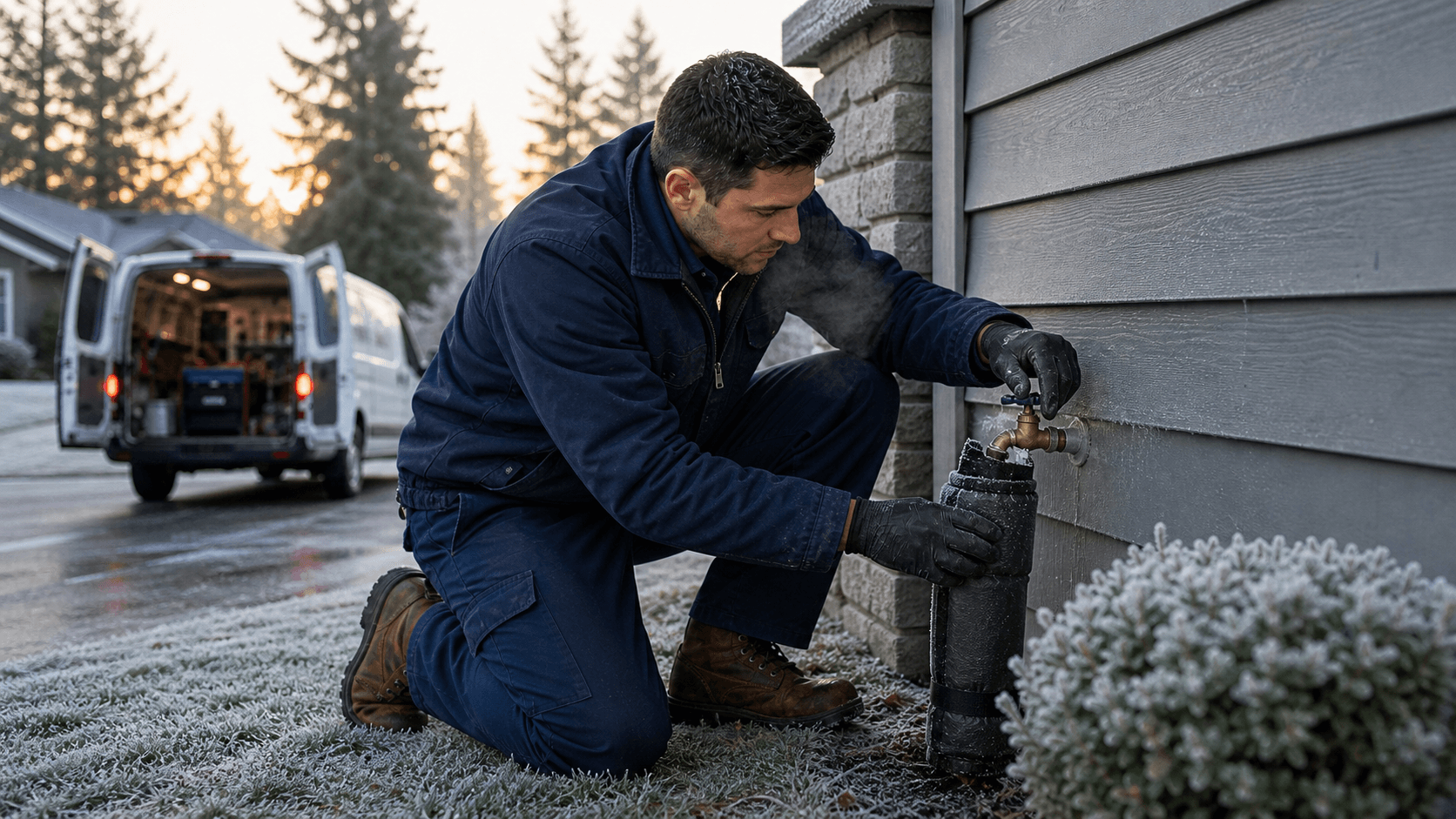
When temperatures hit the teens, exterior hose bibs and exposed wall runs need immediate attention.
This happening in your home right now? A licensed plumber can talk you through the next step on the phone — 24/7, and the call is free.
When the forecast confirms a cold snap is inbound, the 48-hour window before arrival is the highest-leverage prep time. Six actions matter: confirm October prep is in place, identify and brief every household member on the main shutoff, charge phones and flashlights, stage drip-faucet locations, plan the thermostat strategy, and stage materials for the during-event response.
Why the 48-hour window. Most October prep covers the structural items (insulation, vent covers, irrigation drain). The 48-hour pre-event window adds the active-management items that only matter during the event itself. Both layers together produce a home that comes through a severe cold snap intact.
Phone and flashlight charging. PSE windstorm events frequently coincide with cold snaps — the same low-pressure systems that bring Arctic air also bring high winds. PSE outages affecting 100,000+ customers have occurred during freeze events. A 12-hour outage during a sustained freeze drops indoor temperatures dangerously fast and removes the ability to call for help. Charged phones, flashlights, and portable battery banks ensure the household can navigate an outage without scrambling for power.
Shutoff briefing. The single highest-stakes 60-second decision during a burst-pipe event is reaching the main shutoff before significant water enters the house. If only one household member knows the shutoff location, the chances of being available at the moment of failure are 50/50 at best. Brief everyone. Walk the location together. Confirm understanding.
48-hour pre-event Bellevue cold-snap checklist:
Verify October winterization is in place — hose bibs disconnected, irrigation blown out, crawlspace vents covered, pipe insulation on exposed runs. If any was missed, do it now in the warmer air ahead of the event
Walk the household through the main water shutoff location — every adult and teenager should know where it is and how to operate it
Charge every phone, flashlight, and portable battery in the household. Test the flashlights at the shutoff locations
Identify the drip faucets — typically the upper-floor bathroom on the north or west side of the house, plus a kitchen sink. These are the locations you'll set to a pencil-thick drip during the event
Plan the thermostat strategy — 60°F minimum overnight, cabinet doors open under sinks on exterior walls. Brief any household members who tend to lower the thermostat
Stage the response materials — towels, buckets, a wet/dry vacuum if available, and the phone numbers for your insurance carrier's 24/7 claims line and your preferred plumber
The during-event playbook — thermostat, drip, and cabinet strategy
During an active cold snap, three actions prevent most freeze failures the prep didn't already cover: maintain the thermostat at 60°F minimum day and night, open cabinet doors below kitchen and bath sinks on exterior walls, and leave a pencil-thick drip running from the upper-floor and kitchen faucets identified during pre-event prep.
Thermostat at 60°F. The advice 'don't go below 55°F when away' assumes mild weather and a tight building envelope. Bellevue homes during a sub-20°F event have neither. Heat distribution within a house is uneven — closets, corners, exterior-wall plumbing, and unused rooms can run 10-15°F below the thermostat reading. At 55°F whole-house, the exterior-wall plumbing can drop into the low 40s overnight; at 60°F whole-house, the same plumbing stays in the mid-50s. The marginal heating cost between 55°F and 60°F over a 4-day event is roughly $25-$80 in PSE billing depending on heating fuel and home size. The cost of a single burst pipe is $3,000-$40,000.
Cabinet doors open. Under-sink cabinets on exterior walls create sealed pockets of cold air around the supply lines. Opening the cabinet doors during freeze events lets warm room air reach the lines and prevents the pocket from concentrating cold. This is especially relevant for kitchen sinks on the north side of the house and bathroom sinks on exterior walls — exactly the locations most likely to fail during a sustained event.
Drip faucets. Moving water resists freezing because the kinetic energy disrupts ice crystal formation. A pencil-thick drip from the highest fixture on the coldest run of plumbing (usually an upper-floor bathroom on the north or west side of the house) ensures continuous movement through the most vulnerable section. The water cost during a four-day freeze is roughly $3-$8 at Bellevue Utilities' current rates. Drip both hot and cold lines — both are vulnerable. Run two faucets if the home has two distinct cold runs.
What the drip actually does. The flow rate at a pencil-thick drip is roughly 1 gallon per hour. That's not enough to keep moving water if the pipe is fully blocked, but it's enough to prevent the blockage from forming. By the time water in a pipe stops moving entirely, freezing has already started — the drip prevents the stoppage.
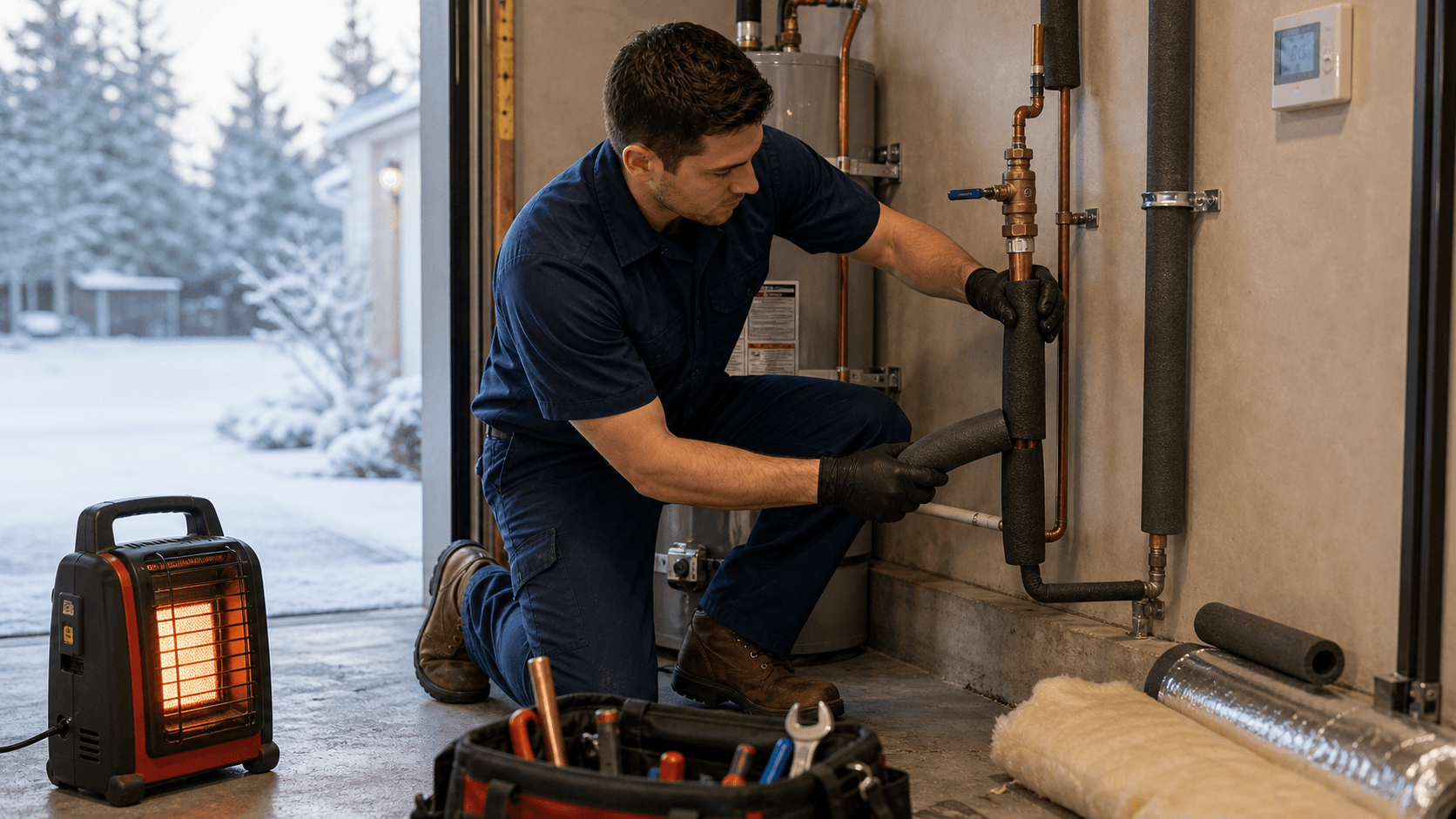
The cold-snap playbook is about fast triage: protect exposed runs, know the shutoff, and monitor vulnerable rooms.
The power-outage contingency — the windstorm-plus-freeze scenario
When the cold snap coincides with a PSE windstorm outage — historically common in the Pacific Northwest — the thermostat strategy collapses and the response shifts to either alternative heat (gas fireplace, wood stove, generator) or full water-system shutdown to prevent burst risk during extended cold without heating. The decision threshold is roughly 24 hours: outages under 24 hours can usually be ridden out; outages projected longer than 24 hours warrant shutting off the main supply.
Why this scenario matters. PSE windstorm outages have affected 100,000 to 363,000 customers in recent events. The same low-pressure systems that bring Arctic air mass to the PNW often bring high winds that knock down trees and power lines. The convergence — extended freeze plus extended power outage — is the worst-case scenario for residential plumbing.
Short outage strategy (under 12 hours). Maintain interior heat with whatever supplemental source is available — gas fireplace, wood stove, propane heater (well-ventilated only), or layered passive insulation (close doors to unheated rooms, gather everyone in the warmest room, blankets). Keep the drip faucets running. Monitor temperatures with an instant-read thermometer at the coldest plumbing locations. Most short outages don't drop indoor temperatures below 55°F if windows are intact and doors stay closed.
Extended outage strategy (12-24+ hours). The thermostat is offline regardless of supplemental heat. Move to the shutdown decision. Close the main water shutoff. Open every faucet in the house to drain residual water from the supply lines. Drain the water heater via the drain valve to a floor drain or garden hose to outside. Flush every toilet to remove water from the tank and bowl (the bowl water can be replaced with non-toxic antifreeze for extended outages — propylene glycol, pet-safe RV antifreeze). At this point, the plumbing is largely drained and freeze-resistant. Restore the system after power returns and indoor temperatures recover.
Generators and alternative heat. Whole-house generators ($8,000-$15,000 installed in Bellevue) eliminate the outage scenario for homeowners who maintain them. Portable generators ($1,000-$3,000) running an extension cord to the furnace transfer switch provide partial coverage. Gas fireplaces with battery-backup ignition continue working through outages. Wood stoves with adequate fuel supply provide reliable heat. Any of these change the calculus from 'shut down the plumbing' to 'ride it out warm.'
First sign of trouble — the response sequence when something fails
If you detect any sign of failure during the event — sound of water inside a wall, visible drip, sudden loss of flow at a fixture, audible hammering or banging from pipes, smell of damp drywall — operate the main shutoff first, then identify and isolate the source, then begin documentation and call for help. Speed of shutoff is the single most important variable.
The audible signs. Burst pipes are often audible before they're visible. A sudden hammering or whooshing sound from a wall, a high-pitched whine from a pipe (sometimes from partial freeze restricting flow), or a rumbling sound from the water heater all warrant immediate investigation.
The flow signs. A fixture that suddenly produces no flow during a freeze event has either a frozen line upstream (recoverable if thawed before bursting) or a burst line upstream (water is escaping somewhere). Either way, the main shutoff is the right immediate action — it stops the water for both scenarios while you investigate.
The visible signs. Standing water on a floor, wet drywall, drip at a ceiling fixture, frost or ice on a visible pipe, sudden formation of a bulge or crack in drywall around a plumbing run — all indicate active failure. Main shutoff first, always.
The investigation sequence. Once water is shut off at the main, walk the house with a flashlight. Listen for residual dripping. Look at every plumbing penetration, every wall cavity that contains plumbing, every ceiling area below a bathroom or kitchen. The source is usually visible within a few minutes. The full diagnostic framework for identifying source is in our where every shutoff valve is in a Bellevue home guide.
The call for help. With main water shutoff completed and source identified, call for help. Plumbers during cold-snap events are heavily booked — call the company you'd normally use, then a second and third option. The full pricing reality for emergency response during severe events is in our emergency plumber cost in Bellevue and after-hours plumbing decision guide.
What the January 2024 cold snap actually produced
The January 2024 PNW cold snap produced over 150 documented water-leak responses by Seattle Fire Department in the affected weekend, 312 water line break responses by Eastside Fire and Rescue in Issaquah, burst-pipe school closures across Stanwood-Camano district, flooding in Swedish First Hill hospital patient rooms, and displaced Seattle University students. The pattern of damage clustered in homes without prep — homes that had done the October work and run the during-event playbook largely came through intact.
The numbers. Per Seattle Times reporting, Seattle Fire Department received over 100 'no water' reports during the cold snap, with crews responding to more than 150 water leaks since the freeze began. Eastside Fire and Rescue in Issaquah responded to 312 water line breaks since the previous Sunday morning. A regional water-damage restoration company responded to over 150 homes and businesses with active flooding from burst pipes.
The geographic pattern. Damage was distributed across Western Washington with notable clusters in older housing stock and homes with exposed garage plumbing. The Stanwood-Camano Island school district saw four schools close from burst pipes (Utsalady Elementary, Elger Bay Elementary, Stanwood Middle School, Port Susan Middle School). Swedish First Hill hospital reported flooding in patient rooms in the East Tower. Seattle University students were displaced from a residence hall.
The temperature profile. The Seattle area didn't warm above 20°F over the affected weekend. Daytime highs stayed below freezing for 3-4 consecutive days; overnight lows dropped into the teens. This is the temperature profile this playbook is designed to address — sustained sub-20°F for multiple days is when the prep work earns its keep.
What the survivors had done. Anecdotal reporting from plumbers and restoration companies after the event consistently identified the same prep items as the difference: hose bibs disconnected, irrigation winterized, crawlspace vents covered, exposed pipe insulated, thermostat set at 60°F, drip faucets running, and household members briefed on the main shutoff. None of these items individually prevents failure; together they prevented the worst outcomes.
The post-event walk-through — finding the slow leaks
After temperatures return above freezing, walk the home systematically looking for the failures the active event masked. Three categories of damage emerge: obvious failures (visible water, broken pipes — addressed during the event), slow leaks (small cracks that drip slowly and may not be obvious for days), and concealed damage (cracks that haven't started leaking yet but will when full pressure returns). The walk-through catches categories 2 and 3 before they become bigger claims.
Why slow leaks are dangerous. A pipe that cracks during a freeze may not begin leaking until it thaws and full water pressure returns. The crack is small, the leak rate is low, and the failure is initially invisible — but the leak runs continuously until discovered. A 24-hour delay in discovery turns a $400 spot repair into a $4,000 water-damage event when wall cavities saturate and drywall fails. The post-event walk-through is the cheapest insurance against this scenario.
When to call a plumber for proactive inspection. After any cold snap with sustained sub-20°F temperatures, a same-week plumber visit to camera the visible plumbing and check for early signs of stress is worth the $200-$400 service call cost — especially in homes with copper or galvanized supply where cold-snap stress accumulates over multiple events. Our galvanized supply line guide covers the related aging issues that compound with freeze stress.
Post-cold-snap walk-through checklist:
Walk every accessible plumbing area (under sinks, basements, crawlspaces, attached garages) with a flashlight in the first 24 hours after thaw
Run every fixture briefly — listen for unusual hissing, trickling, or pressure changes that suggest a crack downstream
Open every cabinet under a sink and feel the pipe surfaces — they should be dry, not damp
Check the floor around the water heater, washing machine, dishwasher — any moisture is a signal
Walk the perimeter of exterior walls looking for ice or wet spots on the exterior
Check the irrigation backflow preventer if not removed for the season — these crack during freezes and don't show damage until spring startup
Listen at quiet times — running water sounds, even faint, from inside a wall indicate active leak
Document anything found with photos before any repair work begins
What plumbers prioritize during widespread events
During a regional cold-snap event, every Eastside plumber is booked solid. Calls are triaged by severity: active uncontainable water entry first, sewage involvement second, complete loss of water in winter third, and routine repairs after the event subsides. Expect 4-12 hour response time even for high-priority calls; multi-day delays for lower-priority work.
The triage logic. With 100-300+ pending calls per Eastside plumbing company during a cold-snap event, the only sustainable response is severity triage. Active water entering a home where the homeowner can't shut off jumps to the front of the queue. Confirmed sewage backup follows. Loss of water heat or supply in winter conditions is high priority. Routine repairs (running toilet, dripping faucet, even some non-active leaks) get scheduled for after the event.
What this means for the homeowner. The shutoff competency described in this playbook is essential because the plumber may not arrive for hours. If you can operate the main shutoff and stabilize the situation, your timeline is forgiving. If you can't, you're dependent on emergency dispatch in a regional event where dispatch is rate-limited by the available labor.
Pricing during regional events. Emergency dispatch fees increase during peak demand. Plumbers running 18-hour days through a multi-day cold snap charge accordingly. Expect after-hours rates at the top of the published range and dispatch fees at 1.5-2x the normal level. The full pricing context is in our emergency plumber cost in Bellevue guide.
Insurance preparation before the event
The single most-leveraged preparation for the insurance side of a cold-snap event is documentation: pre-event photos of every room and every plumbing fixture, the carrier's 24/7 claims line saved in your phone, and the policy number written somewhere accessible without internet. After damage occurs, these become claim leverage. Without them, the claim depends on adjuster discretion.
Pre-event photo baseline. Walk through every room of the home and take photos showing the normal condition of floors, walls, furniture, and visible plumbing. These photos establish the pre-loss baseline that defends against carrier arguments that damage was pre-existing. The exercise takes 20-30 minutes and the photos store easily in any cloud-backed photo app. Refresh every 2-3 years.
Carrier contact info. Save the homeowners insurance carrier's 24/7 claims line in every household member's phone. Write the policy number on a piece of paper kept in the kitchen junk drawer or with the home's important documents. After a major freeze event, you may need to call from a friend's phone (yours is dead, no power to charge) or report damage during an internet outage. Having the basic info accessible without depending on online retrieval matters.
Carrier requirements review. Read your policy's water-damage section before a major weather event arrives. Specifically: what does the policy require for prompt notification (typically 24-48 hours), what's the deductible for water damage, what's the sublimit for personal property, is sewer-backup coverage included as a rider. Most homeowners discover these details only mid-claim, when negotiating terms is impossible. Pre-event review converts surprises into expectations. The full claims process landscape is in our water damage insurance claims in Bellevue guide.
Self-pay reserve. Even a covered claim involves a deductible (typically $1,000-$2,500) and out-of-pocket expenses during the response. Having $3,000-$5,000 in accessible savings dedicated to emergency response prevents the financial constraint from compounding the physical crisis.
Sources
Every fact in this guide cites a verifiable public source. If you find a number we got wrong, email dispatch@bellevueplumberpro.com.
How cold does it get before pipes are at risk in a PNW cold snap?
The danger zone is four or more days with overnight lows below 25°F — and real damage clusters when daytime highs also stay below freezing, so pipes never recover warmth between nights.
QUESTION02
What should I do during a cold snap to prevent frozen pipes?
Three actions prevent most failures: keep the thermostat at 60°F minimum day and night, open cabinet doors under sinks on exterior walls, and leave a pencil-thin trickle running on the farthest cold fixtures.