What is a drain trap?
The U-shaped pipe bend under a sink that holds water to block sewer gas. The P-trap is the most common shape, named for the P it forms with the drainpipe.

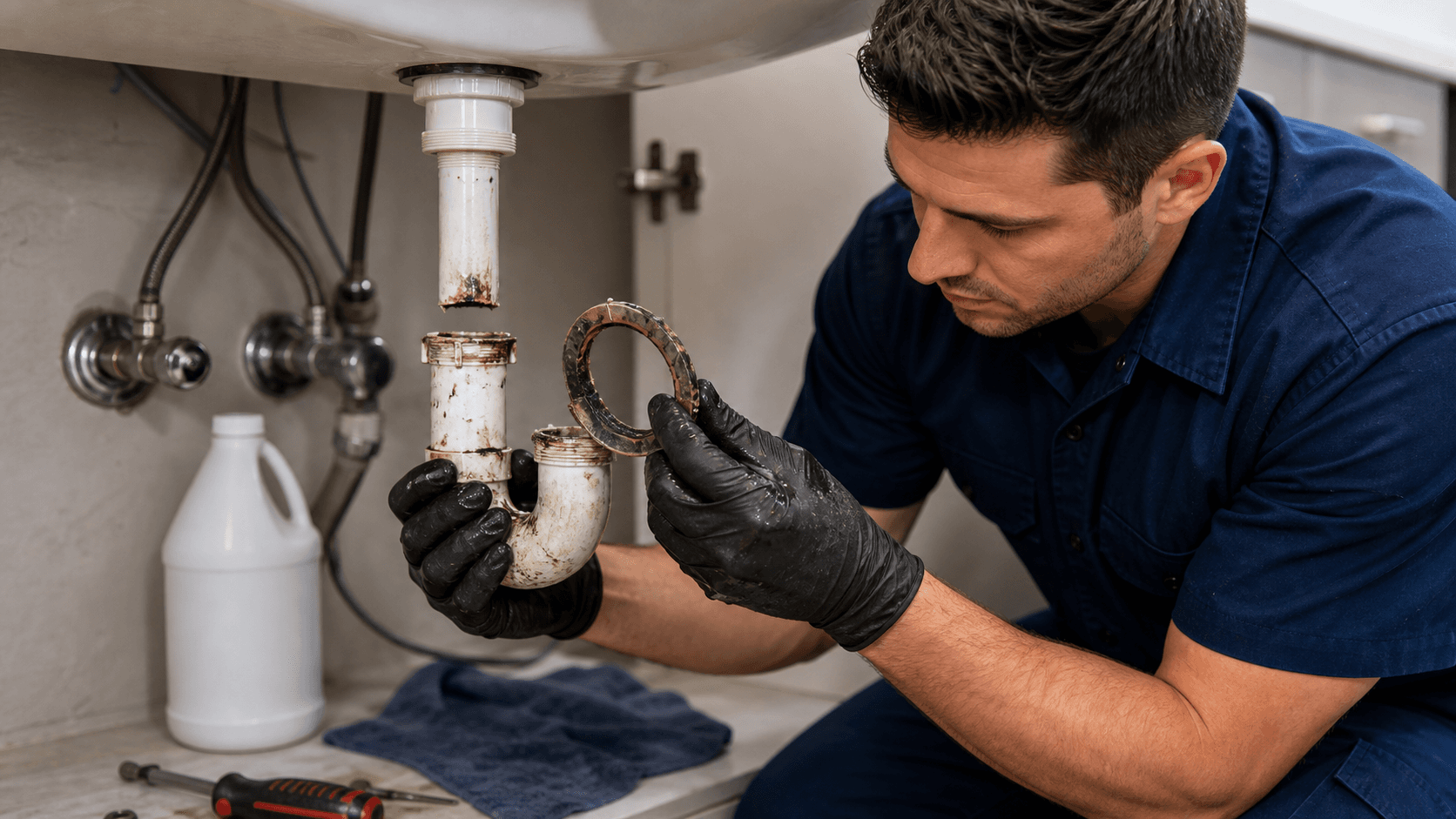
The drain trap — the U-shaped bend of pipe under a sink, usually a P-trap — holds a water seal that blocks sewer gas from entering the home, and it is also where hair, grease, and debris collect because the bend is the slowest point in the drain. Cleaning it is a 10-minute job: place a bucket under the trap, loosen the two slip nuts by hand or with channel-lock pliers, pull the trap off, and empty the water and sludge into the bucket, then scrub the inside with a bottle brush and flush it before reattaching it hand-tight. The signs a trap needs cleaning are a slow-draining sink, a sewer odor around the drain, or standing water that pools after the water runs. A dry P-trap — usually in a sink that has not been used for weeks — lets sewer gas pass into the room, and the fix is simply running water into the drain to refill the seal.
Last reviewed: 2026-08-18
A drain trap is the U-shaped pipe bend under a sink that holds water to block sewer gas; a P-trap is the most common shape, named for the P it forms with the drainpipe.
Every sink has a trap — the curved section of pipe immediately under the drain — and its job is to hold water. That standing water forms a seal that keeps sewer gas and odor from rising up through the drain and into the room, which is why a trap is always filled with a little water even when the sink is not in use. Without the trap, the drain would be a direct open channel into the sewer line.
The P-trap is the standard shape in homes, named because the curved pipe plus the straight drain arm together look like a sideways letter P. It is the most common because it is self-scouring — the flow of water through the bend carries most debris past it — while still trapping a small amount of water at the bottom of the curve. S-traps, the older shape, are less common now because they can siphon their own seal dry.
The trap is also the collection point for what does not wash through. Hair, soap scum, grease, and small objects settle in the bottom of the bend because it is the slowest-moving point in the drain, and over time that buildup slows the drain and holds odor. This is why a trap is the first place to look when a sink drains slowly or smells — the problem is usually in the bend, not deeper in the line.
Knowing the trap is what it is matters because it is a removable, cleanable part, not a permanent fixture. The two slip nuts that hold it are designed to come off by hand, which makes cleaning the trap the single most accessible plumbing maintenance a homeowner can do, and the first fix to try before assuming a slow sink is a bigger clog.
This happening in your home right now? A licensed plumber can talk you through the next step on the phone — 24/7, and the call is free.
Call a plumberPlace a bucket under the sink, loosen the two slip nuts, pull the trap off, empty and scrub it, then reattach and hand-tighten the nuts.
Cleaning a P-trap starts with a bucket placed directly under it, because the trap is full of water and sludge that will spill the moment it comes off. Loosen the two slip nuts — one where the trap joins the sink tailpiece, one where it joins the drain arm — turning them by hand or with channel-lock pliers wrapped in a rag to avoid scratching the chrome. The nuts are plastic or chrome and only need to be loosened, not removed.
Pull the trap straight down and off, and pour its contents into the bucket. The water will be gray and may contain hair, grease, and small objects, which is exactly what was slowing the drain. Rinse the trap in a separate sink or with a hose, then scrub the inside of the bend with a bottle brush to break up the coating of scum that lines it — a coat hanger works in a pinch, but a bottle brush reaches the curve properly.
Check the slip-nut washers before reassembling. The rubber or plastic washers that seal the slip nuts are the wear parts, and a hardened or cracked washer is the cause of the drip that sometimes appears after the trap is disturbed. Replace a cracked washer rather than over-tightening to compensate for it, because a washer that does not seal will leak no matter how hard the nut is cranked.
Reassemble by slipping the trap back into place and hand-tightening both slip nuts, then run the water and check both joints for leaks. Hand-tight is usually enough, and the nuts only need a gentle quarter-turn with pliers if a joint weeps. The whole job takes about ten minutes and needs no special tools, which is why a slow or smelly sink is worth a trap cleaning before anything else.
A sink that drains slowly, a sewer odor around the drain, or standing water that pools after the water runs all point to a trap that needs cleaning.
A slow-draining sink is the most common sign, and it usually means the trap has collected enough hair and scum to narrow the passage. Water that takes several seconds to clear, or that rises and swirls before draining, is telling you the bend is partly blocked. Because the trap is the slowest point in the drain, most slow-sink problems are in the trap rather than deeper in the line, and a cleaning clears them.
A sewer odor around the drain is a different signal with two possible causes. Either the trap is packed with decomposing debris that smells even though the water seal is intact, or the seal has dried out in an unused sink. Run water first to refill a dry seal; if the smell persists after the seal is full, the trap itself needs cleaning to remove the odor source.
Standing water that pools after the water runs is the clearest sign of a heavy buildup. When the trap is nearly full of debris, water backs up and takes a long time to drain, leaving a shallow pool in the sink. This is a trap that needs to be emptied and scrubbed, and it is the point where a cleaning turns a worsening clog around before it becomes a full blockage.
All three signs are cheap to address because the trap is removable. A slow drain, a smell, or pooling water each point to the same fix — take the trap off, clean it, and reattach it — and doing that early prevents the debris from being pushed deeper into the line, where a clog becomes a drain cleaning call instead of a ten-minute job.

Clean a kitchen P-trap every 3 to 6 months because of grease, and a bathroom P-trap every 6 to 12 months; clean sooner if the sink drains slowly or smells.
The cadence for cleaning a trap depends on the room, because kitchen and bathroom drains collect different material. A kitchen trap collects grease and food particles, which build into a sticky coating faster, so it benefits from cleaning every 3 to 6 months. A bathroom trap collects hair and soap scum, which build more slowly, so every 6 to 12 months is usually enough.
These are intervals for a trap that is otherwise behaving, and the real trigger is symptom, not calendar. A sink that drains slowly or smells should be cleaned when the symptom appears, not on a fixed schedule, because buildup varies with how the sink is used — a family kitchen washing greasy pans daily fills a trap far faster than a powder-room sink used occasionally.
Cleaning on a light schedule is preventive in a way that matters: it keeps debris from hardening into a cement-like layer that a bottle brush cannot clear. Fresh grease rinses out with hot water and a brush, while a trap left for a year can harden to the point that the whole trap is easier to replace than to clean, which is a $10 to $20 part rather than a free cleaning.
The practical rule is to clean a kitchen trap quarterly and a bathroom trap twice a year, and to clean any trap the moment it slows or smells. This is maintenance, not repair, and it is the same reason a slow sink is best handled by the homeowner first — the trap is the accessible part, and a scheduled cleaning keeps the drain moving without a service call.
A dry P-trap loses its water seal and lets sewer gas into the room, causing a rotten-egg smell; running water into the drain for a few seconds refills the seal.
A P-trap depends on its water seal, and when the water evaporates the seal is gone. This happens in sinks that are not used for weeks — a guest bathroom, a basement utility sink, or a floor drain — because the standing water in the bend slowly dries out. Once the seal is gone, there is nothing blocking the sewer gas from rising up through the drain and into the room.
The smell is the giveaway: a dry trap produces a sulfur or rotten-egg odor that comes specifically from the drain opening, not from elsewhere in the room. It is often worst when the HVAC system or a bathroom fan runs, because the negative pressure pulls air up through the open drain. The smell appears and disappears with air movement, which is what distinguishes a dry trap from a dirty one.
The fix is the simplest in plumbing: run water into the drain for a few seconds to refill the bend and restore the seal, and the smell stops almost immediately. For a drain that is rarely used and keeps drying out, add a tablespoon of mineral oil or cooking oil after the water — the oil floats on the water and slows evaporation, keeping the seal intact for months.
A dry trap is a maintenance issue, not a blockage, but it is easy to confuse with a dirty trap or a real sewer problem. If running water does not stop the smell, the trap is either packed with debris or the odor is coming from deeper in the line, and at that point the problem is a drain cleaning or sewer line issue rather than a dry seal.
Clean a P-trap with a bucket and pliers in about ten minutes; clean kitchens quarterly and bathrooms twice a year, and refill a dry trap with water to stop odor.
Cleaning a P-trap needs only a bucket and a pair of channel-lock pliers, and it takes about ten minutes. Loosen the two slip nuts, pull the trap off, empty it into the bucket, scrub the bend with a bottle brush, check the washers, and reattach it hand-tight. It is the most accessible plumbing maintenance in the house, and it fixes most slow and smelly sinks before anything deeper is needed.
Kitchen traps collect grease and should be cleaned every 3 to 6 months, while bathroom traps collect hair and soap scum and are fine every 6 to 12 months. The real trigger is symptom, not calendar — a sink that slows or smells should be cleaned when it happens, and a fresh buildup rinses out easily while a year-old layer may harden to the point the trap is cheaper to replace than clean.
A dry trap causes a sewer smell because the water seal is gone, and the fix is running water into the drain to refill it. This happens in sinks that are not used for weeks, and adding a tablespoon of mineral oil after the water slows future evaporation. If running water does not stop the smell, the trap is dirty or the odor is coming from deeper in the line.
When the trap is clean and the sink still drains slowly, the clog is past the trap — in the branch line or the main drain — and that is the point where the job grows beyond a bucket job. At that stage, a professional drain cleaning in Bellevue clears the line past the accessible parts, and the trap cleaning you did first is what ruled out the cheap, common cause.
For a layered answer: how often should you clean a kitchen P-trap that collects grease in a busy family home? Every 3 months, or sooner the moment the sink slows — fresh grease rinses out with hot water and a bottle brush, while a year-old layer can harden to the point the whole $10–$20 trap is cheaper to replace than clean.
Cleaning the trap yourself is free; the cost appears only when the clog has moved past the accessible parts.
Every fact in this guide cites a verifiable public source. If you find a number we got wrong, email dispatch@bellevueplumberpro.com.
Need help with this in your home? See our Drain cleaning and clog removal in Bellevue page for pricing, our diagnostic process, and how same-day service works across the Eastside.
The U-shaped pipe bend under a sink that holds water to block sewer gas. The P-trap is the most common shape, named for the P it forms with the drainpipe.
Place a bucket under the sink, loosen the two slip nuts, pull the trap off, empty and scrub it, then reattach and hand-tighten the nuts — about a 10-minute job.
Every 3 to 6 months for a kitchen P-trap (grease builds faster) and every 6 to 12 months for a bathroom trap — sooner if the sink drains slowly or smells.