Why is my shower backing up?
A clog — either hair and soap in the shower's own trap or branch line, or a blockage in the main drain the shower shares with other fixtures. Which one it is determines the fix.

A shower that backs up — water rising in the pan when you run the shower, the washing machine, or a nearby fixture — is a clog, and the first question is whether the clog is in the shower's own line or the main drain. Hair and soap in the shower's P-trap or branch line back up only the shower, while a main-line clog backs up the shower plus the toilet, tub, or washer, because the shower pan is usually the lowest fixture in the house. The washing machine backing up into the shower is the classic main-line signal, because the washer pumps water out fast and a restricted main line surfaces that volume at the lowest drain. Fixing a localized shower clog is a plunge, a zip-it hair tool, or a branch-line snake; a main-line clog that surfaces sewage needs a professional cable or hydro jet rather than a plunger.
Last reviewed: 2026-08-18
A shower backs up because of a clog — either hair and soap in the shower's own trap or branch line, or a blockage in the main drain the shower shares with other fixtures.
The shower drain backs up for one of two reasons, and hair is behind most of them. A shower drain collects hair, soap scum, and body oils every time it is used, and that mix binds into a mat that narrows the drain until water no longer passes. The clog is usually in the shower's own P-trap or the short branch line between the shower and the larger drain it feeds — a localized clog that affects only the shower.
The second reason is a clog further downstream in the main drain line that the shower shares with the rest of the house. The shower is often the lowest fixture, so when the main line is partly blocked, water that cannot pass downstream surfaces at the lowest opening — the shower pan. A main-line clog backs up more than one fixture, which is how it is distinguished from a local shower clog.
The volume of water also matters. A shower drains slowly at first — water pooling around your ankles and taking minutes to clear — and that slow stage is usually a hair mat in the trap or branch. A shower that fills suddenly when you run the washing machine or flush a nearby toilet is the opposite signal: the water has nowhere to go downstream, so it is coming back up through the shower.
The distinction between the two causes is the whole diagnosis, because the fix is different. A local clog clears with a plunge or a hair tool; a main-line clog needs a cable or jet run through the main drain. Reading which one you have before reaching for a tool is what keeps a simple shower clog from being treated like a sewer emergency, or vice versa.
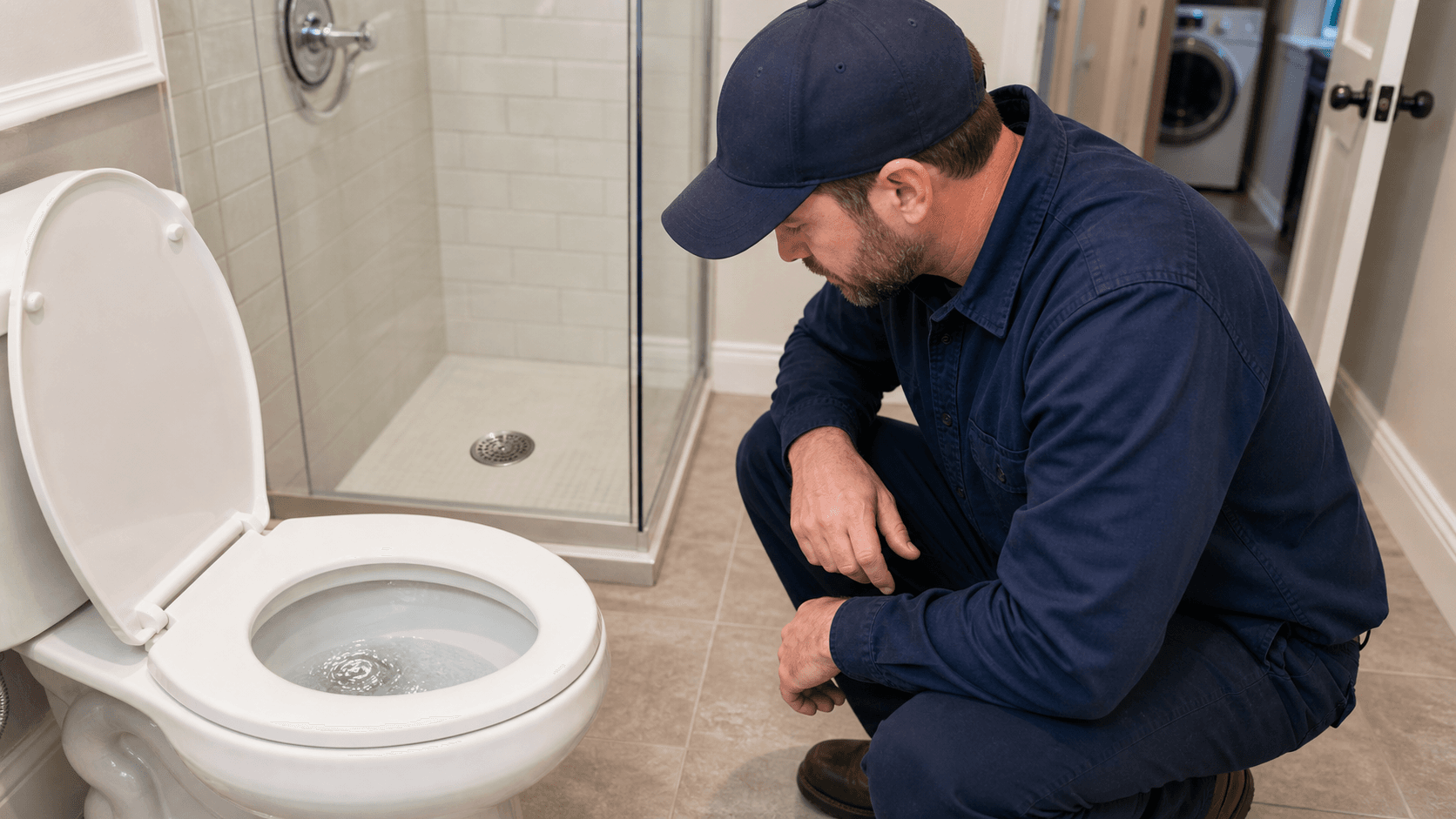
This happening in your home right now? A licensed plumber can talk you through the next step on the phone — 24/7, and the call is free.
Call a plumberIf only the shower backs up, the clog is local; if the toilet, tub, or washing machine also back up, the clog is in the main drain line.
The single test that splits the two causes is how many fixtures are affected. Run the shower and watch: if only the shower fills while the toilet flushes and the bathroom sink drains normally, the clog is in the shower's own trap or branch line. A localized clog stays localized, which is why a shower-only backup is the cheaper and easier case.
If the shower backs up and the toilet also gurgles or fails to flush, the tub is slow, or the washing machine water comes up through the shower, the clog is in the main drain that all those fixtures share. A main-line clog presents at multiple fixtures, and the shower pan is usually the lowest one, so it is often the first place the backup appears even when the actual blockage is well downstream.
The washing machine is the clearest test of the two, because it moves a large volume of water quickly. When a washing machine drains, it pumps the whole tub's worth of water into the line in about a minute, and if the main line is restricted, that surge cannot pass and comes up at the lowest fixture — the shower. A washer that backs up into the shower is almost never a shower problem; it is a main-line restriction the shower merely reveals.
Naming the cause correctly is what prevents the wrong repair. Treating a main-line clog with a shower-only fix — a plunge or a short branch snake — clears the shower for a day and then it backs up again, because the real blockage is downstream. Treating a local hair clog as a main-line job costs a cable run that a five-dollar hair tool would have cleared. The fixture-count test is the cheap diagnostic that picks the right one.
Plunge the drain with the overflow covered, pull hair with a zip-it tool, or snake the branch line; a main-line clog needs a cable or hydro jet, not a plunger.
The first fix for a localized shower clog is a plunger, done correctly. Cover the overflow opening with a wet rag — otherwise the plunger just pushes air through the overflow instead of the clog — then plunge the drain with a few firm strokes. A plunger works on the soft, fresh clogs near the top of the drain, which is where hair mats usually sit.
When plunging does not clear it, the next tool is a zip-it or a hair snake. A zip-it is a two-dollar plastic strip with barbs that you push down the drain and pull back up; it comes out loaded with the hair that the plunger could not shift. For a clog a little deeper in the branch line, a hand-crank drum snake reaches past the trap into the branch, and a few rotations break up the mat.
If the shower is the only fixture backing up and these tools clear it, the job is done, and a routine of preventing hair from reaching the drain — a hair catcher over the drain — keeps it from returning. A local shower clog is the case where the homeowner fix genuinely works, because the clog is accessible and the tools are cheap.
A main-line clog is the case to stop and call, because the blockage is past what a plunger or short snake reaches. Main-line cabling runs $189 to $345 and hydro jetting $595 to $1,200 in Bellevue, and the right choice depends on pipe age and the clog type. When the fixture-count test says main line, the fix is a professional drain cleaning in Bellevue, not another plunge.
The washer pumps its water out fast, and a restricted main line surfaces that volume at the lowest fixture — usually the shower pan.
The washing machine backing up into the shower is a main-line signal, not a shower problem, because of how a washer drains. A washing machine does not drain by gravity the way a sink does — it pumps the entire tub's water out under pressure in about a minute. That surge of water enters the drain line all at once, and if the main line is partly blocked, the water has nowhere to go and rises at the lowest point, which is the shower.
The shower is the lowest fixture in most homes because its drain sits at floor level, lower than the toilet rim and the sink, so a main-line backup surfaces there first. Water backing up into the shower when the washer runs means the restriction is downstream of where the washer, shower, and other fixtures all tie together — a partial main-line clog, not a clog inside the shower drain.
The same surge can also back up into a nearby toilet or floor drain depending on the layout, but the shower is the common one because it is the lowest. The key point is that the shower is not the cause — it is the pressure-relief valve for a main line that cannot accept the washer's volume, and clearing the shower drain will not stop the backup.
The fix is to clear the main line, and a washer-into-shower backup is usually a recurring problem if only partially cleared — the blockage is often grease, soap, or a settling pipe belly rather than a single plug. A camera inspection of the main line shows whether it is a clog to cable, a grease line to hydro-jet, or a structural belly to repair, which is the difference between a one-time clear and a repeat backup.
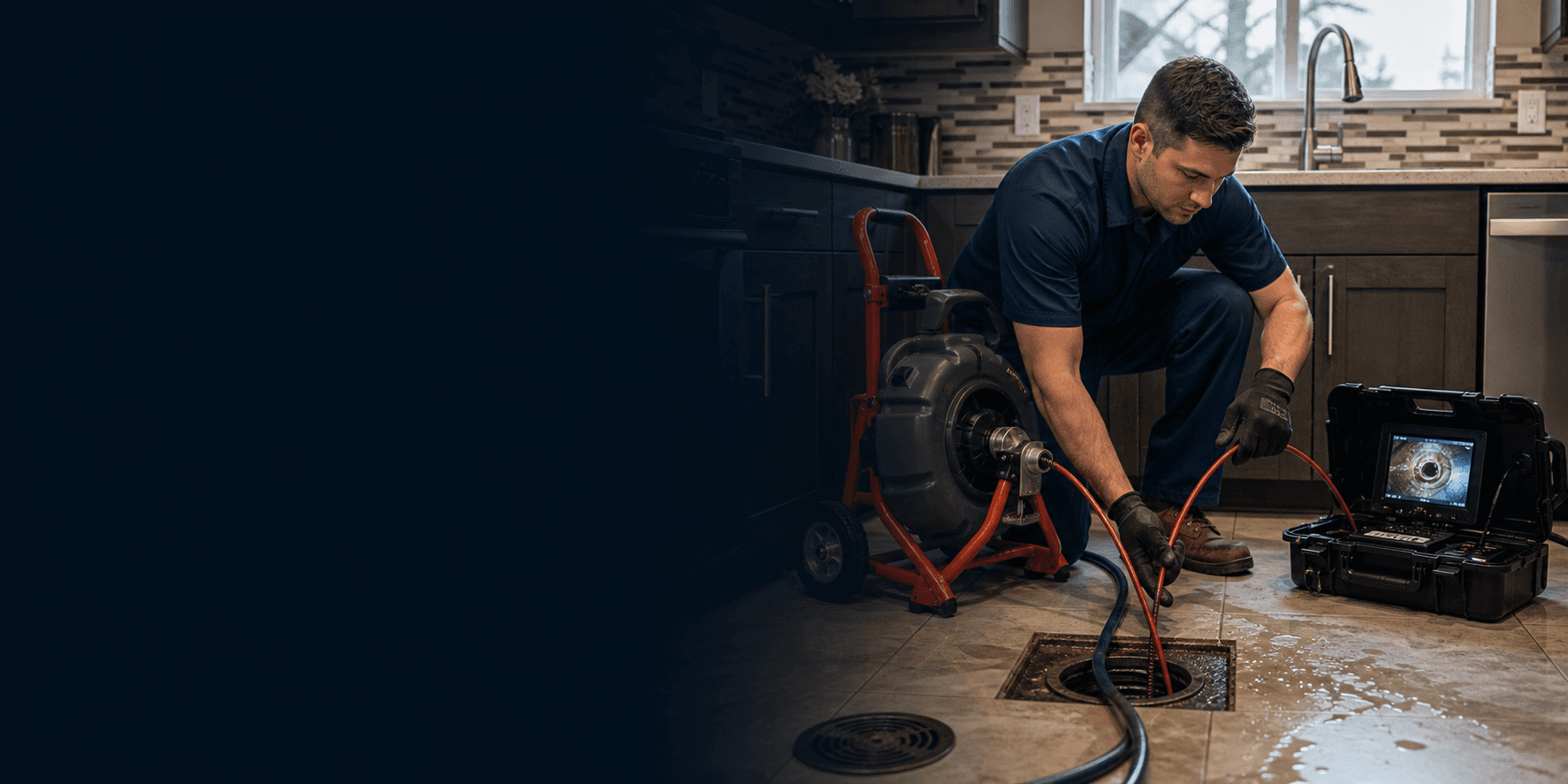
It is an emergency when the backup is sewage — brown or gray water that will not drain, or a toilet that also will not flush — rather than clear water from the shower itself.
A backed-up shower is an emergency when what comes up is sewage, not clean shower water. Clear water rising in the pan from a slow shower drain is a nuisance clog; brown, gray, or foul-smelling water, especially water that rises when you flush the toilet, is a sewer backup. The distinction is what is in the water, and it decides whether you fix it yourself or stop using water and call.
The other emergency signal is a toilet that will not flush or that gurgles when the shower is run. A shower and toilet that both misbehave point to a main sewer line that is blocked far enough down to affect the whole house, and continuing to run water or flush only forces more volume against the blockage. Stop running water the moment the backup is brown or the toilet fails, to avoid pushing sewage further into the house.
A sewer backup is also a health hazard, not just a plumbing one. Sewage contains bacteria and pathogens, so a backup that floods the shower or tub needs the water kept out of living areas and the area cleaned and disinfected after the line is cleared. This is why a sewer backup is treated as an emergency and a clear-water shower clog is not — the difference is exposure risk, not just the clog.
If the backup is clear water from a slow shower alone, it is a clog you can attempt to clear. If it is sewage or affects the toilet, stop using water and call for emergency plumbing — a main sewer line is cleared with a cable or jet, and the sooner it is opened the less damage and exposure the backup causes.
Only the shower backing up is a local hair clog; the washer or toilet backing up too is the main line. Plunge and use a hair tool for local, cable or jet for main.
The fixture-count test is the first move: if only the shower backs up, the clog is in the shower's own trap or branch line, and if the toilet, tub, or washing machine also back up, it is the main drain. A local clog clears with a plunger or a zip-it hair tool; a main-line clog needs a cable or hydro jet. The test is free and it picks the right repair.
Hair is the number-one cause of a localized shower backup. A hair catcher over the drain stops most of it before it becomes a clog, and pulling the visible mat with a zip-it tool clears a slow drain in seconds. A shower that drains slowly at first and then stops is usually a hair mat, while a shower that fills suddenly when the washer runs is the main line.
The washing machine backing up into the shower is the classic main-line signal. The washer pumps water out fast, and a restricted main line surfaces that surge at the lowest fixture — the shower. Clearing the shower will not stop it; the main line has to be opened, and a camera inspection shows whether it is a clog to cable or a pipe belly to repair.
When the backup is brown or gray and the toilet will not flush, it is a sewer backup and an emergency — stop using water and call. Clear water from a slow shower is a clog to clear yourself; sewage is a drain and sewer job that needs a professional to clear the line and a cleanup after.
For a layered answer: why does the washing machine back up into the shower in a house where only those two fixtures are affected? The washer pumps its whole tub of water out in about a minute, and a partial main-line clog surfaces that surge at the lowest fixture — the shower pan — so the shower is the relief point, not the cause.
A shower-only backup is cheap to clear; the price rises when the fixture-count test says main line.
Every fact in this guide cites a verifiable public source. If you find a number we got wrong, email dispatch@bellevueplumberpro.com.
Need help with this in your home? See our Drain cleaning and clog removal in Bellevue page for pricing, our diagnostic process, and how same-day service works across the Eastside.
A clog — either hair and soap in the shower's own trap or branch line, or a blockage in the main drain the shower shares with other fixtures. Which one it is determines the fix.
If only the shower backs up, the clog is local. If the toilet, tub, or washing machine also back up, the clog is in the shared main drain line.
The washer pumps out fast, and a restricted main line surfaces that volume at the lowest fixture — usually the shower pan. It's a main-line symptom, not a shower problem.